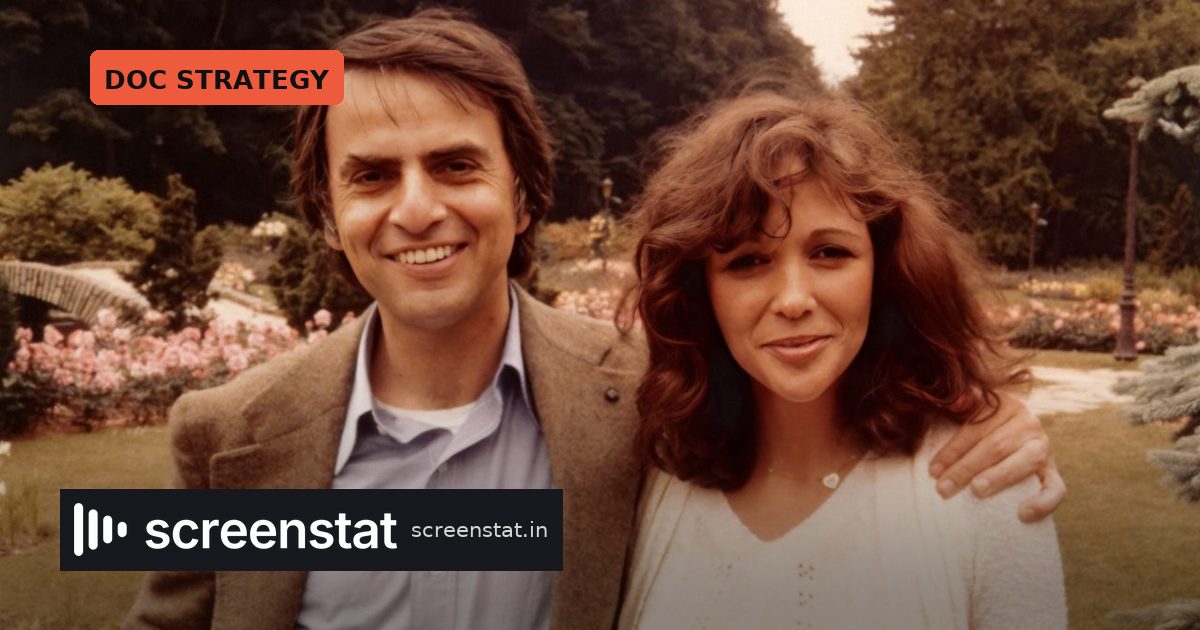
A new documentary on Carl Sagan is drawing solid notices, and the reason is instructive for anyone commissioning, buying or marketing non-fiction video: the film stops being a career survey and becomes a love story.
“Carl Sagan: We Are Made of Star Stuff,” directed by Oscar-nominated filmmaker Nanette Burstein (“On the Ropes”), moves through the astronomer’s childhood, his parents, a strained first marriage and a checklist of accomplishments before finding its actual engine: Sagan’s relationship with Ann Druyan, his collaborator on the Voyager golden record, the PBS series “Cosmos” and the novel “Contact,” later adapted by Robert Zemeckis into a studio film.
Why a reviewer’s structural note matters commercially
TheWrap’s review is blunt about the shape of the film: the early stretch is “important groundwork, expertly told,” but the documentary improves sharply once Druyan enters. That is not just a critical preference. In an on-demand environment, the first act is where completion rates are decided, and a talking-head chronology front-loaded with biography is the single most common reason a well-made archival doc leaks viewers before the halfway mark.
The Druyan material gives the film what platform programmers actually shop for: an emotional spine that can be cut into a trailer, a thumbnail and a one-line synopsis. “Astronomer’s life and work” is a search term. “They fell in love while choosing what to send to aliens” is a recommendation-engine asset.
The recognisable-IP advantage
Sagan is one of the few science communicators with genuine global brand recall decades after his death, carried by “Cosmos” in both its book and television forms. For streamers, that solves the hardest problem in documentary acquisition – unaided awareness. A subject audiences already recognise cuts the marketing spend needed to convert a title card into a play.
The film also carries built-in narrative set pieces that travel across markets:
- The Voyager golden record, assembled as a portrait of humanity for a possible alien listener
- Druyan’s insistence on including whale songs and crickets
- Her brainwaves recorded while she concentrated on thoughts about humanity, in case a sufficiently advanced civilisation could decode them
- Archival audio of Sagan dictating lines from “Cosmos” that later ran in classrooms
- The candid, and lightly comic, thread about cannabis fuelling the writing – with Druyan saying it made the work better
The review also flags what the film does not dodge: that a largely white American group was choosing which art represented civilisations its members had never visited. Acknowledging that is what keeps an archival celebration from reading as hagiography, and it is increasingly a baseline expectation for legacy-figure documentaries.
What buyers and marketers should take from it
Three practical notes. First, if a science or history doc has a relationship at its centre, lead with it in the cut and in the artwork; the subject-matter audience will arrive anyway. Second, biography-by-checklist is the most replaceable format on any platform, because the same facts sit free on the open web – the differentiator is access, archive and intimacy. Third, titles with a pre-existing text and television legacy behind them, as Sagan has, are the cheapest form of awareness a documentary can buy.
The review’s summary judgement is that the love story takes over and the film is better for it. For commissioners, that is a reminder that structure is a distribution decision, not just a creative one.
Source: TheWrap