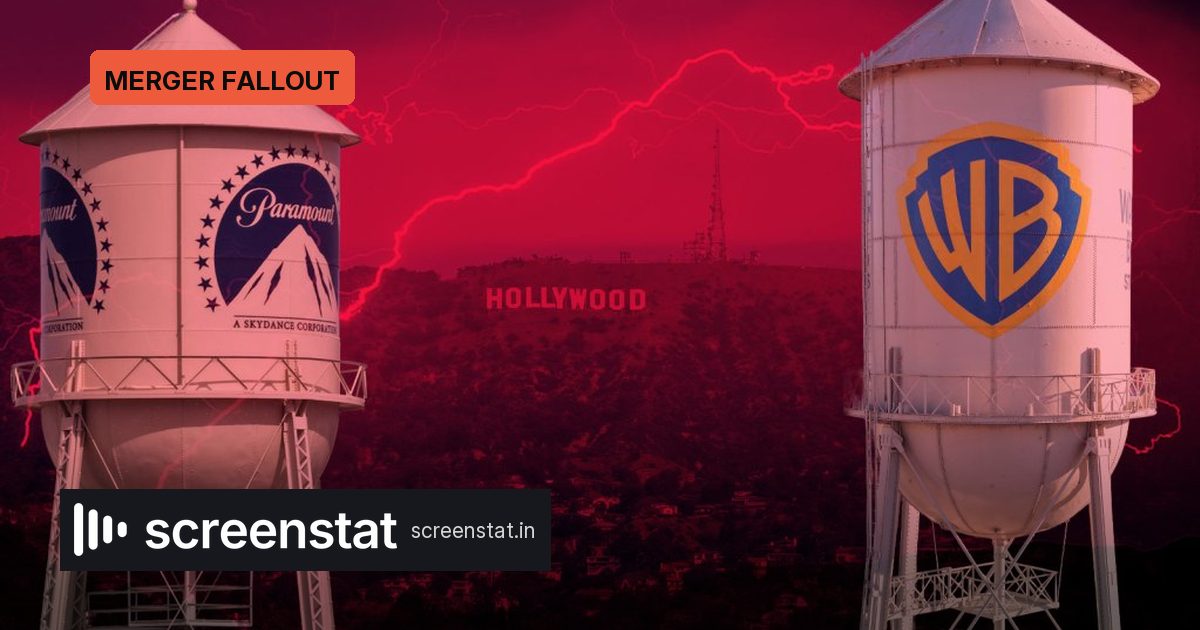

The proposed settlement clearing Paramount’s acquisition of Warner Bros. Discovery goes before a federal judge on Thursday, days after a landmark agreement was reached to resolve the challenge from a dozen states.
U.S. District Judge Araceli Martinez-Olguin will consider whether to lift the July order that has blocked the deal from closing. A Tuesday court filing said the hearing will address “certain outstanding questions regarding the factual and legal underpinnings of the parties’ proposed consent decree” and its implementation.
That phrasing matters: the judge is not simply rubber-stamping the agreement, but testing the legal basis of a settlement that would create Hollywood’s next media giant.
What the settlement requires
Instead of requiring divestitures typical in enforcer-friendly mergers, the deal imposes a five-year operating agreement. The combined company would have to meet specific theatrical production and governance conditions:
- Release at least 30 theatrical films a year for the first two years.
- Release at least 32 films a year for the following three years.
- Maintain minimum numbers of wide and independent releases.
- Ensure at least half of films are produced or jointly produced by the combined company.
- Keep basic-cable negotiations for the studios separate.
- Create a five-member independent board, selected by Paramount, to oversee editorial standards at CBS News and CNN.
Enforcement has teeth. Walking away from the basic-cable negotiation term could expose the studio to divestitures of BET, VH1 and Comedy Central, among others. Missing the annual film quota could force a sale of Paramount’s stake in Miramax. CNN and New Line Cinema are not on the divestiture table under those scenarios.
Why this matters for the business
For media planners and entertainment marketers, the settlement is a planning input, not just a legal headline. The 30-32 film quota creates a visible theatrical pipeline for the first five years, and the separate cable negotiation requirement may change how distribution and carriage deals are structured.
Compliance will be monitored by an independent monitor and a small group of state attorneys general. Paramount must provide reports and information to assess whether it is meeting the terms, and the court retains authority to intervene with enforcement proceedings and financial penalties.
Editorial independence remains a flashpoint
The CNN and CBS News editorial board has drawn criticism before the hearing. New York City mayor Zohran Mamdani framed the merger as a threat to media competition, saying it “strikes a chilling blow against that freedom.”
Approval is still required. Thursday’s hearing is the next test of whether the settlement’s conditions are enough to satisfy the court and the dozen states that challenged the deal.
What to watch
Treat Thursday’s hearing as a regulatory checkpoint, not the finish line. Model release planning around the 30-32 film quota, and track whether separate cable negotiations alter carriage timelines. Do not assume divestiture risk has disappeared: quota breaches could still put the Miramax stake in play.
Source: The Hollywood Reporter