What’s happening
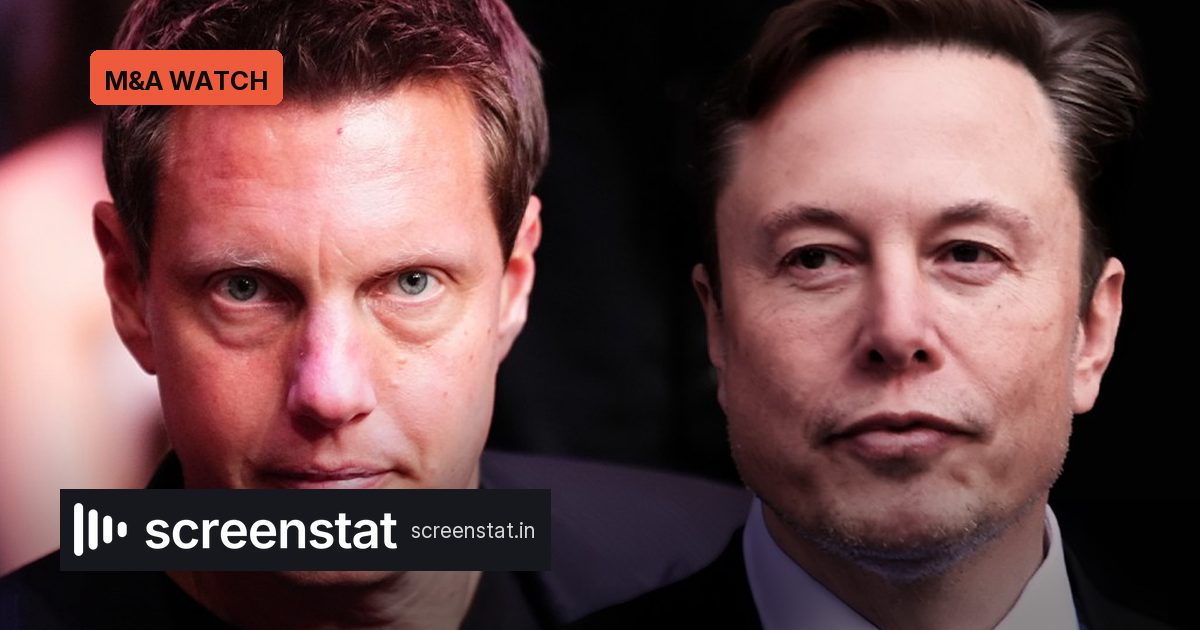
Paramount executives have discussed an equity investment from Elon Musk as the company moves to close its Warner Bros. Discovery acquisition, Semafor reported. Musk is one of several wealthy individuals Paramount and CEO David Ellison have considered for a syndicate of equity investors. Paramount declined to comment.
The equity foundation is already substantial. Larry Ellison personally committed to backstop more than $40 billion in financing to win Warner Bros. Discovery’s agreement. A Saudi-led group of three Middle Eastern sovereign wealth funds later joined, easing his exposure and taking a combined stake of just under 50% in the combined company.
Why a Musk stake changes the conversation
The Musk relationship is not theoretical. Larry Ellison invested $1 billion in Musk’s 2022 takeover of Twitter, now X, and served on Tesla’s board from 2018 to 2022. That pattern makes a Musk role in the Paramount equity syndicate plausible, even if no transaction has been disclosed.
For media buyers, the issue is not ownership drama but ad adjacency. An eventual investment would connect Musk to the parent of CBS News and CNN. Depending on size, it could surface in future SEC filings. That creates a governance overlay for advertisers who already weigh news content carefully. The question is whether a controversial shareholder changes how brands evaluate those environments.
The debt stack
Banks have started reaching out to investors ahead of a $49 billion debt sale supporting the acquisition. Bank of America, Citigroup and Apollo underwrote the buyout package. Bloomberg reported strong demand before the state attorneys general lawsuit paused the process. The reported mix:
- Around $30 billion of investment-grade bonds
- $7.5 billion of investment-grade loans
- About $12 billion of second-lien bonds
What still needs to happen
Paramount settled its antitrust case with a dozen state attorneys general on Sept. 21. The company has said the deal should close in about two weeks, but the final step is the federal judge who must approve the consent decree. She has set a Thursday hearing to address what the report describes as “outstanding questions” on the legal and factual basis.
The settlement surprised parts of the industry because it relied mostly on behavioral remedies rather than structural remedies. For legal and media observers, that means the combined entity faces enforceable conduct promises rather than forced asset sales.
The framework: ownership versus operating pressure
In media M&A, the equity syndicate sets who controls the company, while the debt stack sets how quickly the company must produce cash. Here, the equity story is about governance and news-brand perception; the debt story is about margin pressure on ad-supported and subscription assets. Teams that treat both as one risk picture will read the next two weeks more clearly.
Watch three signals: any SEC filing that reveals a Musk stake, the first major advertising and subscription decisions from the combined company, and the pricing of the debt package. A $49 billion stack can force management to prioritize cash-generating streaming and linear units quickly.
Source: Deadline