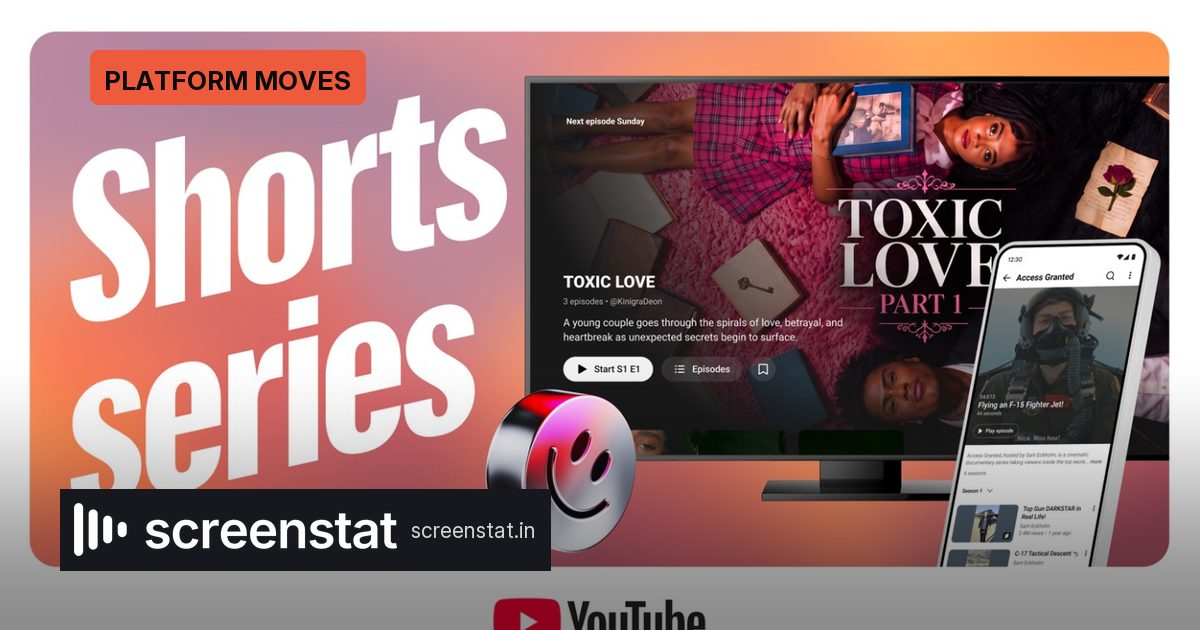
YouTube is making a bigger bet that short-form, episodic video belongs on the living-room TV. At its Made on YouTube event in New York on Wednesday, the platform said it will bring Shorts Series to the TV screen, extending the episodic features of Creator Shows into YouTube Shorts for the biggest glass in the house.
Why microdramas are the target
The feature is aimed squarely at microdramas, a category YouTube says already posts 90 percent year-over-year watch time growth. The company argues that TV unlocked communal viewing for Shorts in a way mobile could not. Kurt Wilms, YouTube’s director of product for the living room, told The Hollywood Reporter the company was initially unsure whether Shorts would work on TV. “We launched it, and we were blown away by the response,” he said.
Microdramas are particularly ripe for disruption, the company believes, because many existing players try to pull users into standalone subscription services. YouTube sees its scale as an advantage, and creators can use memberships to give away a few episodes and reserve the remainder for paying members. That positions microdramas as a subscription funnel rather than only an ad-supported format. The genre already counts creators such as Kinigra Deon as sizable players.
What else is changing on TV
- Shorts Series brings episodic Creator Shows to the TV screen.
- YouTube Posts, with photos and text, will appear in the Shorts feed on TVs.
- Viewers can post comments on TV using voice control, and YouTube says the number of viewers reading comments on TV is approaching web levels.
What media teams should watch
For planners and marketers, the update is a signal that short-form video is becoming a connected-TV reach format, not just a mobile filler. Dina Berrada, senior director of product for Shorts, framed it as success of bite-sized content that can be personalized to taste across a bunch of screens, with microdramas as a big part.
Teams should test whether TV-native Shorts Series changes placement and sponsorship around episodic short content. Membership-gated microdramas also matter because they convert viewing into recurring revenue, a different calculus than pure ad impressions. And as YouTube adds Posts and voice comments to TV, engagement data may start to look more like lean-back social than one-way streaming.
For media planners, the shift matters because connected TV budgets have typically been reserved for long-form streaming. If short-form episodic content earns appointment viewing on TV, it can compete for a different part of the plan. YouTube’s membership tool also gives entertainment marketers a direct conversion mechanic: sample episodes in the feed, then convert to a channel membership.
Do not assume short-form viewers are mobile-only; YouTube’s own product lead says communal TV viewing is driving the response. Watch whether the 90 percent growth figure accelerates after Shorts Series reaches TVs.
Source: The Hollywood Reporter