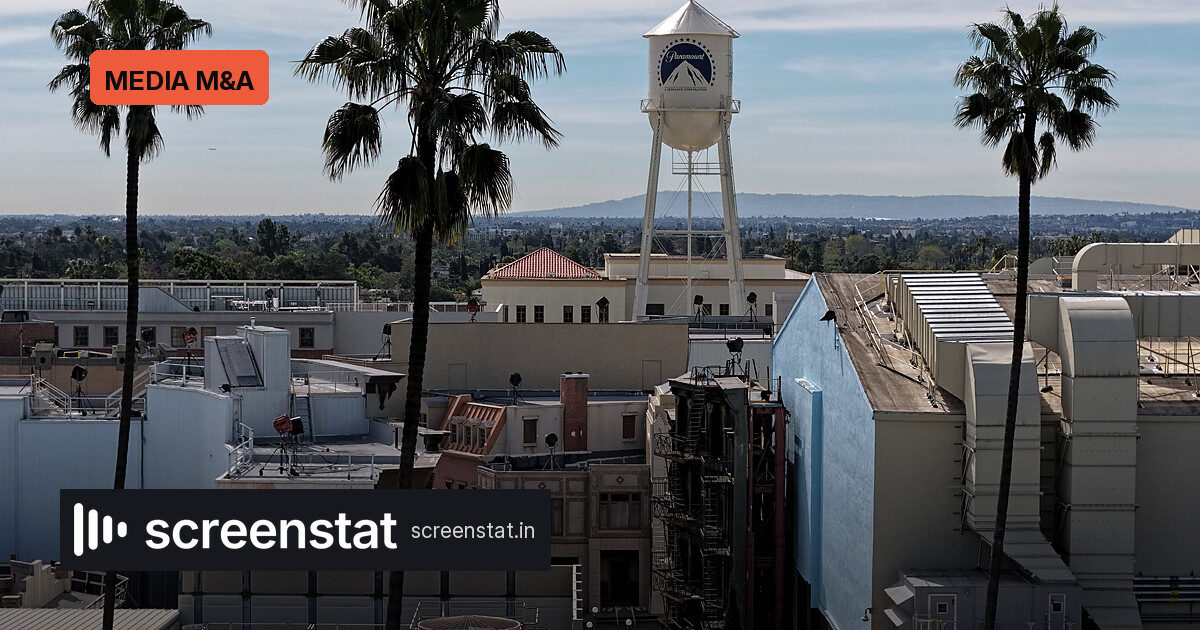
Paramount has moved to lock in acquisition financing for Warner Bros. Discovery while a federal judge holds the final condition to close: approval of an antitrust settlement with 12 state attorneys general.
The capital stack
Paramount is marketing a $44.4 billion debt offering, split roughly between $32 billion in investment-grade debt in dollars and euros and the equivalent of $12.4 billion in high-yield, or junk, bonds. Bank of America and Citigroup hosted investor calls Monday, and Bloomberg reported they generated enough demand to cover the offering.
The proceeds will be combined with cash on hand, term-loan borrowings and equity financing to pay for WBD. The wider debt package totals $51.9 billion, including a $7.5 billion seven-year Term B loan and a $49 billion bridge loan that stands as contingent financing if permanent money is not in place by closing.
The final gate is a courtroom
Paramount has satisfied all closing conditions except one: U.S. District Judge Araceli Martinez-Olguin must approve a proposed settlement of the antitrust action led by California Attorney General Rob Bonta. The judge declined to approve it at a Sept. 24 hearing and set aside time for opposition briefs; responses were due by noon PT Monday, with the AGs and Paramount both defending the settlement.
Paramount set an Oct. 7 marker for the offering. In an SEC filing it said:
“The actual closing date of the acquisition is uncertain.”
The company reiterated that the merger will be consummated only after the closing conditions in the WBD merger agreement are met or waived.
What the combined balance sheet will look like
Assuming an Oct. 6 close, Paramount calculates total cash consideration to WBD common stockholders at $78 billion, including the $31-a-share payout, a ticking fee that starts Oct. 1, and about $1.1 billion for vested WBD equity awards. The February agreement valued WBD equity at about $80 billion and enterprise value at about $110 billion.
The resulting company will be heavily loaded. WBD had about $34 billion in debt and $3.4 billion in cash as of June. Paramount Skydance has a market capitalization of about $11.5 billion versus WBD’s $77.4 billion. The combined entity will carry more than $80 billion in long-term debt and annual interest costs above $6 billion. David Ellison has targeted $6 billion in synergies.
- $44.4B debt offering: about $32B investment-grade, $12.4B high-yield.
- $51.9B total debt financing, including a $7.5B term loan and $49B bridge.
- $78B cash due to WBD stockholders under the current close assumption.
- $80B+ long-term debt and $6B+ annual interest for the merged company.
The equity side
Equity funding includes up to $46.7 billion from the Lawrence J. Ellison Revocable Trust plus $250 million from RedBird Capital, but subscription rights have been assigned to outside investors including the sovereign wealth funds of Saudi Arabia, Abu Dhabi and Qatar, and LionTree. Those investors will receive newly issued non-voting Paramount Class B shares at close, with the Trust backstopping the equity financing.
Why it matters for the screen business
This is not just a balance-sheet story. A merged Paramount-WBD would reshape streaming, film and TV supply, and its debt service will put pressure on content investment, marketing spend and ad-supported platform economics. Media planners and entertainment marketers should track how the combined company prices inventory and where it trims costs while servicing over $6 billion a year in interest.
The court remains the variable. Even with demand covering the debt offer, a delay in settlement approval can push the timeline and add financing costs.
Source: Deadline