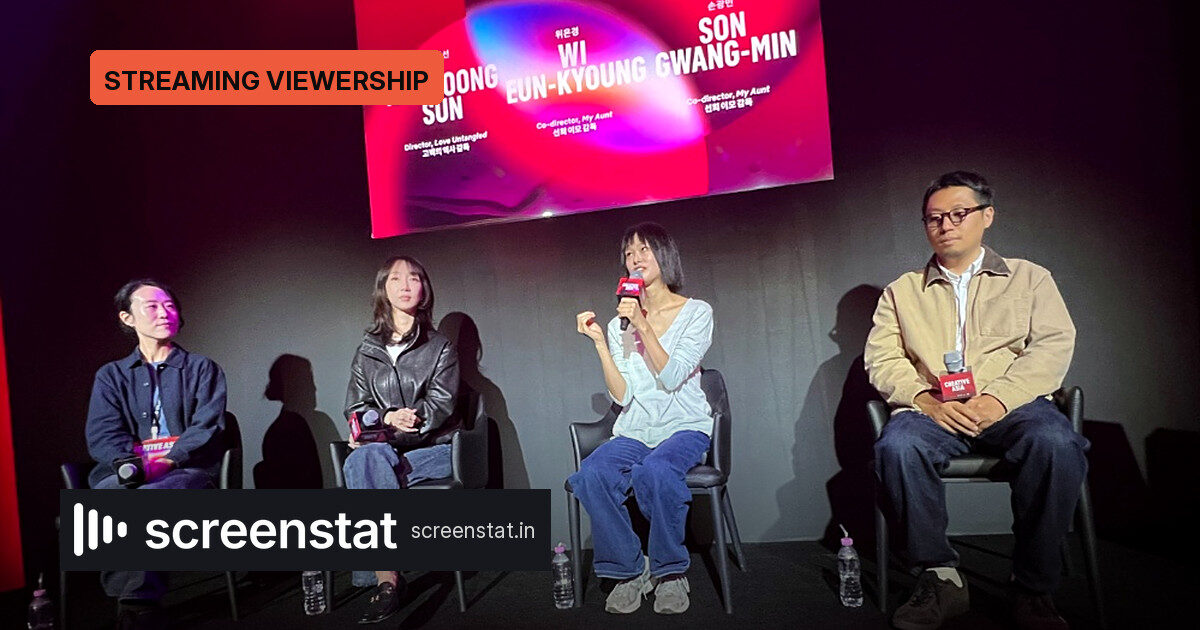
Netflix’s Korean romance Love Untangled has become a quiet distribution case study. Director Namkoong Sun told the Busan International Film Festival’s New Voices in Film panel that the film stayed in Netflix’s global top 10 for more than six weeks and reached No. 1 in many countries, even though it is a Korean-language, 1990s Busan-set period piece. That run matters because it turns a small local story into a measurable global tail.
Namkoong joined after the project and screenplay were already in place, at the adaptation stage, and said she wanted to find joy again after two films about thorny social problems. The production office to release window was a little over a year. Once cameras rolled, she said, the shoot felt similar to her independent work apart from scale.
The freedom came with responsibility
Netflix staff sat in meetings and worked inside the team, but Namkoong said the script changes were her own, made around the theme of happiness. The production recreated the Gwangan Bridge under construction to build a sense of place on a modest period-film budget.
“I didn’t want to imagine what would happen if I failed to take responsibility within that freedom.”
She told younger directors that a filmmaker always carries responsibility for the story, and within guaranteed creative freedom that responsibility has to be taken seriously.
Streaming scale, theatrical ritual
Namkoong said she missed crying and laughing with audiences in cinemas. But the streaming release created a different kind of shared moment: people in Brazil, Poland and Colombia sent messages after watching, and social media filled up with reactions. For a genre she described as not a big share of the Korean audience, the cross-border response was the signal.
The numbers that show distribution
- Love Untangled stayed in Netflix’s global top 10 for more than six weeks and hit No. 1 in many countries.
- The film is Korean-language and set in 1990s Busan, with a modest period-piece budget.
- The short My Aunt, streaming in Netflix Korea’s Mise-en-scène showcase, logged about 7,000–8,000 viewers and over 1,000 comments on a rating app, versus about 15 responses for co-director Song Kwang-min’s previous film.
The indie gap is funding plus a path to release
Asked to name the single biggest challenge facing Korean independent filmmakers, Namkoong pointed beyond budgets. Independent film can get made, she said, but there is not enough infrastructure to show it. Even a festival screening does not guarantee release because release costs and theatrical infrastructure are limited. Ryu Eun-jung, co-director of My Aunt, said independent film is made independently of capital, with creators using their own money. Song said capital has always been his biggest hurdle.
For streaming and media professionals, the takeaway is that a niche, local-language title can hold a global top 10 slot for over six weeks when distribution is present. The more useful metric for such titles is longevity and cross-border reach, not domestic share alone.
Source: Variety