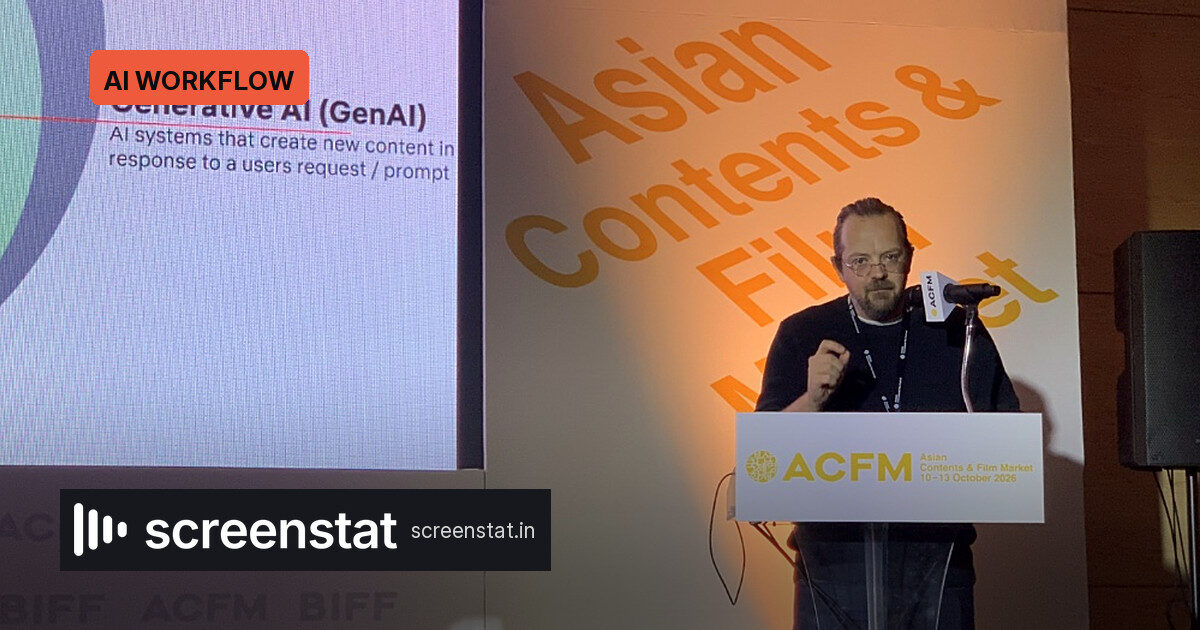
Generative AI is not about to call the final shot at Netflix’s in-house visual effects studio. At the Busan International Film Festival’s Asian Contents & Film Market, James Rustad, global head of GenFX at Eyeline, made a data-minded case: AI can multiply what a VFX team can try, but artists still decide what actually makes it into a show.
1,300 shots, one story filter
Rustad pointed to Brazil ’70: The Third Star, the Netflix series Eyeline worked on, as the reference point. The production carries more than 1,300 visual effects shots, including over 800 set on the soccer field. Eyeline runs a hybrid pipeline with 45 artists, combining generative tools with established effects techniques rather than replacing them.
Where judgment enters the workflow
Rustad described four stages: setup, narrative, look and delivery. The first stage is about possibility: prompts, reference gathering and initial tests generate options. The next stage is narrative. That is where the team stops asking what is possible and starts asking what works for the story.
Only after that narrative filter do shots move into visual refinement and delivery. Lighting, scene details and period accuracy get checked, followed by compositing, upscaling, bit-depth checks and technical review.
Rustad kept the core point simple: “Artists’ judgments are also important.” The technology is advancing quickly, but its role, in his telling, is to widen the field of options, not to make the final call.
Why this matters for screen businesses
For media planners and entertainment marketers, this is a signal about how streaming platforms will manage cost and scale. Generative AI can compress exploration time: more shots, more variations, faster look development. But Netflix is describing a process where the bottleneck is deliberately human.
- More options are generated early, before expensive finishing work.
- A narrative checkpoint separates experimentation from delivery.
- Established VFX techniques still run alongside generative tools.
That structure protects both quality and story coherence while capturing the speed advantage of AI. It also gives a usable template: do not send AI output straight to final; route it through a story-fit decision first.
What to do about it
Teams working with generative tools can borrow the same logic. Generate broadly, review narrowly, finish only what earns its place. For a streaming title, that could mean fewer wasted finishing hours and a clearer rationale for every shot. Rustad’s four-stage model is less about technology and more about where you place the decision rights.
Source: Variety