At Iberseries & Platino Industria in Madrid, the conversation kept returning to formats that are cheap to produce, global in distribution and hard to ignore: microdramas, cross-border co-productions and AI-assisted pipelines. The sixth edition of the Spanish- and Portuguese-language industry event offered a few concrete numbers for buyers, not just buzz.
Microdramas now have a working price range
DramaBox head of communications Marcela Kartaszewicz said Hollywood studios are “jumping into the vertical space,” and argued the format still follows the industry’s oldest rule. “Content is king. It has been. It is. It will always be.”
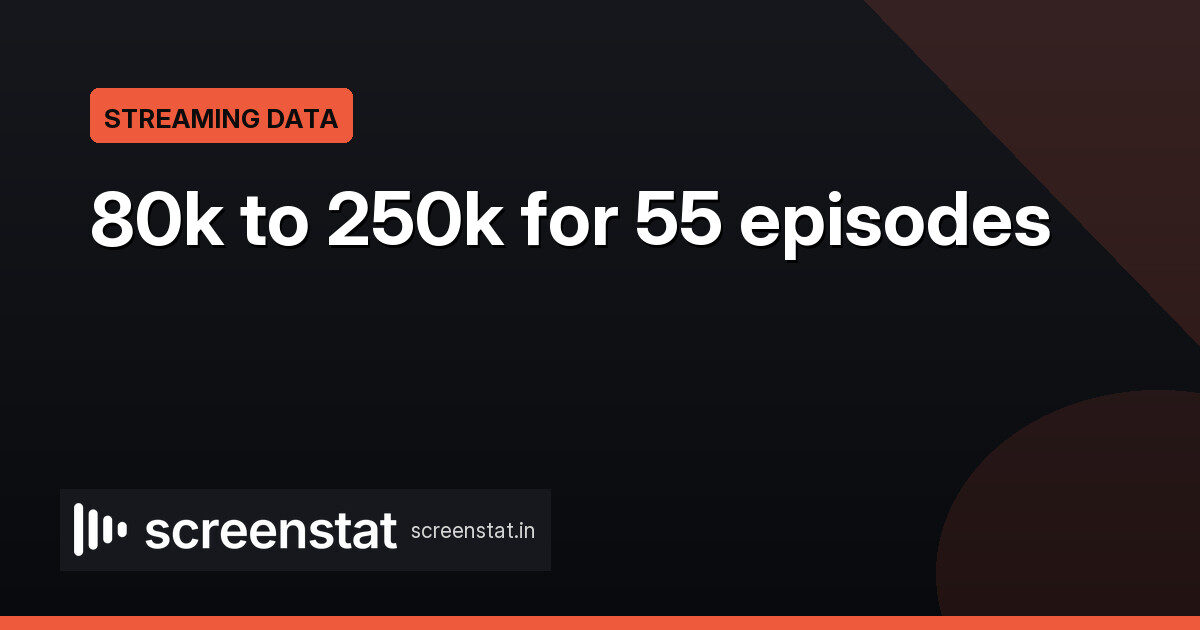
Sasha Tkachenko, head of studio at My Drama by Holywater Tech, put a range on production: Eastern Europe can deliver a microdrama for 80,000 to 120,000, while U.S. productions usually land between 120,000 and 250,000, with Los Angeles at the top. Each title runs 55 episodes minimum, with total running time around 60 minutes.
Viewer data from SPi in Portugal tempers the opportunity: Pedro Lopes said most people watch the first five episodes and then move to another show. That makes microdrama a volume business, not a long-session format.
Where co-production data points
GECA analysts presented data covering 2023-2026: 323 international fiction co-productions involving 50 countries. The U.S. participated in 125, Germany in 85, the U.K. in 76, France in 69, Belgium in 65 and Spain in 38.
Spain’s role as a bridge between Europe and Latin America was framed as an upside, but the numbers show the gap. European co-productions made up 134 projects, or 41 percent of the total, while Europe-Latin America co-productions accounted for only 18 projects, or 6 percent. Spanish-Mexican and Spanish-Argentinian projects led that smaller pool, and Spain-Portugal was called a fertile area.
- Microdrama budgets: 80,000-120,000 in Eastern Europe; 120,000-250,000 in the U.S.
- Viewer retention: Most watch the first five episodes, then move to another title.
- South Korea demand: Up 243% for Spanish- and Portuguese-language series from 2024 to 2026, per Parrot Analytics.
- Co-productions: The U.S. led with 125 of 323 international fiction projects; Spain had 38.
AI and consolidation: fewer, bigger pipes
At the AI in Action panel, Erik Barmack, CEO of Wild Sheep Content, called AI “much more disruptive” than cable, but said the early fear of unlimited AI slop was wrong because generation was too expensive and audiences too small. He argued the value of film and television will increasingly be filtered through big tech platforms such as Instagram and YouTube.
My Drama’s Tkachenko predicted a mix of AI and human-led content, perhaps “50:50 or 60:40,” with audiences eventually wanting real faces. SPi’s Lopes said AI is an easy way to build catalog, but real actors and stars will still be needed.
The consolidation theme was immediate: Paramount’s acquisition of Warner Bros. Discovery received a judge’s final green light, with the merger expected to close next week. Mediawan global content officer Elisabeth d’Arvieu said that as big clients grow bigger, producers need stronger scale and distribution.
There was also a marketing lesson in JustWatch Media’s presentation: demography does not predict viewing. King Charles III and Ozzy Osbourne share a demo profile—born in 1948, married twice, living in a castle—but wildly different media tastes. Planners still need behavioral and intent signals.
For buyers and sellers, Iberseries 2026 made the next moves concrete: microdrama has a budget benchmark, Spain has co-production headroom, and distribution leverage is consolidating around platforms and scaled producers.
Source: The Hollywood Reporter