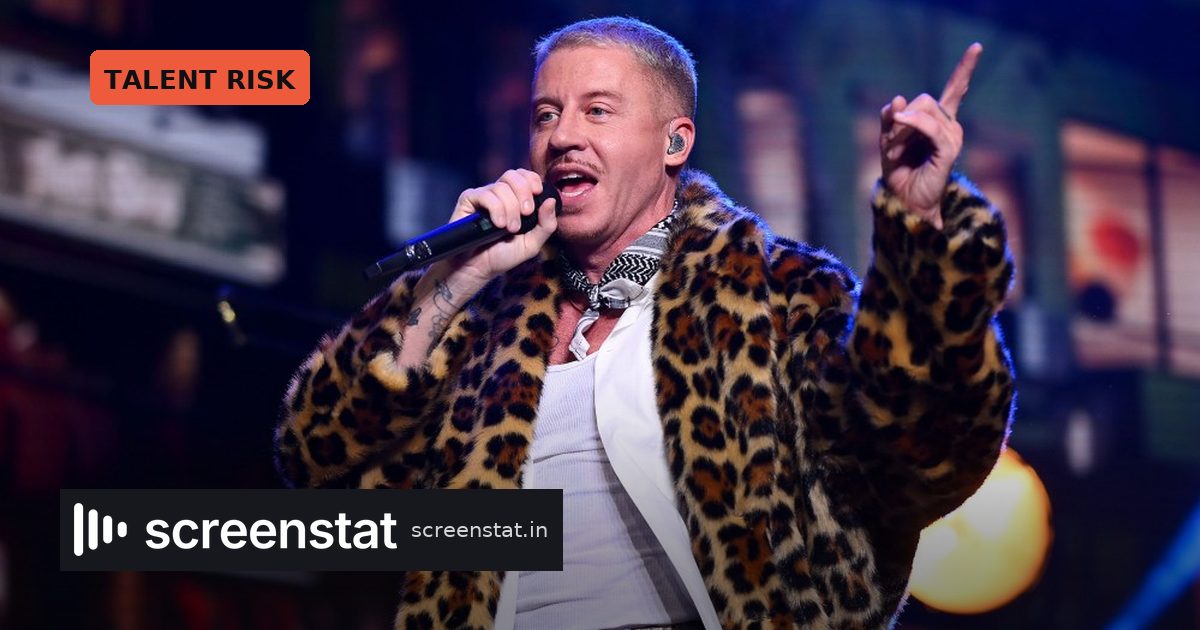
A single sentence from an opening act is now a live-entertainment risk event. Macklemore used his set opening for Ed Sheeran at MetLife Stadium in New Jersey on Friday night to say he had not forgotten people in Gaza and the West Bank, telling the crowd that every human being deserves the same freedom. Within a day, the Israeli American Council had circulated a petition calling for the four-time Grammy winner to be removed from the remainder of Sheeran’s Loop tour.
Macklemore responded the following night. Addressing what he called his Jewish brothers and sisters, he said criticism of Israel, of apartheid and of genocide is not criticism of them, and described his message as one of peace and dignity for all people, according to remarks reported by Newsweek and relayed by Variety. He extended the list to Lebanon, Cuba, Congo and Sudan, and to people in the United States living in fear of immigration enforcement, adding that none of us will be free until we are all free.
Why a support slot became a stakeholder fight
The petition’s argument is not about whether the rapper is entitled to his views. It frames the issue as venue-appropriateness: a stadium concert, the organisers argue, is not a protest, and the question is where the line sits when an opening act uses a global stage for a political message.
That framing matters commercially because a stadium tour is not one business. It is a stack of separate contracts sitting on top of each other, each with its own risk tolerance:
- The headliner, whose brand absorbs everything said from the stage regardless of who says it.
- Promoters and venues, which carry security, insurance and local-authority exposure.
- Sponsors and category partners, the fastest to move and the least willing to explain themselves.
- Streaming and broadcast partners, if any part of the run is captured for a film, special or live simulcast.
- The support act, who typically has the least contractual leverage and the most artistic latitude in practice.
When a support act triggers a boycott campaign, the pressure lands on the headliner’s name, not the opener’s. That asymmetry is exactly why petitions target tour billing rather than the artist directly.
What entertainment marketers should take from this
For anyone buying against live music inventory, sponsoring tours, or licensing concert content for streaming, the practical lesson is that support-act risk is under-modelled. Most brand safety work in live entertainment focuses on the headline name. The exposure here came from the slot before the headliner walked on.
Three things worth checking before the next cycle of tour deals:
- Contractual clarity on stage content. Not censorship clauses, which rarely survive contact with artists, but agreed escalation paths and who speaks publicly first.
- Sponsor notification windows. The gap between an on-stage moment and a partner learning about it from social media is where relationships break.
- Downstream rights. If a tour is being filmed for a streaming special, decide in advance how contested moments are handled in the edit, and who signs off.
The pattern to watch
Petitions of this kind are a signal, not a verdict. They generate coverage quickly and rarely change tour routing on their own. The number that actually matters is whether ticket sales, sponsor renewals or any associated content deal move in the following weeks. That is the only reliable read on whether a political flashpoint has commercial consequences or simply a news cycle.
For now, the story sits where most of these do: high visibility, contested framing, and an unresolved question about how much latitude a global concert platform extends to whoever is holding the microphone. Nobody involved has said the tour lineup is changing. Watch the sponsors, not the headlines.
Source: Variety