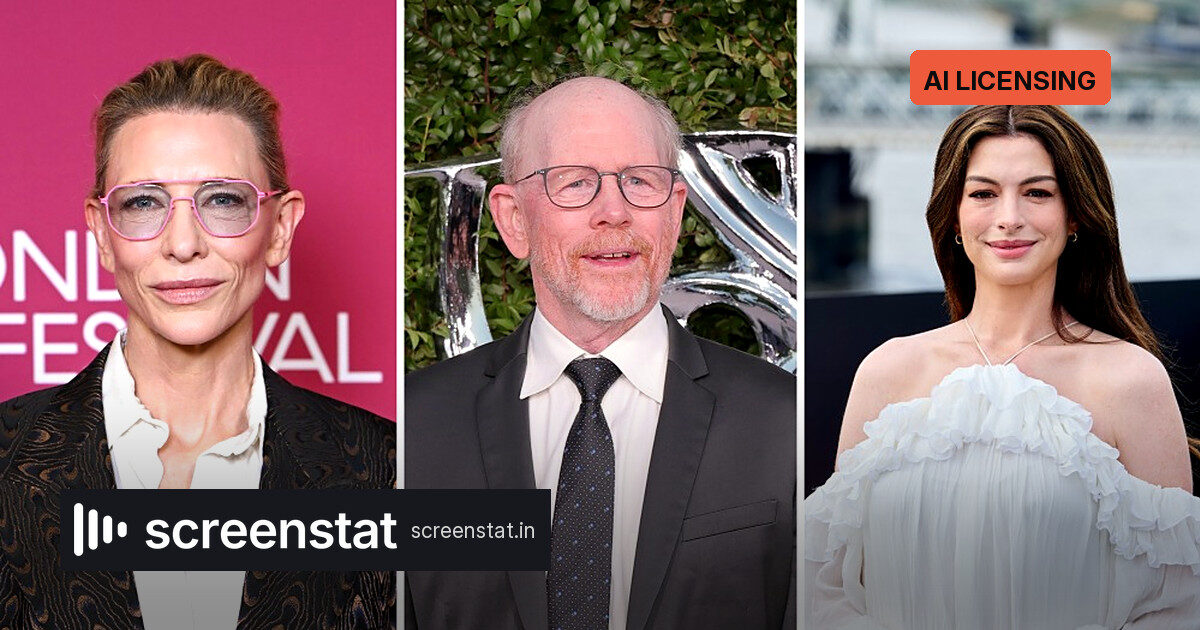
Late Friday, a coalition led by Cate Blanchett’s Human Consent Foundation filed a 31-page amicus brief in The New York Times’ copyright suit against OpenAI and Microsoft. The argument is not whether AI can train on creative work. It is that the creative industry already has the machinery to license that work at scale.
The counter to “fair use”
The brief directly contests the practical defence OpenAI and Microsoft have used. It says the tech companies have called licensing “cost-prohibitive” and claimed there is no settled way to value training data. The coalition responds that existing rights-clearance workflows can already handle dispersed works at scale and cost-effectively.
HCF co-founder and CEO Nikki Hexum said the filing was meant to show how the creative industry actually works. “We are not starting from scratch,” Hexum said. “There is already a functioning market and infrastructure for licensing creative work.” The group’s position: as the AI data-licensing market grows, creators should have a meaningful choice, including the choice not to participate.
Who signed on
The brief was joined by CAA, the Music Artists Coalition, the National Association of Voice Actors, Writer, Inc. and the Creative Coalition on AI. An appendix carried support from Anne Hathaway, Emma Thompson, Dan Levy, Ron Howard, Madonna, Olivia Wilde and a wider list including Julia Roberts, Robert De Niro, Scarlett Johansson and Rian Johnson.
Blanchett put the principle in plain terms. “If someone wants to use my face, my voice or my image, they ask me first,” she said in the brief. “Consent isn’t a barrier to creativity, it is the foundation of it.”
The consent layer
The Human Consent Foundation began as RSL Media in May, and launched a registry in June where individuals log the permissions they give AI models for their likenesses. Steven Soderbergh is also a backer. That positions the filing as both legal argument and market infrastructure: a rights registry can operate before courts decide what AI companies must clear.
What it means for the screen business
OpenAI pointed Variety to a Friday blog post highlighting other briefs that back its “fair use” interpretation, including groups aligned with the US government. Microsoft did not respond to a request for comment. The filing came a day after SAG-AFTRA, the Writers Guild of America and the American Federation of Musicians filed their own brief, arguing that a broad fair-use win would make union-negotiated terms moot.
The stakes for media professionals are commercial, not just legal:
- For studios and rights holders, AI training data becomes a licensable revenue line if fair use is contained.
- For talent and representatives, consent registries may become the practical control layer for voice and likeness.
- For streaming and platform teams, AI-generated creative may need the same clearance discipline as any other asset.
For media planners and platform teams, this legal debate is not a distant tech story; it will shape the cost and clearance path of AI-assisted creative work. The Times filed suit in December 2023 and moved for summary judgment last month. A ruling on fair use will effectively set the default price of creative training data: negotiated market rates or zero.
Source: Variety