
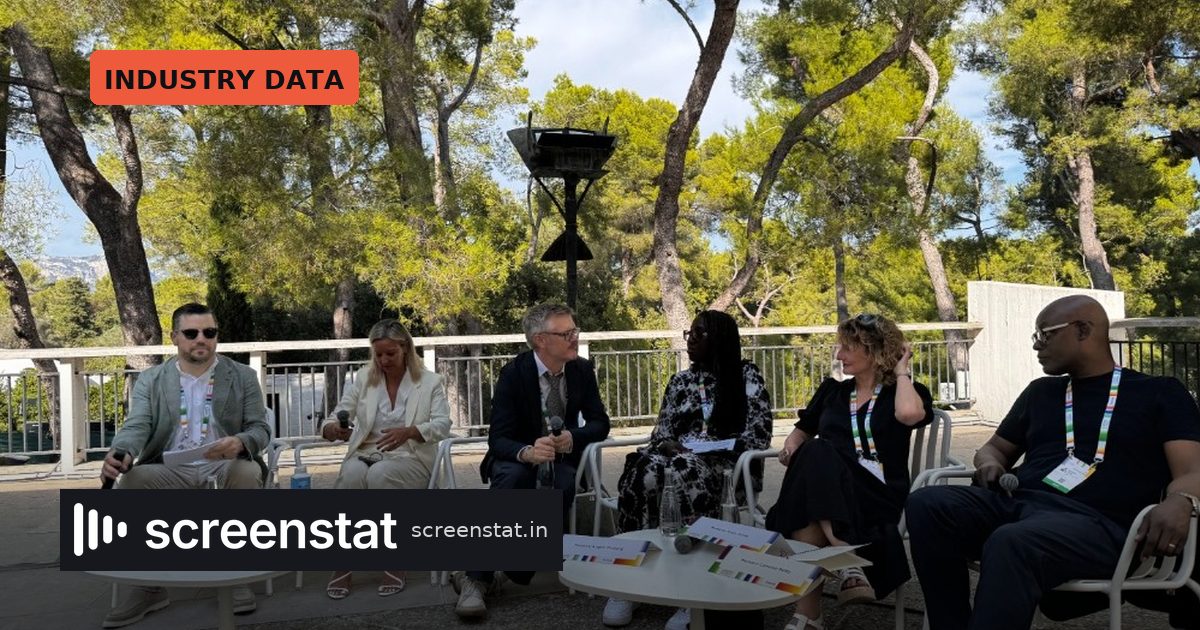
Here is the number that framed an entire panel at the Lumière Summit on Monday: women held 17% of key behind-camera roles when the Celluloid Ceiling study started counting in 1998. Last year the figure was 23%. That is six percentage points of movement across 27 years – roughly a fifth of a point a year.
The session, titled “Safer Sets, Different Stories: Why Gender Balance Matters,” brought together executives from StudioCanal, Canal+, the BFI, the Berlinale and the Toronto International Film Festival. Their shared argument was blunt: the industry is not just failing a moral test, it is leaving commercial and creative value on the table.
The leak happens after film school
Anna Marsh, chief executive of Studiocanal and deputy chief executive of Canal+, laid out the funnel. Women make up 50% of film school graduates. By the third feature, only one in six directors is a woman. And when women do direct, their budgets average 44% of what male directors get.
That is the part media and finance professionals should sit with. This is not a pipeline supply problem at entry; it is an attrition and capital-allocation problem at the point where careers compound. Marsh’s framing – that the industry should treat this as “investing in its own future” rather than a concession – is essentially a portfolio argument.
Canal+ has put money against it, extending its development budget by €1 million over three years earmarked for projects from female writers and directors. A feature on silent-cinema pioneer Alice Guy, to be directed by Anne Le Ny, is in development.
Where curation data moved fastest
The sharpest gains cited on the panel came from places that started publishing their own numbers.
- Berlinale competition: 0% women directors in 2005, 15% in 2015, 40% in 2025, per festival director Tricia Tuttle.
- TIFF: 35% of the 2026 selection directed by women, up from 25% a decade ago, said chief executive Cameron Bailey; the programming team itself has sat near 50% women for over ten years.
- Sight and Sound’s Greatest Films poll: three of the top 100 directed by women in 2012, rising to 11 in 2022, with two each from Agnès Varda and Chantal Akerman – the example BFI director general Ben Roberts used to argue the inequality is a loss of quality, not just fairness.
Tuttle’s point about transparency is the operative one for anyone who runs a slate or a commissioning budget: publishing the split changes the behaviour of the person making the pick. She also noted that data consistently shows films made with greater gender balance perform better commercially.
The regulatory lever nobody can ignore
France is the case study to watch. The CNC has required gender-based violence training for all cast, crew and technicians on French productions since 2021. From 2027, funding moves to a bonus-penalty model: productions with fewer than 40% women in the crew are penalised, those at or above the threshold get a bonus.
That converts a reporting exercise into a line item. For co-producers and streamers with European exposure, it means diversity data starts affecting the cost of capital on a title. Roberts made the connected point that work and employment cross borders, and urged international co-production partners to align on shared minimum standards – pointing to the BFI’s Inclusion Standards and the new Creative Industries Independent Standards Authority.
Training beats tokenism
Senegalese filmmaker Angèle Diabang described the Mousso Institute, which she founded in 2022 to train women as cinematographers, sound engineers, lighting technicians and editors, free of charge, in cohorts of six. She deliberately based it in Casamance rather than Dakar to decentralise access. Two cohorts so far: 12 women trained. “Competence is a form of emancipation,” she said, adding she does not want women hired to tick a box.
What to take away
Three things travel from Lyon to any market, India included: measure and publish the split at every decision gate, attach money to the target rather than to the pledge, and fix budget parity, not just headcount. Headcount without budget parity produces 23% of roles and 44% of the money.
Source: Variety