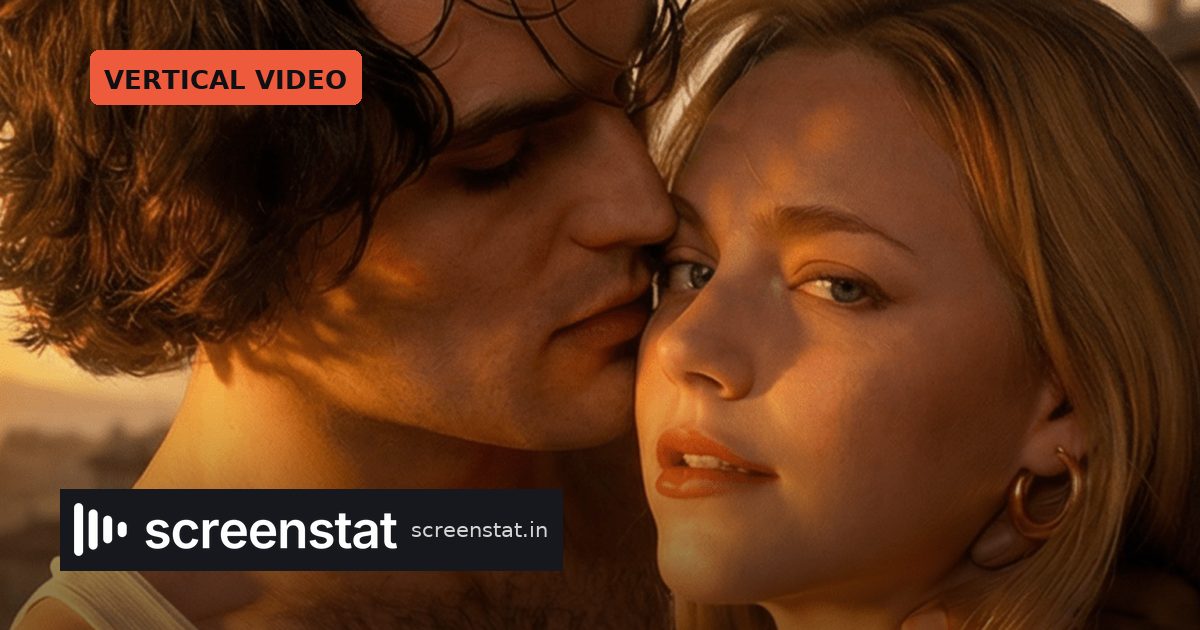
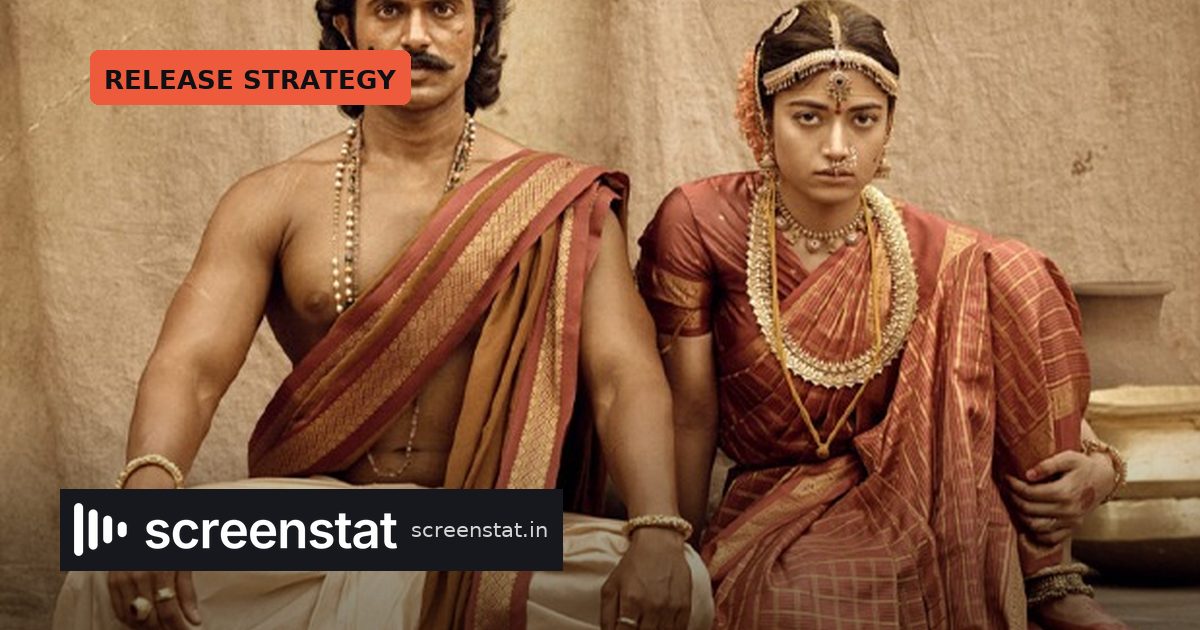
Mythri Movie Makers has locked the next beat in the campaign for Ranabaali: the teaser arrives on September 9, roughly five weeks before the film’s worldwide theatrical release on October 16, 2026, timed to Dussehra.
Directed by Rahul Sankrityan, the film pairs Vijay Deverakonda and Rashmika Mandanna again, this time in a period setting. Music is by Ajay-Atul.
What the announcement actually tells us
The pre-teaser video leans hard on positioning rather than plot. The on-screen lines – “A buried history,” “A rebellious chieftain,” “A brutal face-off,” “1876-1878,” “From the folklore of India” – fix the film in a specific historical window and frame it as a resistance story drawn from an under-documented chapter of India’s freedom struggle. The makers’ post described it as “the legend of the cursed land” rising.
For anyone tracking Telugu tentpole marketing, that framing is the story. A star pairing alone sells a romance or an action vehicle. A period-resistance drama needs the audience to buy the world before it buys the cast, which is why the campaign has been drip-feeding character posters, songs and glimpses since announcement rather than going straight to a trailer.
Why the September 9 date matters
Five weeks between teaser and release is a deliberate window, not an accident. It gives the campaign room to run a standard three-stage escalation without burning heat too early:
- Teaser (T-5 weeks): establishes tone, scale and period. Drives the first big spike in YouTube views and social conversation.
- Music and trailer (T-2 to T-3 weeks): Ajay-Atul’s score becomes the mass-reach asset, particularly for audiences outside the Telugu core.
- Booking window (T-1 week): advance sales open, and the teaser-to-trailer view curve becomes the best available proxy for opening-day demand.
Media planners buying around this title should treat September 9 as the moment inventory pricing on entertainment-adjacent digital placements starts to move for the October festive block.
The Dussehra calculation
Dussehra is one of the two reliably high-yield theatrical windows in the South Indian calendar, alongside Sankranti. Holiday footfall lifts occupancy across all four to five days of a release, and family audiences show up in numbers that a non-festival Friday cannot deliver.
The thematic fit is doing double duty here. A story built on righteousness against tyranny maps directly onto the festival’s own good-versus-evil symbolism, which is a marketing gift – the campaign gets to borrow the cultural mood rather than fight it. Films that align theme with festival have historically converted better on day one, because the release feels like part of the occasion rather than a competitor to it.
What to watch
Three numbers will tell you how this is tracking:
- Teaser velocity in the first 24 hours. For a Telugu tentpole, the opening-day view count and like ratio are the earliest read on whether the period setting is landing with the star’s core audience.
- Non-Telugu language traction. Hindi and Tamil dubbed asset performance will indicate whether this stays a regional play or scales pan-India, which changes the box office ceiling materially.
- Competitive clustering around October 16. Dussehra windows attract multiple releases. How much of the festive weekend Ranabaali holds to itself will shape screen counts more than any marketing spend.
The teaser on September 9 is the first hard data point in that sequence. Everything before it has been anticipation. From here, the numbers start talking.
Source: bollywoodHungama.com