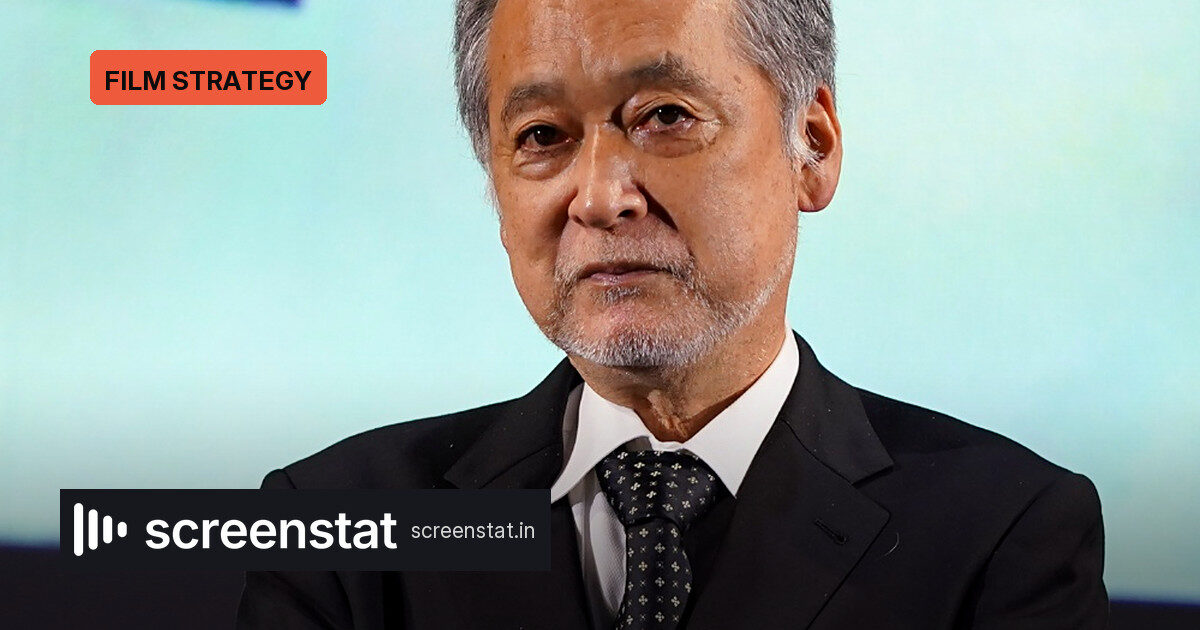
At a packed Tokyo International Film Festival masterclass, director Zeze Takahisa made a business case that many film marketers will find uncomfortable: the industry is over-indexed on adaptations, and original stories still have a unique pull.
Zeze, whose “Sukiyaki” opened this year’s festival, traced the argument through his own career. He joined a pink-film production house in 1986 and debuted as a director in 1989 with “Extracurricular Activity: Rape,” which won the Pink Grand Prix Award for Best New Director. Pink films ran in specialised theatres and required a bed scene roughly every ten minutes. Zeze and three peers branded themselves the “Four Heavenly Kings of Pink,” a label that first gained traction overseas before being re-imported to Japan.
Originals versus the source-material reflex
Zeze did not reject IP outright. His 2016 two-part mystery “64” was based on a bestselling novel. But he drew a line at the industry’s default setting.
“The industry is too focused on the ‘source material market.’ They think that if the source material is selling well, they should adapt it.”
His counter-evidence is his 278-minute revenge drama “Heaven’s Story,” which screened in Berlin’s Forum section and won the FIPRESCI Prize in 2010. Zeze described the project as a response to a sense of crisis, not a safe commercial bet. “The movies we actually found interesting or the ones I personally found entertaining were all originals,” he said.
Why this matters for slate and campaign planning
For streaming and studio marketers, the math of adaptation is simple: a book or comic arrives with pre-awareness. That lowers discovery cost but raises comparison risk and limits brand distinctiveness. An original has no built-in base, so it needs sharper positioning, but it can create a franchise instead of borrowing one.
- Originals require stronger awareness-building but can build differentiated IP.
- Adaptations offer pre-sold audiences yet face higher fan-expectation pressure.
- Festival validation can be imported into domestic campaigns, as Zeze’s Berlin win shows.
The takeaway for buyers
Media planners evaluating a slate should not rank original films only on pre-awareness. Check the director’s track record, look for festival or critical validation, and consider group branding—the Four Heavenly Kings label shows how a cohort can create cachet. In an adaptation-heavy market, originals are not the absence of data; they are a data point about differentiation.
Source: Variety