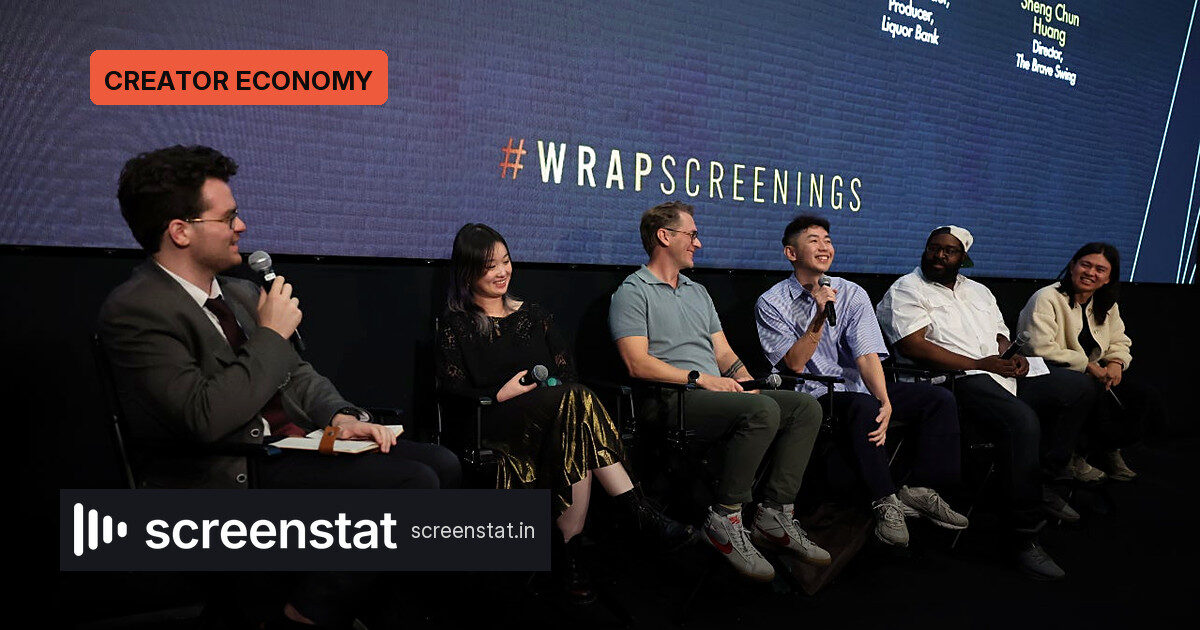
The 2026 Oscar-qualifying shorts conversation has a new centre of gravity: YouTube. At TheWrap’s Oscar-Qualifying Shorts Showcase, five directors described a moment when a filmmaker can build an audience, raise a profile and reach awards voters without waiting for a studio green light.
Own the domain, keep the control
Marcellus Cox, director of “Liquor Bank,” put the shift plainly. “You control your own domain,” he said. “You control the avenue at every point of your career.” His short follows two characters through the unglamorous truths of addiction and recovery, a subject he said he has seen up close among family members.
Cox’s argument framed YouTube not as a fallback but as a viable front door. TheWrap pointed to Curry Barker and Kane Parsons, two names in the 2026 shorts conversation who made microbudget work on YouTube before breaking through with “Obsession” and “Backrooms,” respectively.
One showcase, five different bets
The slate showed how wide the format has become:
- “Liquor Bank” — a drama about addiction and sobriety that avoids easy uplift.
- “Dear Upstairs Neighbors” — an AI-assisted animation built with engineers at Google.
- “Optimus Prime: Awakening” — a Transformers short attached to the 1986 film’s theatrical rerelease, and Peter Cullen’s final time voicing Optimus Prime.
- “Praying Mantis” — a hand-drawn horror animation about a half-woman, half-mantis mother, four years in the making.
- “The Brave Swing” — a personal drama about childhood sexual abuse and the silence around boys and men.
The business read
For studios, streamers and brands, the showcase is a signal about where talent is coming from. YouTube-native filmmakers arrive with an audience, a style and a production history—often before an agent or a development deal. That changes early-stage discovery for buyers and marketers.
Connie He, director of “Dear Upstairs Neighbors,” described using style transfer—an AI technique that merges her own animation and painting—with Google engineers to reboard the film’s third act. She was careful about the boundary. “We don’t want generated art,” He said. “We love our artists, and we want to honor the craft.” The point is less “AI made this” and more “AI let a small team finish an ambitious visual idea.”
Source: TheWrap