YouTube is packaging its next growth phase around artificial intelligence, aiming tools at both viewers who want sharper discovery and creators who want faster production.
At Made on YouTube in New York, CEO Neal Mohan framed the update as part of an aggressive cadence, saying the platform has launched “over 3,000 product updates and improvements” since the start of the year.
A more specific home feed
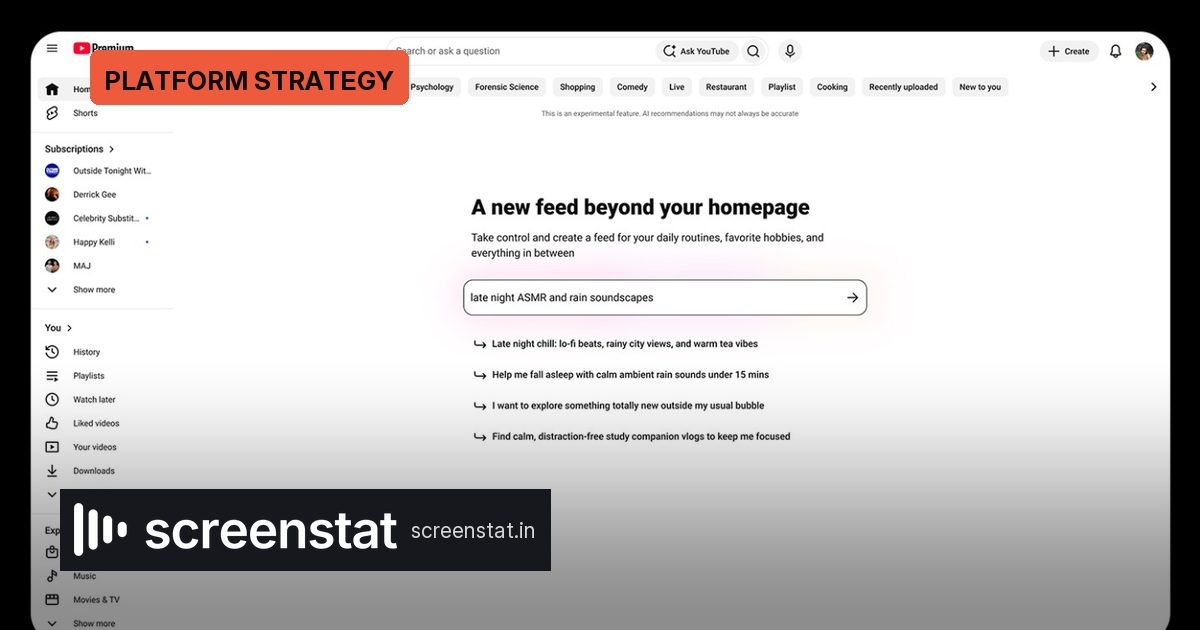
The main viewer-facing change is Custom Feeds. Users can type what they are looking for, such as new DIY creators or podcast ideas for a commute, and YouTube will build dedicated tabs that refresh with options in those areas. Ask YouTube is also adding follow-up questions and more specific search capabilities.
That matters because YouTube has largely relied on algorithmic recommendations to hold attention. Letting users describe intent makes the platform more search-like and could create a stronger signal for what they actually want next.
Creator tools become test beds
For creators, YouTube Studio can now suggest pacing and structure changes for videos and help automate thumbnail A/B testing. YouTube says A/B testing of videos is next, enabling different versions of content for different audiences.
The bundle also includes:
- A conversational editing assistant that accepts natural-language prompts.
- Opt-in AI-powered comment moderation.
- A voice detection tool joining the existing likeness detection program.
Mohan positioned the tools as support, not replacement, describing the approach as using “AI to empower human creativity, and to do it responsibly.”
Why the business should pay attention
For media planners and entertainment marketers, Custom Feeds is the item to watch. If viewers begin defining their own content tabs, discovery becomes more explicit and categories may produce clearer contextual signals for creator-led and brand campaigns. The risk is that brands will need to earn placement in a feed the user has deliberately shaped.
For creators and streaming professionals, A/B testing video variants is the most commercially interesting piece. It applies a direct-response discipline to entertainment: run a small experiment, read the data, then scale the winner. The caution is that AI pacing and editing suggestions can flatten style if used too literally.
The opt-in moderation and voice detection tools are also a signal about rights and safety. YouTube is building the technical foundation to manage synthetic voice and likeness misuse without forcing adoption all at once.
The strategic message is clear: YouTube wants AI to be a utility for its ecosystem, not a one-off feature. The platform gets more usage data, creators get faster workflows and viewers get feeds they explicitly define. The open question is whether Custom Feeds become a daily habit or another tab that gets ignored.
Source: The Hollywood Reporter