The pitch: if you take the audience, help pay for the content
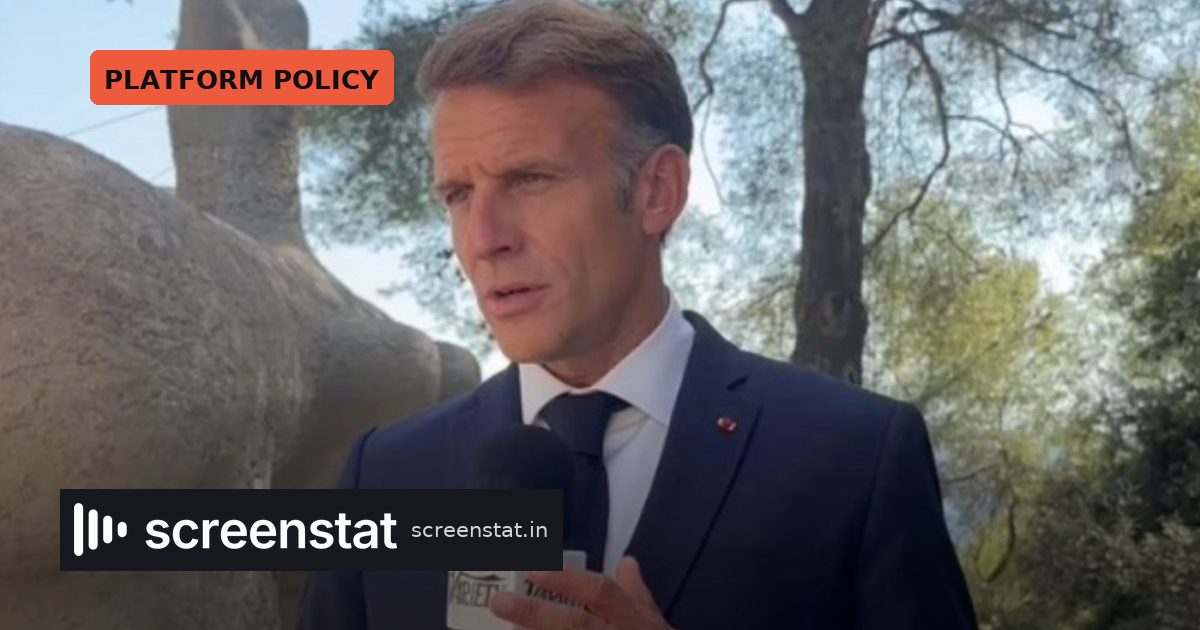
French President Emmanuel Macron used the Lumiere Summit in Saint-Paul-de-Vence — co-chaired with South Korean President Lee Jae Myung — to make a direct argument to YouTube: platforms that absorb national viewing time should also contribute to national production budgets.
Speaking to Variety at the Fondation Maeght, Macron described YouTube as “very efficient” and, in his words, the “default platform” in many countries, arguing that it pulls audiences away from services and broadcasters that invest heavily in original creation. He noted that YouTube is now ahead of Netflix in viewing terms in more than 20 international markets.
His proposed fix is regulatory symmetry. Netflix, Amazon and Disney already face local investment obligations in France and across the EU. Macron wants countries to “engage with them” multilaterally so YouTube is drawn into the same ecosystem, financing local content while offering more protection for authors’ rights.
Why this matters beyond France
France is the template exporter of media regulation. Its investment quotas, windowing rules and levy-funded film board have been copied, adapted and argued over from Brussels to Delhi. If a serious push begins to treat user-generated video platforms as regulated broadcasters-by-another-name, the debate will not stay in Europe.
For anyone planning media or building a content P&L, the structural point is simple: the money that funds professional local production is raised from the parts of the market that are regulated. As attention shifts to platforms that sit outside that perimeter, the funding base thins even while total viewing grows.
- Platform teams: expect compliance conversations that assume UGC platforms are part of the audiovisual economy, not adjacent to it.
- Producers and studios: any levy or investment obligation extended to a platform of YouTube’s scale would be one of the largest new content funding pools in a decade.
- Creators: obligations usually come with definitions — who counts as a local work, and who counts as an author, will decide who gets paid.
- Advertisers: regulation tends to raise platform costs, and platform costs eventually surface in CPMs and inventory rules.
AI: compete hard, label everything
Macron, who has backed French AI player Mistral and pushed the EU’s AI Act, said France intends to compete aggressively on compute, data centres and European models. But he paired that with a demand for transparency and IP protection.
“When you have content produced by AI, you just have to know it,” he said, adding that France wants such content flagged because “we think it’s fair.” Without labelling, he warned, AI could reshape the public’s relationship to truth, damaging trust in creative work, science and democracy alike.
Consolidation, tax credits and what survives 2027
On the Paramount–Warner Bros. deal cleared by EU regulators, Macron said he did not lobby for it and framed it as fundamentally a U.S. M&A story. His interest, he said, was in the commitments to invest more in Europe, produce more content and offer guarantees to theatres. Paramount Skydance chief David Ellison met him in Paris in January; at the summit lunch table sat Netflix’s Ted Sarandos, Disney’s Dana Walden, NBCUniversal’s Donna Langley, Sony’s Tom Rothman, Mediawan’s Pierre-Antoine Capton and Paramount Skydance’s Andy Gordon.
With his term ending in May and polls favouring parties hostile to the current cultural settlement, Macron flagged two things he wants preserved. First, the international tax credit, recently widened to cover above-the-line costs, which has drawn productions including the final season of “Emily in Paris” and season four of “The White Lotus.” Removing it, he said, would “just kill the industry.” Second, the CNC and the exception culturelle — the levy-on-admissions system that recycles box office money into local production.
His closing framing was geopolitical rather than cinematic: culture, he argued, is part of French soft power, and defending it requires deliberate state investment and multilateral effort.
Source: Variety