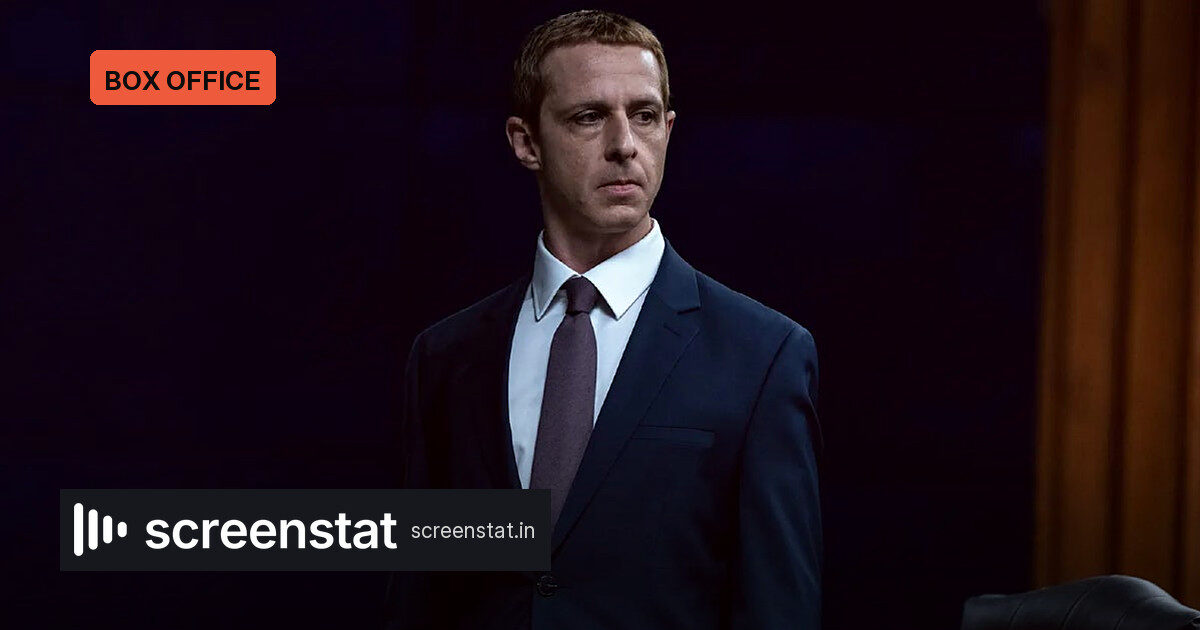
Aaron Sorkin’s The Social Reckoning opened to just $5.5 million domestically this weekend, one of the frame’s notable misfires and a reminder that name-brand creative talent no longer guarantees a theatrical audience.
The Sony/Alcon co-production scored 55% on Rotten Tomatoes and a B- CinemaScore. By contrast, the 2010 Sorkin-penned, David Fincher-directed The Social Network opened to $22 million, won three Oscars and became one of the defining films of the century.
Familiar names, different frame
Fincher did not return; he is tied up in a Netflix deal, though he reportedly read and praised the script. Sorkin has acknowledged he was his own second choice to direct. Jesse Eisenberg passed on returning as Mark Zuckerberg, and Jeremy Strong plays him instead. The film largely follows a Wall Street Journal reporter’s investigation into Meta’s algorithm.
The deeper issue is positioning. The Social Network was sold as a propulsive origin story about a group of students reshaping the internet. The Social Reckoning was sold more like a journalism thriller about the damage Facebook causes. One promised entertainment; the other promised a warning.
Why the economics still work
Sony kept the budget at $30 million, so the opening is a setback rather than a write-off. The film is the kind of title that may perform on PVOD and should get a viewership bump when it reaches Netflix. Sorkin’s directorial record has been mixed: Molly’s Game made $59 million worldwide, while The Trial of the Chicago 7 and Being the Ricardos went straight to streaming.
Here is the immediate slate of issue-driven titles to watch:
- Musk (Bleecker Street, this weekend): Alex Gibney’s four-hour Elon Musk documentary; few expect it to be a breakout.
- Artificial (Neon, December): Luca Guadagnino’s OpenAI story starring Andrew Garfield; festival reviews are strong, and it has drawn comparisons to The Social Network.
Where the market is
The weekend box office was otherwise soft. Universal/Blumhouse-Atomic Monster’s Other Mommy led with $27.5 million despite a D+ CinemaScore, and overall grosses slipped to an estimated $88-90 million, down from $100 million last weekend. That makes the issue-film test harder: audiences are already selective, and weak word-of-mouth can punish leggy runs.
For distributors, the next few weeks will show whether strong reviews and star power can overcome the current aversion to stories that hit too close to home.
Source: TheWrap