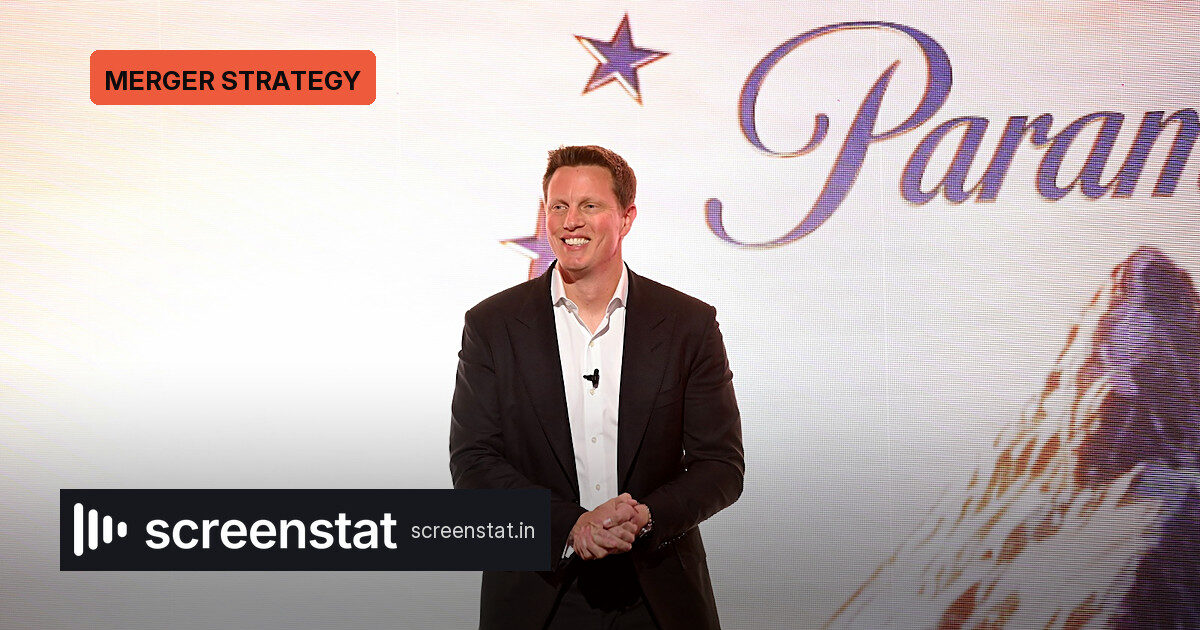
The combined Paramount and Warner Bros. will go to market under a name that is already familiar in Hollywood: Skydance. David Ellison announced the decision Friday, saying the new corporate parent should have its own identity while the two studio names stay in front of audiences.
The announcement matters beyond naming. It arrives as the industry watches how the merged group will handle theatrical volume, streaming strategy and advertiser relationships across two historically separate portfolios.
A parent brand, not a portmanteau
The decision avoids blended names such as WarnerMount or ParaBros that can signal a messy cultural merger. Instead, Ellison is leaning on the production company he built before the deal and positioning Skydance as a “creative-first home for bold, quality storytelling.”
He was explicit about the brand logic: Paramount and Warner Bros. keep their distinct identities, legacies and audience relationships; Skydance sits above them as the corporate engine. In brand-architecture terms, this is a house-of-brands move rather than a rebrand of the studios themselves.
Why that matters for advertisers and planners
For media planners, entertainment marketers and streaming buyers, the name should reduce short-term confusion. Paramount and Warner Bros. remain consumer-facing labels; Skydance becomes the parent that may show up in corporate, trade and investor contexts. The two studios’ content slate and franchise marketing do not have to be re-explained to audiences overnight.
In media mergers, the parent name rarely drives consumer choice; the studio labels do. Keeping Paramount and Warner Bros. as the outward brands means licensing, co-productions, franchise marketing and distribution relationships can continue under recognized names while the corporate structure changes above them. The test will be whether Skydance can preserve that clarity when ad sales, streaming bundles and content budgets are integrated.
The business commitments and costs
- Name: Skydance is the corporate parent; Paramount and Warner Bros. remain the consumer-facing studio brands.
- Output: More than 30 films annually for the first five years.
- People: Michael De Luca and Pam Abdy are out at Warner Bros. film; Cindy Holland is out at Paramount streaming.
- Risk: Thousands of job cuts expected during integration.
Ellison has agreed that the combined studios will release more than 30 films annually for the first five years, a significant increase in output. That is a volume pledge that will require a large, functioning content engine.
Integration costs are already visible
The merger of the two 100-plus-year-old studios is expected to lead to thousands of job cuts. Leadership turnover has already begun: Michael De Luca and Pam Abdy, who oversaw Warner Bros.’ film studio, exited Thursday, and Cindy Holland, who led Paramount’s streaming efforts, recently departed.
The announcement was accompanied by a trailer-style reel that draws on well-known titles from both libraries — including “Forrest Gump,” “The Dark Knight” and “Inception,” along with Taylor Sheridan shows and UFC — narrated by Michael B. Jordan. The emphasis is continuity and scale, even as the integration economics get more difficult.
Source: IndieWire