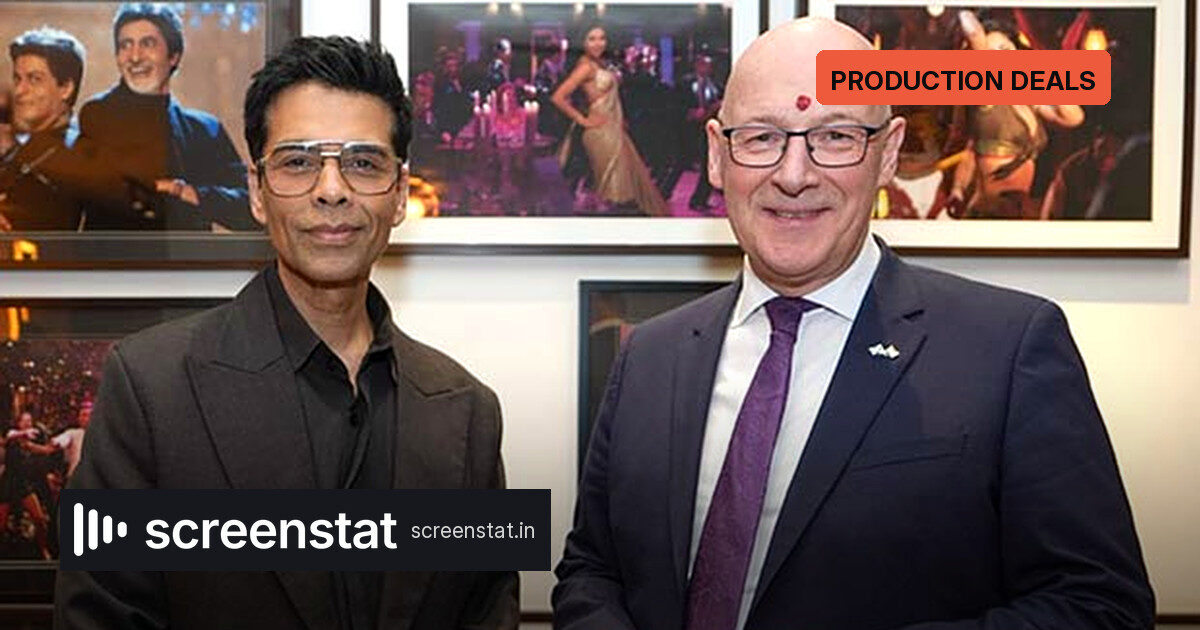
Scotland is making an early move for a larger slice of India’s expanding shoot and streaming pipeline. First Minister John Swinney visited Karan Johar’s Dharma Productions office in Mumbai, where he met Johar and CEO Apoorva Mehta to discuss long-term opportunities for Indian films to shoot in Scotland.
The visit was not a one-off office call. Delegates from Screen Scotland joined the conversation, pitching Scotland’s filming infrastructure, skilled technical crews and financial incentives designed to attract international productions. The pitch also covered the country’s potential as a location for upcoming Indian theatrical films and streaming projects.
A 1998 film still does the soft sell
Johar has a ready-made connection. His directorial debut, Kuch Kuch Hota Hai (1998), shot its title track against Scottish backdrops including Eilean Donan Castle, Blackrock Cottage and Tantallon Castle. In a social media post after the meeting, Johar said the visit took him back to that shoot and that the conversation turned to how the two countries could “deepen the friendship between the two countries in the cinematic field.”
That nostalgia is useful. Scotland gets an emotional hook, and Dharma gets a story to tell if it ever returns with a production.
Beyond the Dharma office
The wider diplomatic stop included an industry roundtable organised with the Producers Guild of India. Senior Indian film producers, studio representatives and members of Scotland’s screen sector discussed co-production opportunities, creative exchange programmes and logistical support for Indian productions filming overseas.
For screen-business readers, the key items on the table are:
- Filming infrastructure and local crew access in Scotland.
- Financial incentives for international productions.
- Co-production discussions and creative exchange programmes.
- Logistical support for Indian productions shooting abroad.
What it means for planners and marketers
No deal was announced, so this should be read as a pipeline conversation rather than a signed production commitment. But it matters because Indian producers are already evaluating overseas locations more seriously for theatrical and streaming slates. A formal co-production arrangement, or even a steady stream of Indian shoots, could create new supply routes, budget benchmarks and destination-marketing hooks around future titles.
The next signals to watch are whether any Indian studio announces a Scotland schedule, whether Screen Scotland unveils an India-specific incentive, and whether Johar moves a project there. For media planners, a Scotland-shot title would carry clear visual assets for travel, tourism and brand tie-ins well before release.
Source: bollywoodHungama.com