Resident Evil has moved from catalog asset to must-track franchise in one weekend.
Zach Cregger’s reimagining collected $108.3 million worldwide in its opening frame, according to IndieWire. The split: $60 million domestic and $48.3 million international.
The comparison that matters
By contrast, the 2002 original ended its entire theatrical run at just under $103 million worldwide. In nominal terms, Cregger’s debut already exceeds that lifetime total.
The inflation asterisk is real: adjusted for ticket-price growth, the 2002 gross would be worth more today, so this is a measure of velocity, not adjusted value. But for distributors, opening-weekend cash is the strongest demand signal in the theatrical window.
- Worldwide opening: $108.3M
- Domestic: $60M
- International: $48.3M
- Production budget: $75M
- Previous benchmark: first film ended at just under $103M worldwide
At a rough 50 percent theatrical split, that opening translates to roughly $54 million in distributor rentals—about 72 percent of the production budget recovered before ancillary windows. That is a fast start even before premium VOD, home entertainment and licensing revenue enter the picture.
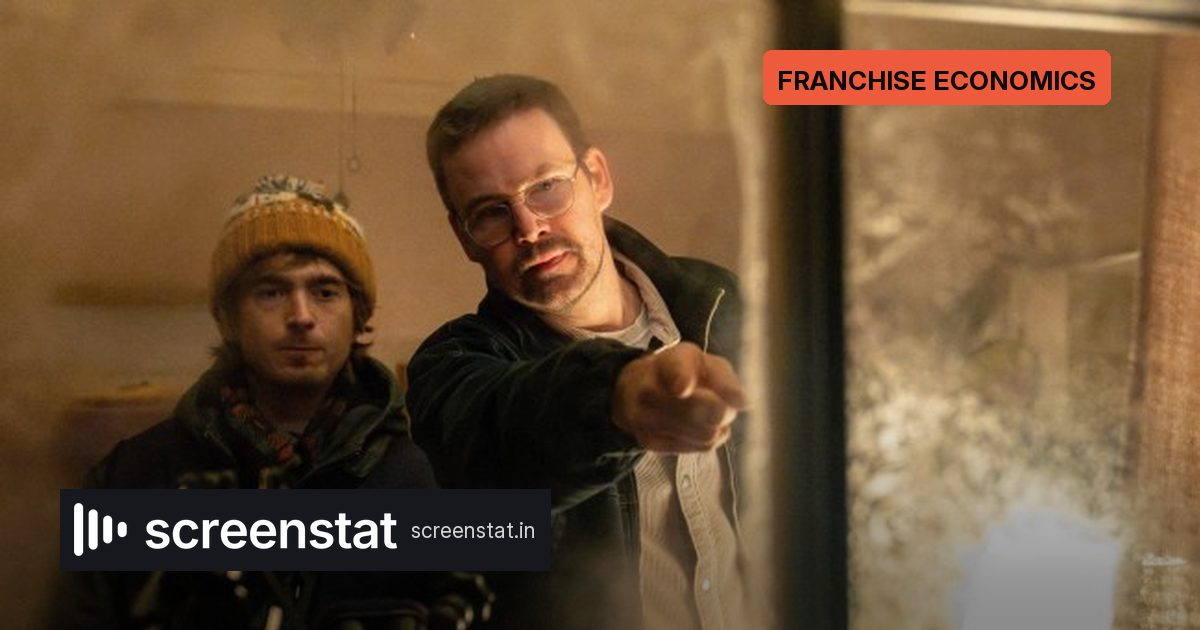
Why Cregger is the story inside the story
The director’s commercial arc explains why this matters to the wider film business. Barbarian earned $46.2M against a $4.5M budget. Weapons grossed $270M against $38M and won an Oscar for Amy Madigan’s performance as Aunt Gladys, with a prequel already in development. Vulture recently ranked Cregger as the 17th most powerful director in Hollywood.
The deal timing is also notable: Sony’s TriStar Pictures, Constantin Film and Davis Film hired Cregger after Barbarian opened but before Weapons released. That pre-breakout window likely kept his fee materially lower than today’s market rate—a case study in how a director’s quote moves after one breakout hit.
The franchise reset
The revival follows a rough stretch. Resident Evil: Welcome to Raccoon City grossed $42M against a $25M budget, and Netflix canceled a Resident Evil series in 2022. The IP looked exhausted. Cregger’s opening changes that narrative: a follow-up film now feels inevitable.
For media planners and entertainment marketers, the lesson is not simply that video-game IP works. It works when paired with a director who has demonstrated theatrical pull, when the budget stays disciplined, and when the talent deal is made before the next price increase. The $75 million spend gives this installment a much cleaner path to profitability than many post-pandemic genre reboots.
Source: IndieWire