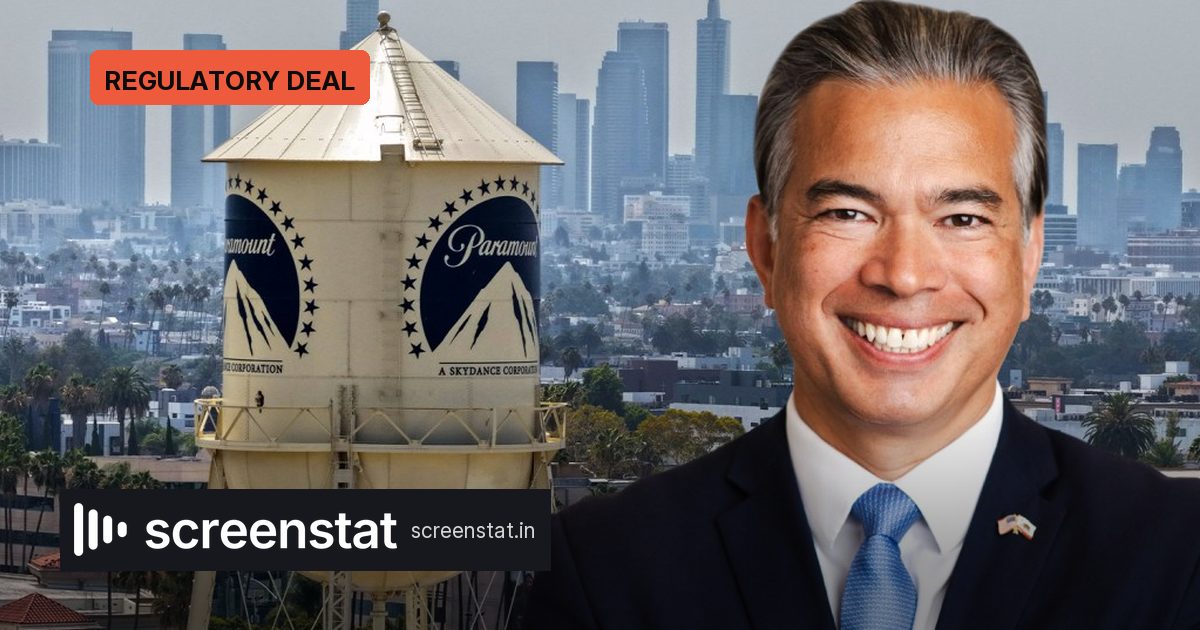
Paramount’s settlement with 12 Democratic state attorneys general — a dispute that also named Warner Bros. as a defendant — closed after sundown Sunday, California Attorney General Rob Bonta confirmed at a Monday press conference. The timeline matters as much as the outcome: the deal went from stalled to closed in roughly a week.
The last mile was the hard part
Bonta declined to give a formal hour-by-hour account, but he did not dispute the late Sunday close. He described the final stage in terms familiar to anyone who has watched a long media deal stall near the finish line.
“You get to a place in some of these negotiations where you get to 90% maybe 95%, maybe even 99%, and then the last part is often the hardest part.”
Progress accelerated in the last week, and talks carried through the weekend. One person with knowledge of the situation told Deadline the process got “unstuck.” Bonta said some components needed to be locked in until the very end.
Newsom, pressure and the political split
California Governor Gavin Newsom stayed close to the final stretch, though Bonta would not describe how involved the governor was. Newsom had not taken an official position until August, when he expressed concerns but ultimately pushed for a settlement outside court rather than a trial. Actor and merger critic Mark Ruffalo blamed Newsom for handing what he called a win to Trump and billionaire allies.
Bonta framed the settlement as a win, but conceded that state leaders still believe the underlying merger should not happen. That split is important: California is settling the suit without endorsing the transaction.
What this means for media and streaming teams
For ScreenStat readers, the story is not just political. A settlement removes a legal overhang that can delay partnership decisions, ad commitments and content-slate planning. Ellison indicated the deal will likely be finalized in the next two weeks, creating a near-term checkpoint for commercial teams.
- Final paperwork window: The two-week estimate points to closure around early October.
- Litigation risk: A signed deal takes the case off the Supreme Court track and lowers headline risk.
- Political positioning: California leaders can claim accountability while still publicly opposing the merger.
- Operational signal: Watch for final language on enforcement terms, releases and timing rather than just the announcement.
Regulatory settlements often follow an S-curve: long public stalemate, sudden progress, then a slow final clean-up. Paramount’s weekend close fits that pattern. For streaming platforms and content buyers, the key discipline is to separate the political headline from the operational deadline. California leaders opposing the merger while settling is a common pattern in multi-state regulatory actions; it preserves their policy position while clearing the litigation calendar.
In practice, settlements like this do not change the underlying merger math overnight. They do, however, convert a binary court risk into a known negotiation outcome, which is what commercial teams are usually pricing. The next material date is the final document, not the press conference.
Source: Deadline