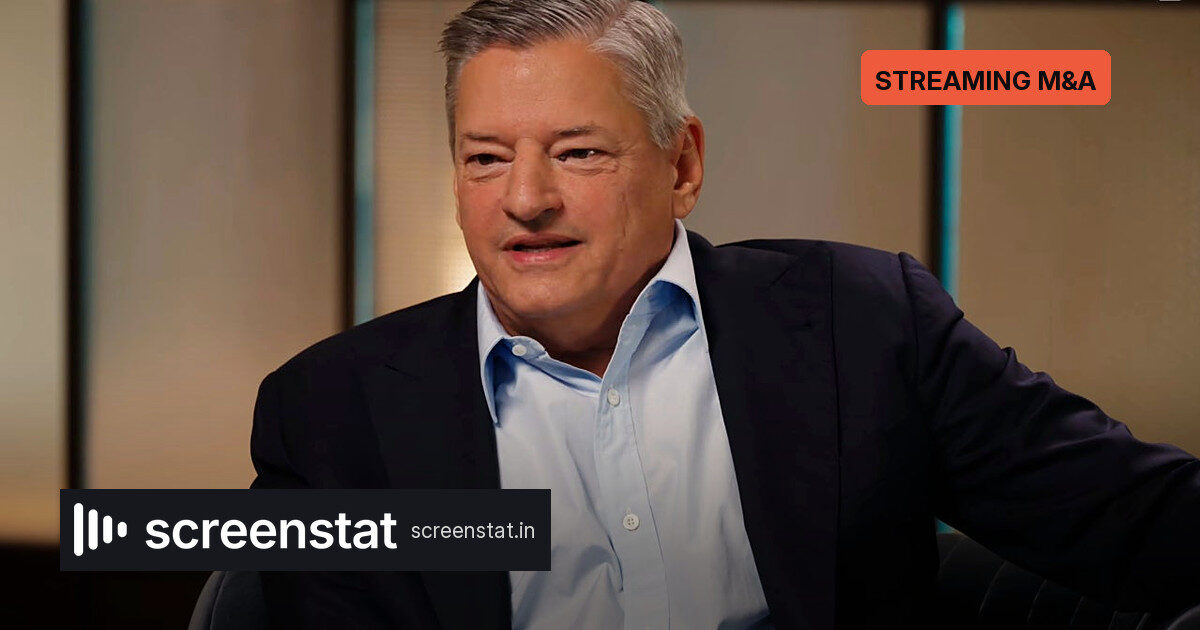
Netflix’s failed run at Warner Bros. Discovery was never a must-win, according to co-CEO Ted Sarandos. In a Bloomberg interview this week, he described the $82.7 billion pursuit as a luxury, not a fight to the finish.
The bid that slipped away
In December 2025, Netflix offered $82.7 billion for the Warner Bros. Discovery studio and streaming businesses, and WBD initially accepted. The deal later came apart. Warner Bros. Discovery shareholders ended up accepting a revised Paramount offer that covered the Netflix breakup fee, and Paramount’s acquisition of the studio closed in early October.
“We would’ve liked to have had the Warner Bros. studio. Obviously, we bid for it,” Sarandos said. He added that the deal sat in the “Nice to Have” category rather than “We’ll Take It at Any Price and Fight to the Finish.”
Organic growth, not another mega-deal
Asked whether Netflix needs another large acquisition to regain the growth trajectory he wants, Sarandos answered simply: “No.” He pointed out that major acquisitions were not how Netflix reached its current position.
“The next growth is what we continue to be — pretty organic,” he said.
That is a clear strategic signal. Netflix may still scout assets, but it is not positioning itself as a desperate buyer, even after watching Warner Bros. land with Paramount.
- Netflix’s leadership viewed the WBD bid as optional, not existential.
- The company is not planning to fix growth through another studio acquisition.
- Warner Bros. Discovery is now part of Paramount after a rival offer.
- Sarandos sees the next entertainment wave tied to AI and audience interactivity.
What Sarandos is watching next
Sarandos also described two forces reshaping entertainment. The first is AI and its impact on production and storytelling. The second is audience agency: viewers increasingly expect to participate, not just watch.
He tied the surge in professional sports TV ratings to interactivity—online betting and prediction markets give viewers more engagement. “I think the next wave of entertainment technology should be able to address both of those things,” Sarandos said.
For media planners and streaming buyers, the practical read is straightforward. Netflix’s near-term story is not built on swallowing a rival library. It is built on its own slate, its content pipeline, and technologies that make viewing more interactive. If Sarandos is right, the next battleground is participation—not just acquisition scale.