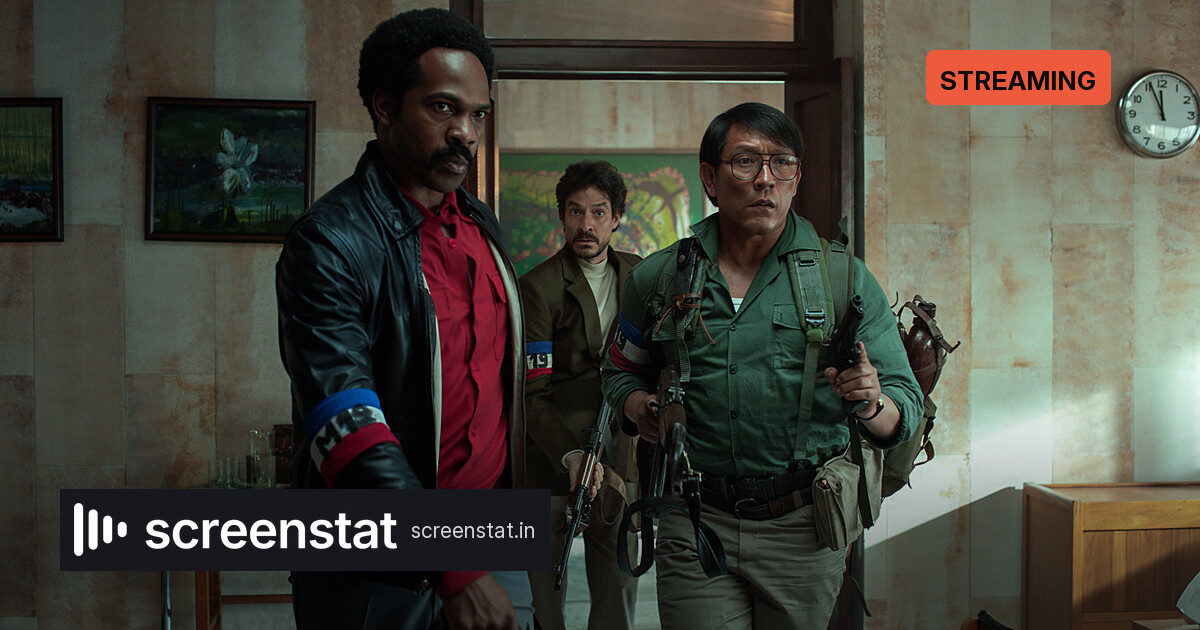
Netflix has dated Under Siege for Nov. 6, placing another large-scale historical bet in Colombia. The eight-part series revisits the 1985 storming of Bogotá’s Palace of Justice by an M-19 guerrilla commando and the Colombian Army’s operation to retake the building a day later.
This is not a light period piece. At least 94 people were killed or disappeared, including justices, guerrillas, civilians and military personnel. The series also follows families who spent more than two decades pursuing accountability.
The scale behind the screen
Veteran Colombian producer Dynamo, now marking its 20th year, backed the project. Netflix’s production notes emphasise research and physical build before plot.
- Eight episodes, directed by Edgar Nito, Samir Oliveros and Jayro Bustamante.
- More than seven years of research drawn from archives, testimonies and interviews.
- A Bogotá set spanning more than 4,000 square metres, built over three months.
- A 30-metre recreation of the Palace of Justice facade.
The cast includes Natalia Reyes, Carlos Manuel Vesga, Robinson Díaz, Luna Baxter and Mariana Gómez, among others. Showrunner Natalia Santa was also part of One Hundred Years of Solitude.
Netflix’s VP of Latin American Content, Francisco Ramos, called the series “a huge undertaking, even by our own standards,” with authenticity positioned as the key promise.
Why this matters for streaming planners
Netflix frames Under Siege as likely its second-most ambitious Colombian project after its adaptation of Gabriel García Márquez’s One Hundred Years of Solitude. That matters because it signals continuity. Rather than letting Colombia cool after the García Márquez adaptation concluded in August, Netflix is keeping a prestige local-language pipeline visible.
Colombia’s rising output is not accidental. Netflix has been expanding in the country, drawn by production incentives and a growing talent pool, and this series is the latest beneficiary. For programming executives, the playbook is familiar: use a major literary adaptation to establish market credibility, then follow with an original that can carry the next slate.
For media buyers and entertainment marketers, the title functions as a retention vehicle for Latin American audiences and a test case for how Colombian historical drama travels globally. The first-week demand figure will be read less as a review and more as a forward indicator: if this travels, the business case for further high-cost local-language originals strengthens.
Expect the conversation to focus on demand outside Colombia and the Spanish-speaking diaspora, not just domestic numbers.
Source: Variety