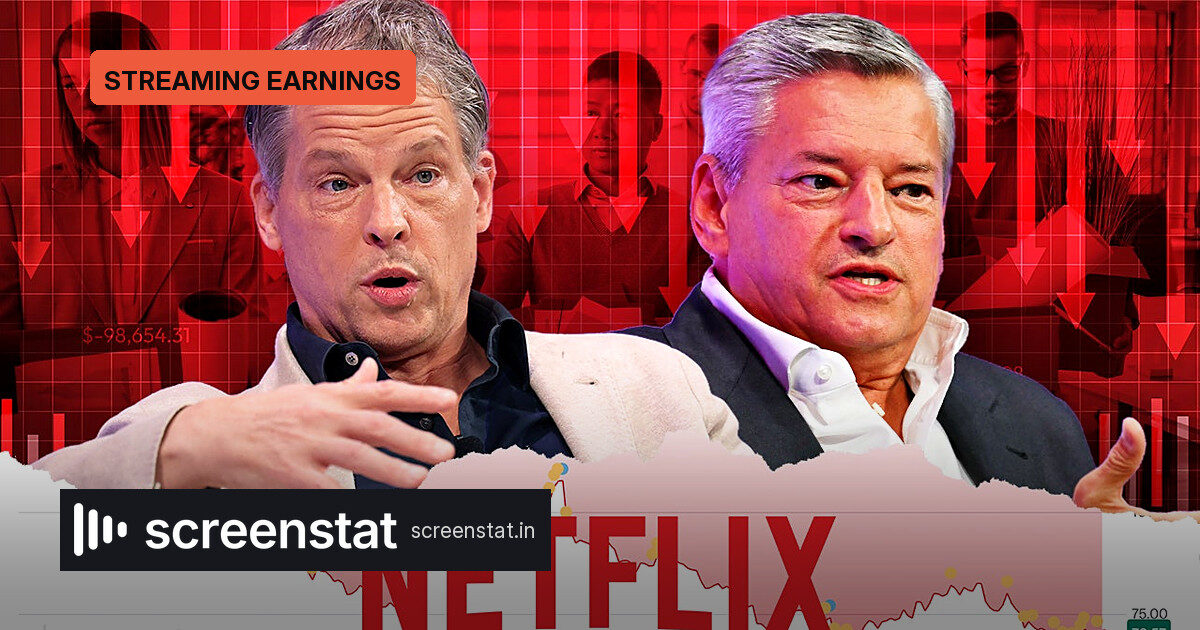
Netflix’s third-quarter numbers looked fine on the surface, but the forward view is what unsettled investors. Revenue reached $12.87 billion, up 11.8% year over year, the slowest pace since Q3 2023, when the password-sharing crackdown was still working through the system. Management then guided for even slower growth in the fourth quarter. Shares fell nearly 6% in late trading after Tuesday’s call, adding to a 45% slide over the past 12 months.
Co-CEO Ted Sarandos told analysts the business flywheel is intact: “There is no need for a fundamental shift in the strategy.” He conceded one area: “We do need better execution in the U.S.” That content-quality job now falls to incoming Chief Content Officer Peter Rice, brought in after Netflix cut 6% of its workforce and removed its previous content and film leadership.
Why the market pushed back
The quarter itself beat some thresholds. Earnings per share came in at 87 cents, a nickel ahead of estimates. Churn beat Netflix’s own forecast and remains among the best in streaming despite price increases. But investors trade on the next quarter, and the fourth-quarter guide, plus a lowered ad revenue target, set the tone.
Netflix reduced its 2026 ad revenue expectation to $2.7 billion from $3 billion. Citi analyst Jason Bazinet said the Q4 outlook and the lowered ad guidance warranted “modest pressure on shares.” The reaction shows the bar has changed: Netflix is no longer graded only on subscriber additions, but on whether it can re-accelerate revenue and engagement before price increases hit their ceiling.
The growth plan, lever by lever
Netflix’s answer is acceleration, not reinvention. The levers executives laid out:
- Content spend: $20 billion in 2026, with originals remaining the anchor and 30 films getting theatrical releases.
- Licensing and add-ons: More deals like Disney’s Ice Age catalogue, which put all five films in the Top 10, and add-on subscriptions “where it makes sense.”
- Ads: Expanding the ad tier to 15 new countries in 2027, starting in March, and narrowing the revenue-per-member gap with the standard tier.
- Live and sports: NFL games, the Fury vs. Joshua fight and the 2027 Women’s World Cup as retention tools.
Sarandos framed the Disney licensing arrangement as good for all sides, noting it primes audiences for February’s theatrical Ice Age: The Boiling Point. “Netflix just plugged a Disney movie on our earnings call. You’re welcome, Josh,” he added.
What buyers should watch
For media planners, the March start of the ad-tier expansion is the near-term signal. More inventory does not automatically mean cheaper reach: connected TV advertising firm Keynes CEO Dan Larkman noted that Netflix’s audience is also available on free ad-supported TV “often at a very different price.” Marketers should treat Netflix as a premium, context-rich buy rather than an unduplicated reach substitute for FAST and AVOD.
Longtime analyst Dan Rayburn was less alarmed. “Nothing here to me is shocking. Netflix really knows its business,” he said, pointing to the company’s high conversion of revenue into operating profit and a healthy balance sheet. The longer-term question is whether licensing and an ad-tier build can restore the growth rate Wall Street expects, or whether the flywheel is simply maturing.
Source: TheWrap