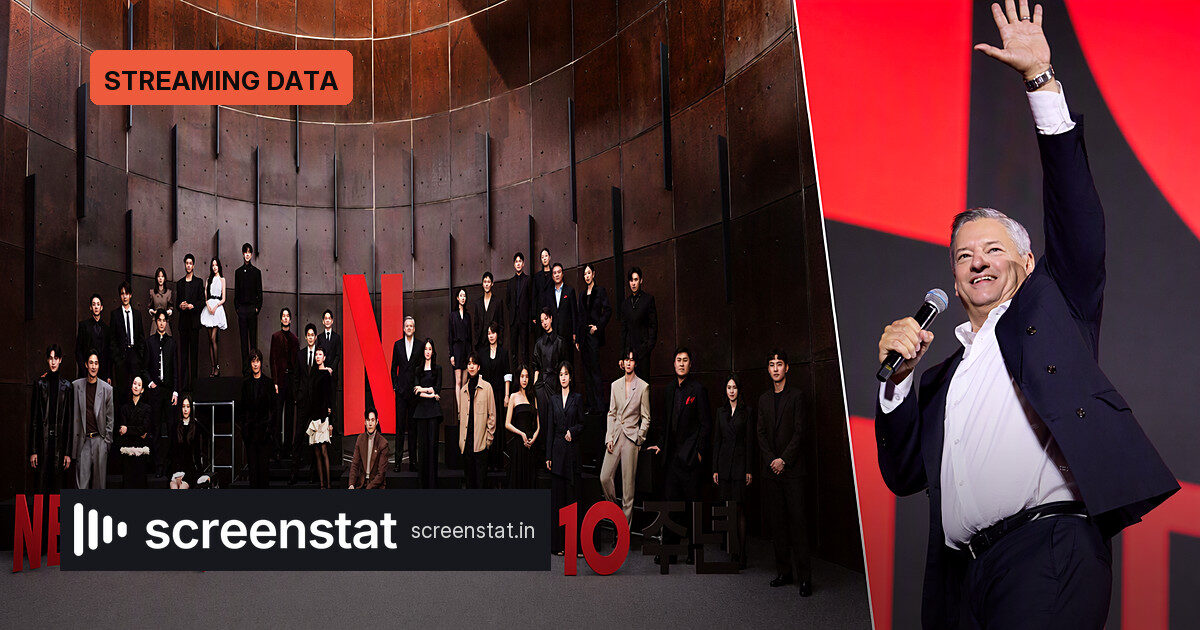
Netflix co-CEO Ted Sarandos took the stage in Seoul this weekend to mark the streamer’s tenth anniversary in Korea with a fan festival and a run of numbers that make one thing clear: Korean programming is no longer a regional bet. It is the platform’s global content spine.
Ten years later, the centre has moved
Netflix launched in Korea on January 6, 2016. A decade on, Korean content is the most-watched non-English language content on the app, and more than 80% of subscribers watch it, according to figures shared at the Korea Fan Festival at Sangnam Oil Tank Culture Park, which ran October 24 and 25.
“Ten years ago, we dreamed big, but none of us could have imagined that Korean stories would move hearts around the world,” Sarandos said.
What the data says
Netflix said more than 200 Korean titles had reached its Global Top 10 chart in the past five years. Squid Game Season 1 stayed there the longest: 32 consecutive weeks. Teach You a Lesson is the tenth most-watched non-English title in Netflix history, and all three seasons of Squid Game sit inside the top ten.
- Over 80 Korean production companies have worked with the streamer.
- Filming has taken place across more than 100 towns and cities.
- A third of Korean originals are led by first-time writers or directors.
Why it matters now
The anniversary lands while Netflix faces pressure at home: its shares have fallen sharply through 2026 despite decent third-quarter results, and Wall Street remains spooked by layoffs. Netflix has pushed back by pointing to international momentum—titles such as Plastic Beauty, The Secret Woman and The Perfect Lie are tracking to become its most-watched ever in Japan, Denmark and the Netherlands respectively.
For media planners and streaming executives, the Korea data changes the planning frame. Korean titles are not a niche slate to test after a global hit; they are a primary audience driver with broad reach. The first-time creator stat also suggests a playbook: new voices, local specificity, and platform scale can outperform established formulas.
The takeaway
The Korean playbook gives Netflix a second engine. The challenge is not whether Korean stories work—the 80% watch rate and Global Top 10 volume answer that—but how much more capacity the company can build before competitors copy the model.
Source: Deadline