Hollywood dealmakers are starting to shop in a different aisle. With the pool of large media targets running thin, bankers and investors are turning their attention to creators, individual IP and small entertainment companies that can be scaled.
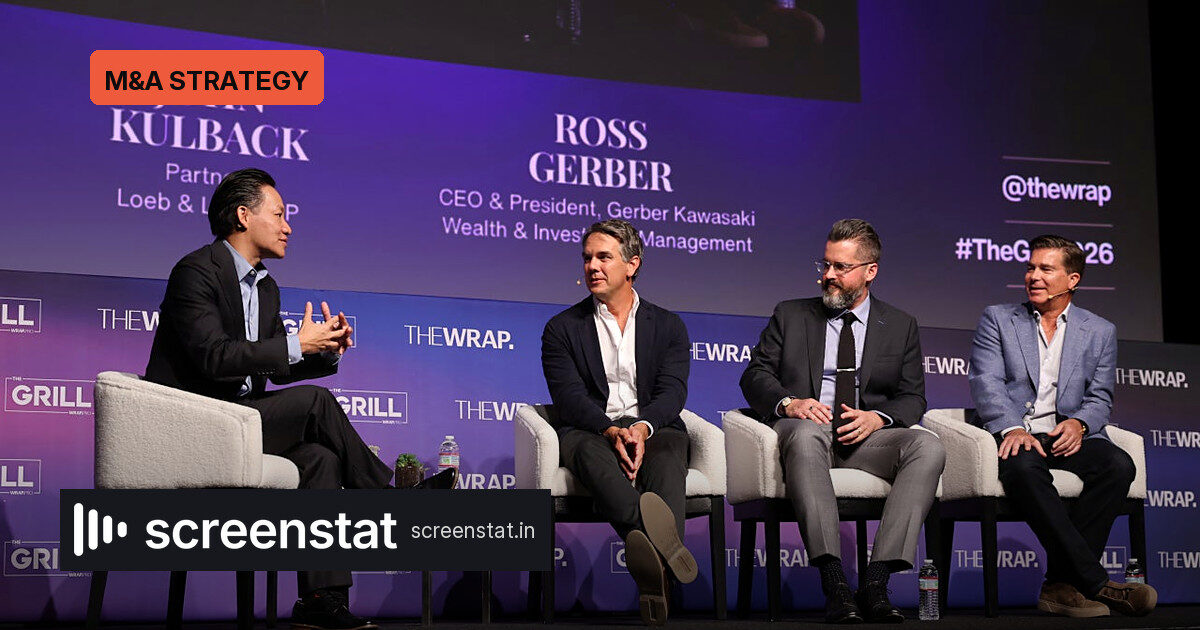
At TheWrap’s TheGrill conference on Wednesday, Raine partner Erik Hodge said the opportunity is in “the migration of traditional talent, traditional content, onto YouTube.”
Fewer mega-deals, more IP bets
Panelists said the wave of mega-mergers that reshaped media is likely to slow. They pointed to combinations such as Paramount’s $110 billion acquisition of Warner Bros. Discovery and Fox’s $22 billion purchase of Roku as the kind of scale transactions that will become less common.
That does not mean a dealmaking slowdown. Instead, capital may move toward smaller, IP-driven assets.
“For us, it’s always about IP,” Hodge said. “It’s always trying to figure out what the entry point is to own IP, and that’s changed a lot.”
Hodge cited Raine’s investment in Moonbug Entertainment, the digital-first children’s company behind Cocomelon and Blippi. Moonbug bought individual pieces of children’s IP, expanded them into consumer products, licensing and streaming, and was later sold to Candle Media.
A creator roll-up is forming
YouTube has lowered the distribution barrier that once forced talent to sign with a studio or network. Hodge pointed to Raine’s investment in Uncensored, the network behind Piers Morgan Uncensored, as an example of an established host building a digital-first business that can still be licensed to traditional TV.
Younger creator businesses are also reaching the point where outside capital and operating help become necessary.
- Brand deals mature into real companies: creators need commercial executives, consumer products and live events expertise.
- Audience is ahead of infrastructure: many creators have large reach but have not built full business operations.
- Gaming adds another lane: franchises such as Take-Two Interactive’s titles are moving across games, film and television.
Gerber Kawasaki CEO Ross Gerber described that gap as an opening. “There are many creators that have huge engagement that still have not even built out real businesses,” he said. That, he argued, could lead to “acquiring pieces of creator businesses and putting that together into a more cohesive company.”
What it means for the screen business
For media planners and entertainment marketers, the shift changes where inventory, IP and audiences originate. Creator-led businesses may become more structured partners, with licensing, consumer products and traditional distribution built on top of digital reach.
The AI layer is also blurring the line between technology IP and content IP, raising questions about copyright, likeness rights and guild rules. Loeb & Loeb partner John Kulback, who represented Google DeepMind in its research partnership and investment in A24, said emerging AI tools for creators will make those rights questions harder to ignore.
The panelists also argued that not every deal has to be about cost cuts. Hodge pointed to Mediawan’s acquisition of Peter Chernin’s North Road Company as a deal about access and scale for creators, not just eliminating overlap.
Source: TheWrap