
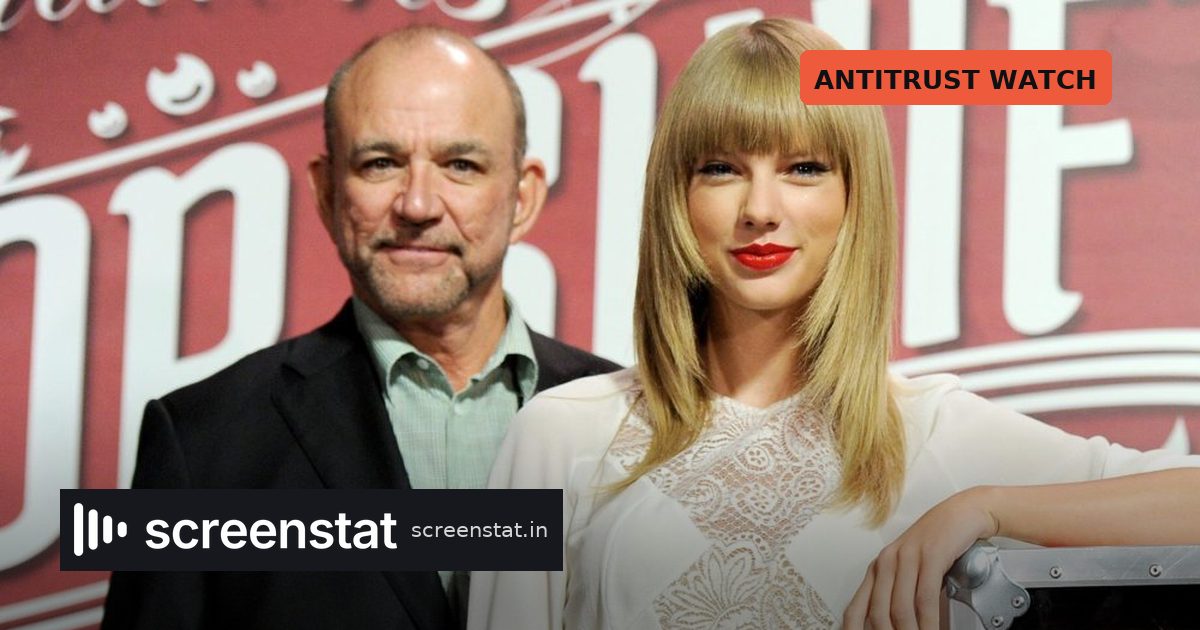
The man behind the Eras Tour says he is not safe either
Louis Messina promoted Taylor Swift’s Eras Tour and every one of her previous global runs. His client list also includes Kenny Chesney, George Strait, Ed Sheeran, Eric Church, Zac Brown Band, Blake Shelton and Phoebe Bridgers. On paper, that is about as much leverage as an independent promoter can accumulate.
It is not enough. In a letter to the federal judge weighing the proposed antitrust consent decree involving Live Nation and Ticketmaster, the Messina Touring Group CEO urged the court to reject the settlement, writing that if the industry is not fixed, he could go out of business “just like other independent promoters who have fallen victim to Live Nation,” as reported by Variety.
Messina framed the jury verdict in the case as progress and the consent decree as regression — a deal that, in his telling, does not repair the market and could leave it worse off.
The amphitheatre chokepoint
The specific complaint is about venues, not ticket prices. Messina said his long-running arrangement to route tours through Live Nation-owned amphitheatres ended in 2024, after which the company stopped returning his calls. Communication only resumed in 2026, after the consent decree was submitted.
The consequences he lists are concrete:
- Old Dominion had to route around Live Nation amphitheatres, and the tour underperformed as a result.
- The Lumineers were allowed into the amphitheatres — on the condition that Messina was not involved.
- Shawn Mendes’ agent had to negotiate directly with Live Nation.
- Mumford & Sons, a prospective client, used Live Nation as promoter because that was the route into the venues.
- Parker McCollum’s team opened their conversation with him by asking about amphitheatre access.
His summary: if Live Nation blocks artists from using him for amphitheatre shows, he cannot compete, and cannot help developing acts build a base.
The economics argument media buyers should note
Messina’s sharpest point is structural. He argues Live Nation does not make its money promoting tours; it makes it on ticketing fees and sponsorships — close to a billion dollars a year from ticketing fees, while the touring business often makes little or nothing. That, he says, lets the company offer artist guarantees no rival can match, and absorb losing tours because the fee income covers it.
Anyone who works in screen and streaming will recognise the shape of that argument. It is the same vertical-integration question that runs through platform businesses everywhere: when one company owns both the distribution pipe and the marketplace that monetises it, the pipe can be used as leverage. Access becomes conditional on using the owner’s services. Independents are not outbid so much as routed around.
The lesson travels. Whenever a single player controls the shelf — cinema screens, an ad-tech stack, a home-page carousel, an amphitheatre circuit — the competitive question is not just pricing, it is who gets shelf space and on what terms.
Why the letter matters legally
Messina also said something more revealing than any of the case detail: most artists, agents and managers will not speak publicly because they could lose everything if Live Nation turns against them. He says it already has, and aligns himself with rival AEG, alleging discrimination over that association.
The case has cut both ways in 2026. The proposed federal consent decree would keep the company intact rather than break it up, but several participating states declined to sign on, and a jury found Live Nation liable on some of the original antitrust claims. A judge now decides whether a settlement that leaves the structure untouched is enough.
Live Nation did not immediately respond to Variety’s request for comment on the letter.
Source: Variety