
A 20% federal credit is on the table
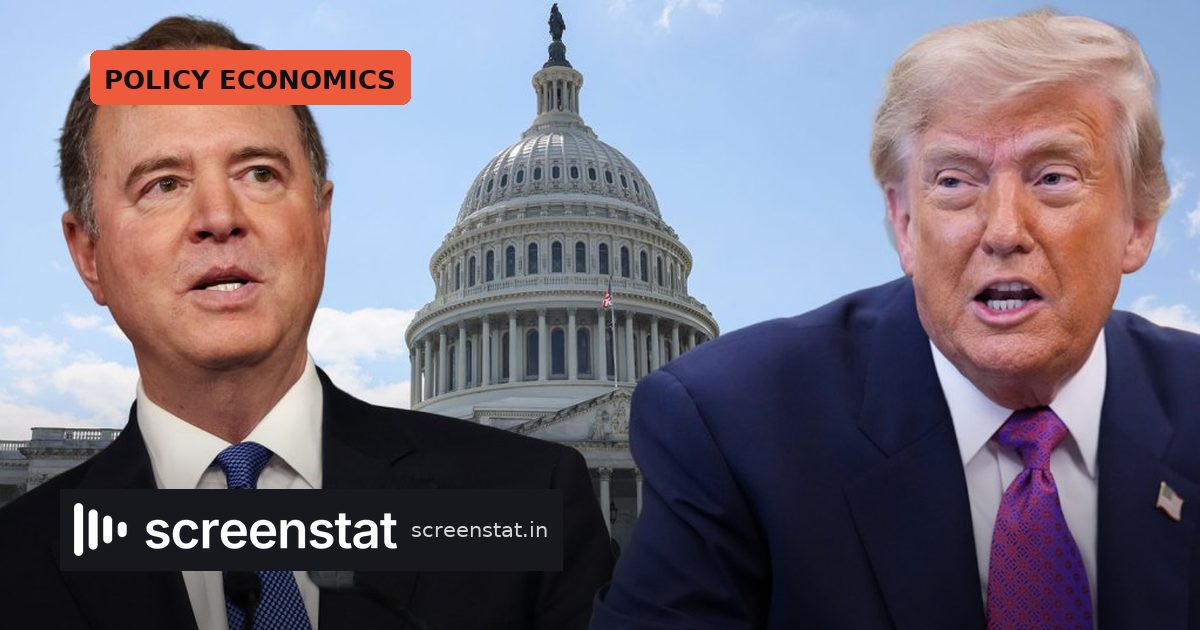
The long-discussed idea of a United States federal film and television tax incentive has moved from talking point to draft text. According to Deadline, a spokesperson for California Senator Adam Schiff said bill language now exists and that Senate, House and Trump administration figures are working to finalise it, with negotiations still live.
The working number on the proposal — branded the Motion Picture, Television, and Entertainment Revitalization Act — is a 20% tax credit, per Deadline’s sources. That base rate could climb by a further 5% to 10% where a production shoots in rural areas, or where spend on the same project is distributed across several states.
That second condition is the tell. This is not designed as a Los Angeles rescue package. It is being built so that lawmakers from states with almost no production history can point to something for their districts.
Who is pushing it
Deadline reports that Democrats Linda Sanchez, a Ways and Means member, and Laura Friedman, the former Rysher Entertainment executive who succeeded Schiff in Burbank, are leading the House effort. Republicans Nathaniel Moran of Texas and Brian Jack of Georgia are also involved, though how deeply is unclear.
Much of the structural thinking reportedly borrows from California’s programme, now running at $750 million a year, including a menu of redemption options that let studios and streamers claim credits over several years at different speeds. Governor Gavin Newsom has publicly pushed for a federal credit in the 20–25% band. Deadline also reports that some draft language echoes proposals Paramount CEO David Ellison raised in private meetings with members of Congress; Paramount did not respond to its request for comment.
The clause that matters most to streamers
Beyond headline rates, the provision worth watching is the pursuit of relocating productions. Per the report, series and films originally set up abroad — or projects already promised foreign incentives but not yet in production — would be actively courted to shoot in the US instead.
For international production hubs, that is the competitive threat. Global streamers allocate physical production the way manufacturers allocate factory capacity: to whichever jurisdiction lowers net cost per shooting day. A stackable 20–30% federal credit sitting on top of existing state programmes changes that maths, particularly against Georgia’s uncapped scheme, which Deadline notes has itself lost big-budget work to richer overseas offers.
Why passage is still the hard part
Draft text is not law. The calendar is the immediate obstacle:
- Both chambers of the Republican-controlled Congress are days away from shutting down for the midterms.
- Washington is expected to be effectively empty from October to the second week of November.
- Many Republicans are in Dallas this week for a midterms-focused gathering.
- The measure must go through the Joint Committee on Taxation, chaired by Senator Mike Crapo, which reviews credit initiatives above $2 million — a threshold this multi-billion-dollar plan clears easily.
The politics, at least, are unusually aligned. Trump has loudly backed the concept, championed by Jon Voight, which gives Republicans cover. As one Hollywood political operative told Deadline, Georgia is competitive in almost every election now and the industry reads locally as jobs, making the pitch “an easy sell.”
What to do with this now
For anyone modelling 2027 production budgets or content spend, treat the credit as a scenario rather than an assumption. Three practical moves:
Build two versions of your slate cost model — one with a stacked federal-plus-state credit, one without. The delta on a $100 million show is large enough to change greenlight decisions.
Watch the relocation language, not the rate. If it survives, projects currently parked in foreign incentive queues become the first movers.
Assume delay. With the electoral calendar and the Joint Committee review ahead, the realistic window opens after mid-November at the earliest.
The backdrop sharpens the stakes: strong summer box office alongside tens of thousands of jobs lost around Los Angeles, and further layoff risk hanging over a potential Paramount–Warner Bros Discovery merger. The incentive may arrive. It will not arrive quickly.
Source: Deadline