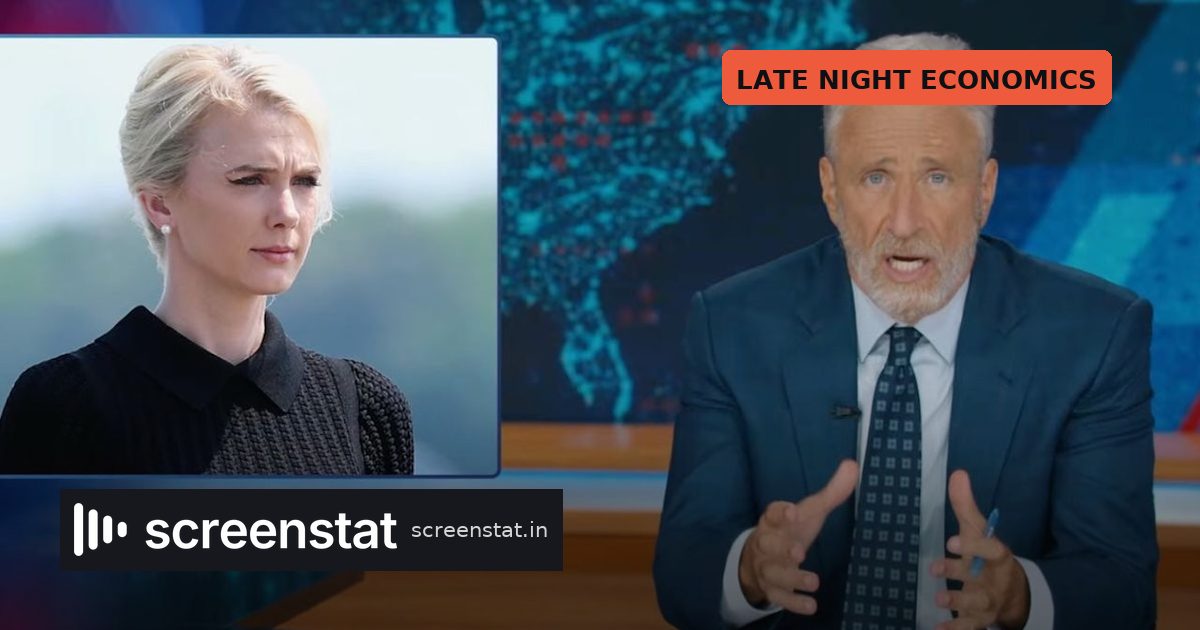
Jon Stewart came back from his summer break on Tuesday and used his first Daily Show monologue of the run to go after what he called President Donald Trump’s “warped reality” — and, specifically, the role of executive assistant Natalie Harp in maintaining it.
Stewart’s framing was that Harp functions as a single filter between the outside world and the president, pointing to news coverage describing her as an aide who follows Trump closely and supplies him with a steady flow of favourable stories. He described the arrangement as “unbelievable,” and noted reporting that Harp had repeatedly declined security clearances, asking whether she could be trusted. He also reached for a Matrix gag, joking that the blue pill looks appealing but wondering who would even hand it to him. A White House representative did not immediately respond to TheWrap’s request for comment.
Why a monologue is a distribution event now
For anyone buying or planning around late night, the interesting part is not the joke. It is the delivery system. The Daily Show airs weeknights at 11 p.m. ET on Comedy Central, but the linear slot is now the smallest part of the footprint. A Stewart monologue is cut, captioned and pushed to YouTube, Instagram, TikTok and Threads within hours, where it competes for attention against everything else in a scrolling feed rather than against whatever else is on at 11 p.m.
That changes what a “successful” episode looks like. The linear rating measures a habit. The clip measures a decision — someone actively chose to press play. Advertisers increasingly price the second behaviour higher, because it comes with a click, a share and a comment thread attached.
The Stewart effect on a franchise
The Daily Show has spent the past few years running a rotating-host model with Stewart anchoring a marquee night. That structure is worth studying for anyone managing an ageing TV brand:
- A recognisable name concentrates demand. One high-salience night is easier to market than five undifferentiated ones.
- A return from break is a scheduling asset. Absence creates a re-entry moment that can be promoted, which a continuous run cannot.
- Topicality is the moat. Political monologues cannot be pre-produced, cannot be easily replicated by AI-assembled content, and age out in 48 hours — which is exactly why they travel well on social.
- The format is cheap relative to scripted. A desk, a writers’ room and an editing bay produce nightly library volume at a fraction of drama costs.
What to watch next
Two numbers will tell the real story of Stewart’s return. First, whether the YouTube views on his monologue clips hold above the show’s baseline once the novelty of the comeback fades. Second, whether Comedy Central’s linear delivery in the demo moves at all, or whether the entire lift lands off-platform.
If it is all off-platform — and the pattern across late night suggests it will be — then the case for these shows rests on social reach and library value, not on the 11 p.m. slot they still nominally occupy. That is the calculation every network running a nightly talk franchise is now making.
Source: TheWrap