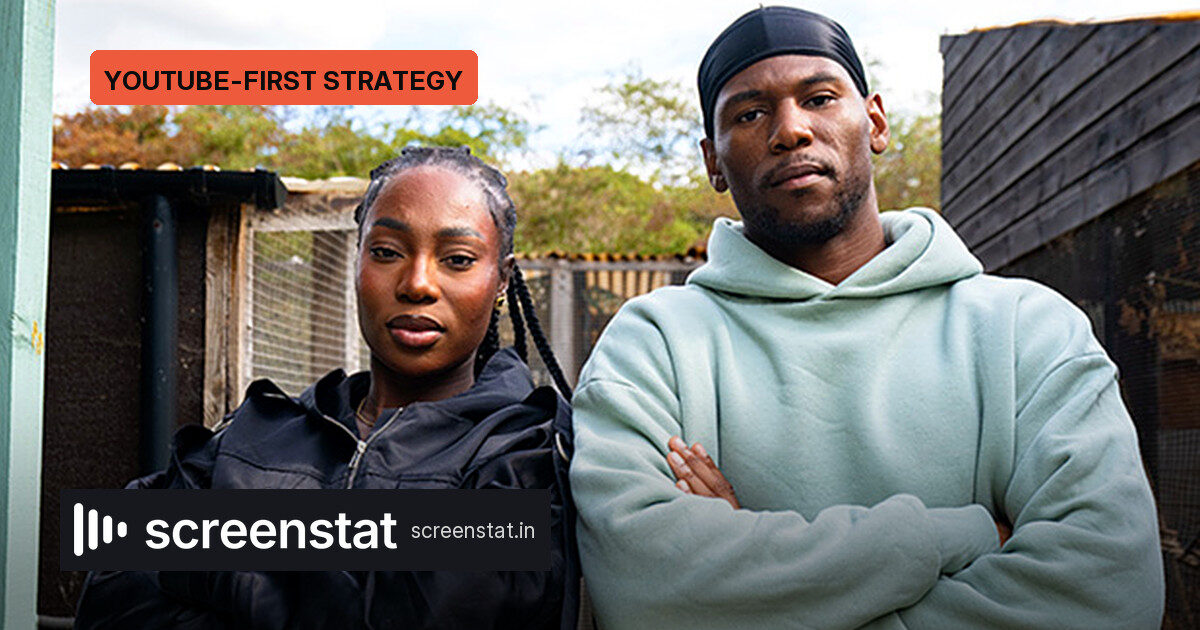
Hearst Canvas, the YouTube-focused label Hearst Networks set up late last year, has launched its first original unscripted format. Pitch, Please! sends two hosts to tackle a real small-business challenge, then uses candid public feedback to shape two competing pitches for the client.
The second episode, released last week, pits King Kenny from The Celebrity Traitors UK against content creator Adeola Patronne. Earlier episodes feature creator duo Will Makoni and Josh Grigson and comedians Eshaan Akbar and Darren Harriott. UK indie Objekt produces the series; Sam Pearson is executive producer for Hearst Canvas.
YouTube gets the first window
Each 15-minute episode premieres on a dedicated YouTube channel, then rolls out to Facebook, Snapchat, Instagram and TikTok. That ordering is the strategic signal. Most broadcast-born formats treat YouTube and social as clip libraries. Here, YouTube is the primary release surface and other platforms are the amplification layer.
- Window: YouTube first, then Facebook, Snapchat, Instagram and TikTok.
- Format: 15-minute episodes built for mid-form viewing, not a broadcast half-hour.
- Talent: reality names and creators, not traditional presenters.
- Pipeline: Pitch, Please! is the first of two Hearst Canvas originals this year; Frontier Collective is next.
Why the label exists
Hearst Networks chief creative officer EMEA and UK general manager Heather Jones framed the label as a response to viewing behaviour. “We built Hearst Canvas because we saw a clear opportunity to create original brands specifically for audiences who increasingly watch content on digital and social platforms,” she said. For entertainment marketers, that is the point: this is not a linear format being clipped for social, but IP built for the feed.
Creative director Danny Baggott highlighted the format’s premise: “taking a genuine business challenge to the public and asking two hosts to transform that feedback into competing pitches.” That structure gives each episode a built-in test: does the public’s input produce a better pitch?
What it means for planners
The project is a small but useful case for windowing and talent strategy. It pairs a known reality personality with native creators and comedians, which spreads reach across fan bases and algorithms. The 15-minute runtime also fits the way audiences watch on phones: long enough for a premise to pay off, short enough to retain attention in a social feed.
If Pitch, Please! works, it strengthens the argument that YouTube-first commissioning can build original franchises, not just distribute existing TV brands. That is the metric to watch: whether a digital-first show can hold a channel and travel across social platforms without a linear premiere behind it.
Source: C21media