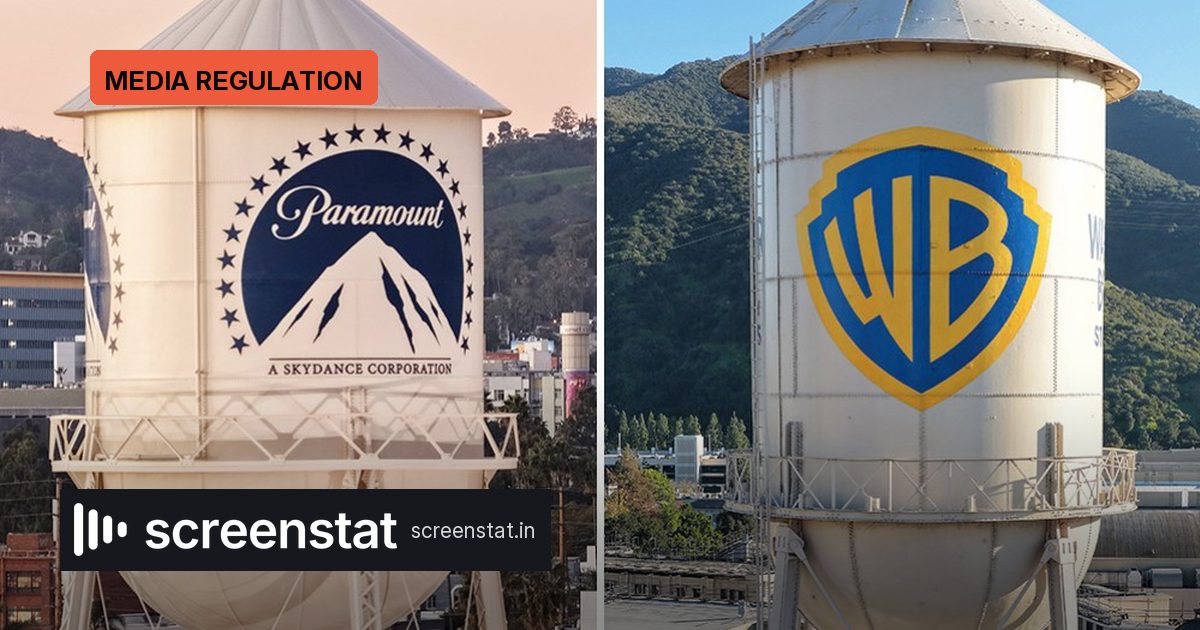
The US Federal Communications Commission has approved a structure that would let foreign investors hold just under half of the combined Paramount-Warner Bros. Discovery once the companies complete their proposed merger.
Because Paramount controls 28 broadcast TV stations, foreign ownership above 25% requires FCC review. Thursday’s order clears the company to have 49.5% of its equity held by foreign entities, including three Gulf state sovereign wealth funds from Saudi Arabia, Qatar and Abu Dhabi.
Voting control stays domestic
The approval rests on a familiar media-law distinction: economic exposure versus formal control. The FCC said it was convinced the foreign funds would not be able to direct programming, station management or other licensee decisions because they are not receiving voting stock. Paramount says the Ellison family and RedBird Capital Partners will hold 100% of the voting shares in the merged entity.
The commission said it was persuaded that the foreign investors “will not be able to wield any influence, let alone control” over station-level decisions.
That separation is the core precedent here. The FCC is not simply allowing a large passive stake; it is betting that governance rights, not capital ownership, are the right test for foreign influence in a major US broadcaster.
The political split is sharp
The decision did not pass without opposition. Free Press argued that the funds may eventually hold a majority of the company’s equity and warned about government-linked control over commercial news media. Democratic senators, including Maria Cantwell, said the agency had never before approved a significant ownership stake in an American broadcaster by a sovereign wealth fund.
FCC Commissioner Anna Gomez made the point more bluntly, saying the order lets “some of the most repressive governments in the world” indirectly control a combined Paramount-Warner Bros. She added that an investment this large can shape “what gets said and made.”
Paramount’s response frames the deal as a competitive necessity. A spokesperson argued that with pressure from dominant big tech platforms, the combined company needs scale to invest in content and distribution.
What to watch next
- The merger remains on hold because of an antitrust challenge brought by California and 11 other states; trial is scheduled for March.
- The FCC order also permits Paramount to seek future foreign ownership above 49.5% — up to 100% — but any move into voting shares would require a new approval.
- For media buyers and marketers, the near-term signal is continuity: voting control stays with the existing US investor group, so programming and ad-sales decisions are not expected to shift immediately because of Gulf capital.
- The longer-term question is whether passive economic investors push for influence through board appointments, content deals or distribution partnerships in the Middle East.
For ScreenStat readers, the right lens is not just “foreign money in US media.” It is the growing use of non-voting equity as a workaround for ownership rules — and whether state-linked funds will accept staying silent if the merged company underperforms.
Source: Variety