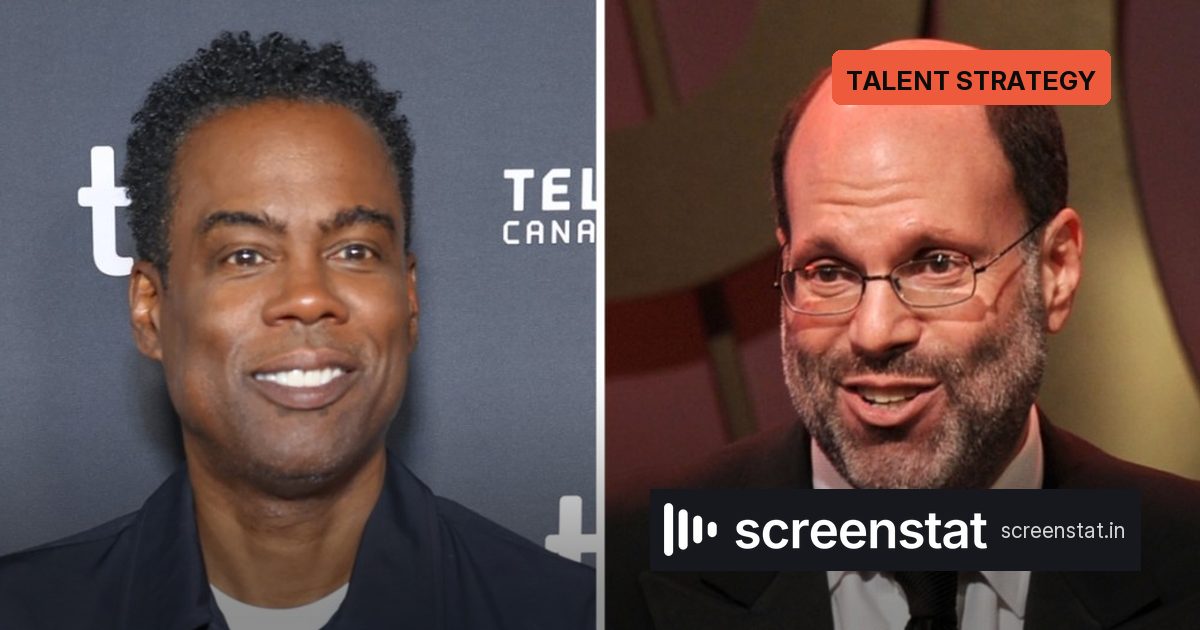
Toronto — Chris Rock’s return to directing is drawing attention not just for Misty Green, but for what it reveals about how high-pressure producing can shape a filmmaker. Speaking with TIFF chief executive Cameron Bailey, Rock credited Scott Rudin, the powerful producer who stepped away after a 2021 report on abusive workplace behavior, with pushing him to demand more from himself and his collaborators.
Rock was discussing Top Five, his 2014 comedy with Rosario Dawson, which Rudin produced. He said he wrote the script in 2012 while shooting Grown Ups 2, when his spot lower on a large ensemble call sheet left long stretches of downtime. He named Woody Allen, Mike Leigh and Alexander Payne as creative influences on the script.
According to Variety, Rock told the audience: ‘I need hard coaching.’ He expanded with an analogy: ‘Everybody doesn’t respond to a hug.’ One child may respond to encouragement, he suggested, while another needs direct pressure. In his retelling, Rudin’s approach taught him not to settle — particularly in casting and hiring. The lesson, Rock said, was to pursue the best talent in front of and behind the camera with ‘no compromise.’
The producer divide
Rudin’s return to the conversation carries extra weight because he spent years as one of the most consequential producers in theater and film. His credits include The Book of Mormon and To Kill a Mockingbird. But his brand of blunt feedback also became industry lore, including leaked emails from the 2014 Sony hack in which he called Angelina Jolie a ‘minimally talented spoiled brat.’
After resurfacing in 2025 and signaling a Broadway return, Rudin acknowledged to The New York Times that much of the criticism was accurate and that he had been rough on people. ‘I own it,’ he said.
Rock’s framing matters because it separates creative rigor from personal conduct. Entertainment professionals have long relied on demanding producers to raise projects. The post-2021 question is whether that intensity can be preserved without normalizing harm.
What leaders should take from the moment
For studios, platforms and production companies evaluating high-intensity talent, the practical test is whether pressure is tied to the work or to control. A useful framework:
- Standard of excellence: The bar should be the best possible casting, design and crew — not the producer’s mood.
- Feedback boundaries: Direct notes can work, but they should target the project, not a person’s value.
- Institutional guardrails: Strong producers need clear channels for complaints and budgets, so power is not unchecked.
Rock’s comments do not resolve the broader accountability debate. They do show that some creatives still value a style of leadership the industry is reconsidering — and that the line between coaching and abuse remains a business decision as much as a cultural one.
Source: Variety