
Venice has become the first serious commercial checkpoint for documentaries about the war in Gaza, and this year’s slate shows exactly how that pipeline works: festival premiere, awards submission, then a distribution and streaming conversation shaped as much by credibility as by craft.
What screened, and what it is
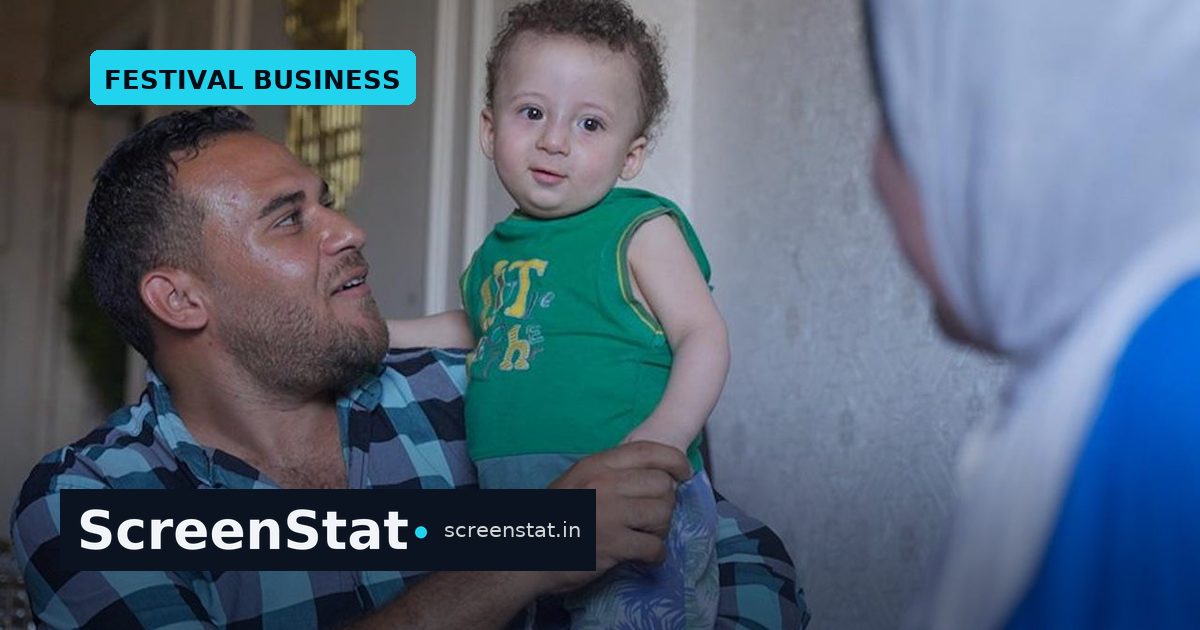
TheWrap’s review of Citizen Osama, directed by Ahmed Hassouna, describes a first-person portrait of a young Palestinian father and videographer, Osama al-Ashi, trying to keep his family alive while filming the war. The film has already been selected as the Palestinian entry in the Best International Feature Film category at the next Academy Awards.
Hassouna studied journalism at Al-Azhar University in Gaza. He previously directed the 2019 non-fiction feature Istrupya and contributed to the 2024 anthology From Ground Zero, which brought together 22 local directors and served as Palestine’s 2024 Oscar entry. That is a two-cycle run of Palestinian submissions built out of documentary work rather than fiction — a meaningful pattern for anyone tracking the international feature race.
A second Gaza documentary, NAZA, was set to world premiere in Venice on the Thursday of the festival. It comes from Yuval Abraham and Rachel Szor, two of the filmmakers behind No Other Land, which won the Oscar for Best Documentary Feature two years ago. In awards terms, that is the strongest possible calling card a new title can carry into a market.
Why the context gap is a business problem
The core critique in TheWrap’s piece is not about the footage but about what surrounds it. The reviewer notes the film does not establish where or when the material was shot, or who al-Ashi was filming for, and leaves scenes — trucks, armed men, aid drops — unexplained. As a portrait of suffering it lands; as an explanatory document it does not.
That matters commercially because international journalists have not been allowed into the Gaza Strip since October 2023, including after last October’s ceasefire. The war followed Hamas’s October 7, 2023 attack on Israel, in which 1,200 people were killed and 250 taken hostage; more than 70,000 people have since been killed in Gaza, per the report. With no independent on-the-ground press access, first-person footage carries an outsized share of the informational load — and buyers inherit the verification burden that would normally sit with a newsroom.
The checklist for acquisitions and programming teams
- Provenance: Can dates, locations and chain of custody for footage be documented, even if not shown on screen?
- Editorial framing: Does the film supply context in-picture, or will the platform need to add cards, disclaimers or a companion explainer?
- Awards runway: An official Oscar submission changes the marketing calendar and the price. Track category (international feature vs. documentary) because they run on different clocks.
- Track record: Filmmakers with a prior Academy win move faster to market and command different terms.
- Standards and legal review: Conflict documentaries need compliance sign-off well before a launch date is set, not after.
What to watch next
For Indian and global streamers, conflict documentaries are low-cost, high-attention library assets that also carry the highest reputational risk on the slate. The practical takeaway from Venice this year: strong footage is now abundant; verified context is the scarce input, and it is what will separate titles that get a wide platform release from those that stay on the festival circuit.
Source: TheWrap