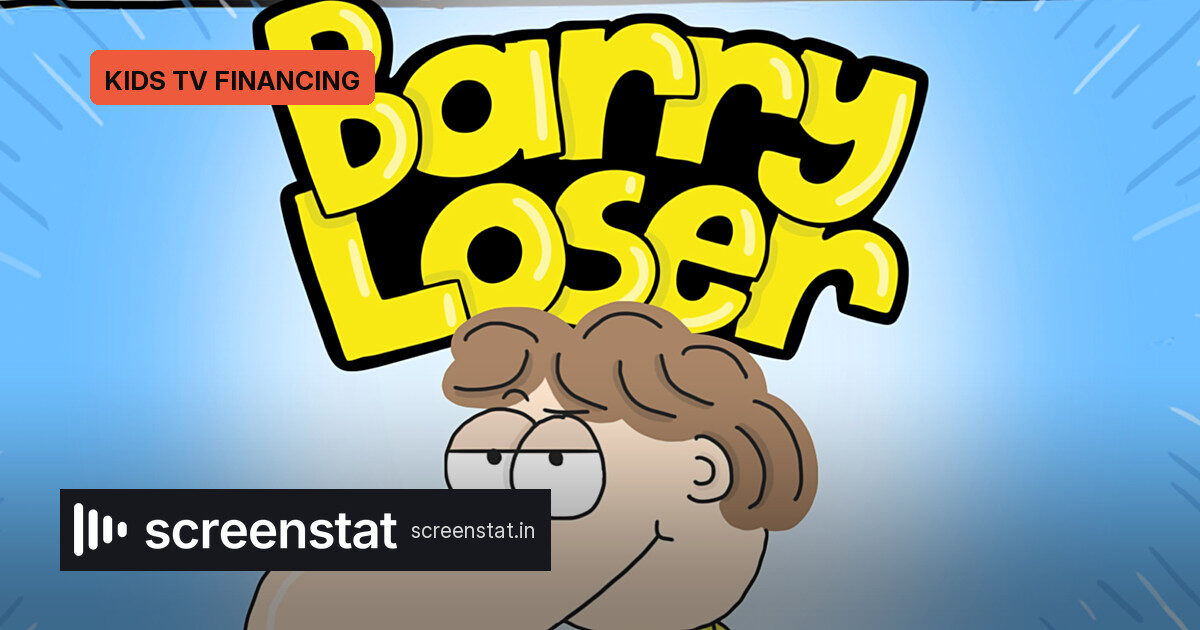
Big Little Fish Television and Italian co-producer Frog Head are taking Jim Smith’s award-winning, million-selling “Barry Loser” books into animation, with 52 eleven-minute episodes planned and the U.K.’s ITVX Kids already attached. The project will be pitched at Rome’s MIA Market through its new Animation Series Gap-Financing Market, running Oct. 19–23.
The package lands with a comparatively derisked financing story for a children’s series.
The numbers behind the pitch
- 52 episodes of 11 minutes each, drawn from 11 books and graphic novels that have sold more than 1 million copies worldwide.
- 17 languages for the source books, winner of the Roald Dahl Funny Prize.
- 60-70% of the budget already in place, with financing targeted to close by the end of Q1 2027.
If the gap closes, production would begin at the start of Q2 2027.
Big Little Fish launched in 2019 and is best known for unscripted documentary, but CEO Mark Procter and COO Georgina Surtees have both worked extensively in children’s TV. The company produced the CBBC scripted reality series “Meet the McQueens” in 2023.
Procter calls the show a “passion project.” It is personal: his son went through the books quickly. “We were devouring these books every night,” he told Variety.
Why the Italian partnership matters
Frog Head and Florence-based DogHead Animation, a subsidiary of Banijay Kids & Family, bring more than 2D craft. Italy’s 40% tax credit was “a big draw,” Surtees said, because it stacks with the U.K. credit to make the budget easier to finance.
That matters because children’s animation rarely gets a single full commission. Producers assemble a broadcaster, presales, distributors, territorial incentives and gap financing for the shortfall. The 60-70% figure suggests the riskiest part of the financing is already covered.
The partnership was seeded at MipJunior several years ago, when the Italian team pitched with photos of the “Barry Loser” books on their own children’s bookshelves. “That level of enthusiasm matched our own,” Procter said.
What to watch at MIA
The immediate goal is to find more co-producers who can bring further tax credits and creative input. Surtees said the team is exploring partners that can help “bridge the deficit gap.” Procter framed the creative conversations as the next step: testing how the books’ ordinary-town, big-imagination tone fits local needs.
For buyers and streaming professionals, the package is a useful test of the gap-financing model. It has known IP, a U.K. broadcaster, an Italian animation partner, two territorial incentives and a clear funding milestone. If MIA yields one or two network co-productions, it becomes a repeatable template for mid-budget children’s animation.
Source: Variety