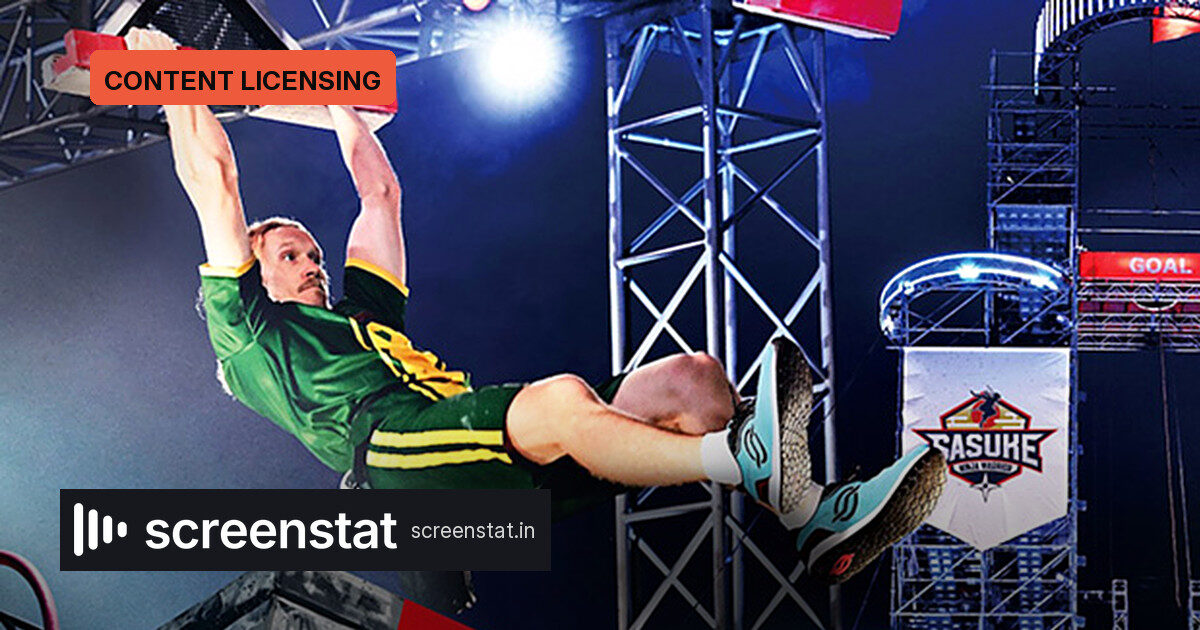
Banijay Rights is moving from selling the recipe to selling the finished dish. The distribution arm has expanded its relationship with Japan’s TBS to license completed episodes of Ninja Warrior internationally, not just the production format. The finished-episode mandate builds on the format licensing agreement TBS and Banijay Entertainment signed in October 2025.
A two-layer sales pitch
Under the earlier deal, Banijay acquired rights to represent the Ninja Warrior format worldwide. Since then, local editions have returned in Israel and Australia, and the title will be part of Banijay Rights’ Mipcom catalogue. The new layer means buyers who do not want to build a local obstacle-course production from scratch can acquire ready-to-air episodes instead.
That gives the franchise a broader buyer base: format licensees for local commissions, and channels or streamers looking for finished library programming. The original Japanese competition, Sasuke, has remained on air since 1997, so there is a long-running brand behind the pitch.
Kids digital shelf expands
Separately, Banijay Kids & Family is adding third-party and owned titles to its digital network across YouTube, FAST and other platforms.
- Acamar Films’ public-service-values YouTube channel Again! Again! has licensed Mister Maker and Mumfie.
- Banijay has acquired YouTube and Amazon Prime rights to preschool series Olobob Top from UK studio Beakus.
- TheSoul Group content including DoodLand, Teen-Z, Baby Zoo and Learn Toons joins Banijay’s owned-and-operated YouTube network.
- Lighthouse Studios’ Murder by Gaslight will sit on Banijay’s ZK Comedy Plus channel under a non-exclusive deal, alongside Ava & Digger and upcoming adult mockumentary Belzebubs.
The thread running through the announcements: Banijay is treating its digital channels as infrastructure that can carry both its own IP and other companies’ brands. For buyers and advertisers, that means more curated kids and comedy inventory concentrated inside a few managed networks rather than scattered across individual creator channels.
What it means for media planners
Finished-episode distribution changes the cost equation. A buyer can test a format in a market with completed episodes before committing to a local production, or keep a franchise on air between local seasons. The FAST and YouTube deals also signal that kids programming is being packaged for ad-supported streaming, where reach is bought against predictable environments.
For Banijay, the strategy multiplies the value of a single IP: format fees, finished-tape sales, digital ad inventory and third-party representation all sit under one roof. That is a classic windowing move, monetising the same brand at different points. Expect more rights holders to bundle finished episodes with format sales rather than selling them separately.
Source: C21media