Netflix co-CEO Ted Sarandos used Wednesday’s third-quarter earnings call to separate the company’s strategy from its execution. The content flywheel is working, he argued, but the U.S. “is just not growing as fast as it could or as fast as we’d like.”
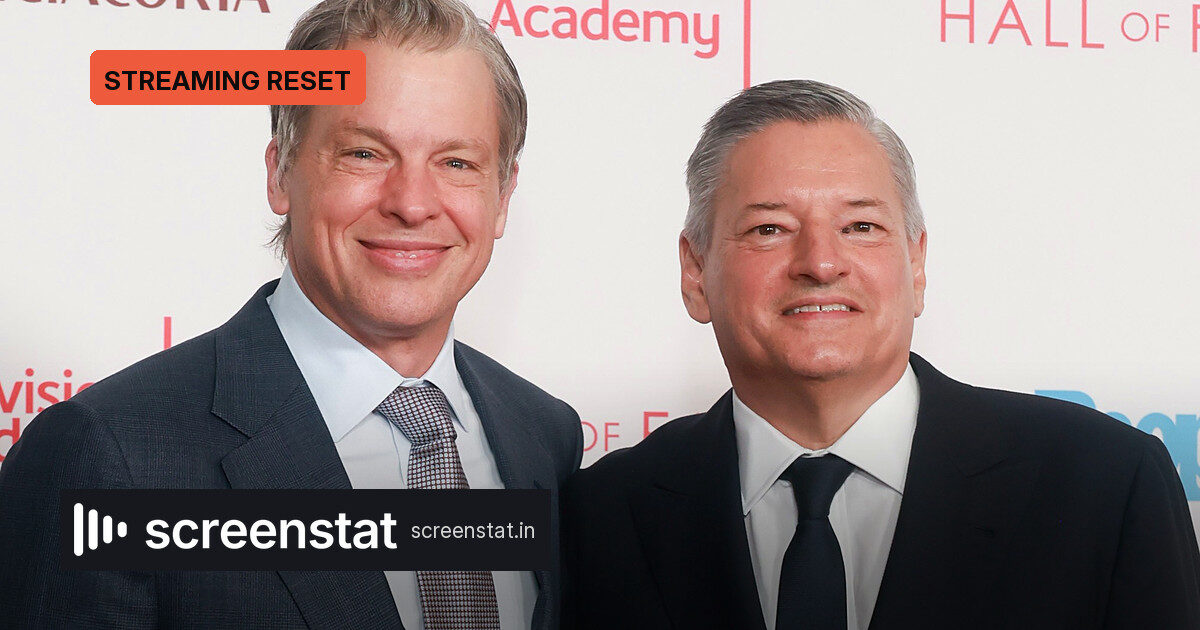
The answer, Netflix says, is not a new plan. It is Peter Rice. The former Disney and Fox executive starts as chief content officer on Oct. 26, a little more than a week after Bela Bajaria was let go. Sarandos credited Bajaria with building the international team and putting “a lot of hits on the board,” but made clear the change is aimed at the U.S. growth problem.
Doubles and triples are not enough
Sarandos described Netflix’s 2026 releases as “really solid doubles and triples.” The baseball language has a business meaning: domestic titles are working, but other territories count on some of those titles becoming home runs that travel around the world. When they do not, growth slows in the company’s most mature market.
For media planners and entertainment marketers, the distinction matters. Netflix is not signalling a pivot to a new business model. It is signalling a content and talent-relations upgrade aimed at producing bigger, more exportable titles—the kind that drive acquisition and retention across regions.
What Rice is expected to change
Sarandos said industry reaction to Rice’s hiring has been strongly positive. He pointed to Rice’s range across movies, television, linear and streaming, and described him as an at-scale operator with “remarkable” creative instincts and business acumen. The mandate is also relational: in a competitive market, Netflix wants to remain the place where creative talent does its best work.
- Strategy remains in place; the problem is U.S. execution, not the business model.
- Peter Rice starts Oct. 26 as chief content officer, succeeding Bela Bajaria.
- The 1,000 layoffs last week were framed as trimming overinvestment, not a retreat.
The layoff framing
Co-CEO Greg Peters addressed the 1,000 job cuts on the same call. Netflix had overinvested in some areas it built quickly, he said. The company prefers to adjust “organically and iteratively,” but sometimes needs “a forcing function”—a mandate that forces hard questions about efficiency and where to redirect investment.
The upshot for analysts and buyers is that Netflix is tightening its U.S. operation without abandoning its global content ambition. The next test is whether Rice’s slate choices convert solid domestic performance into global hits, and whether U.S. subscriber momentum follows.
What to watch next
The earliest hard read will be the U.S. subscriber number in the next quarter, followed by any shift in the 2027 slate toward larger, travel-friendly titles. Rice’s first talent moves will show whether Netflix prioritizes broad commercial fare, prestige creators, or a mix. For the broader screen business, the call is a reminder that mature-market slowdowns are often addressed with content leadership rather than model shifts—and that talent relationships plus a global hit rate, not just volume, are the competitive edge. For now, Netflix has named the problem precisely: better execution, not a different strategy.
Source: The Hollywood Reporter