
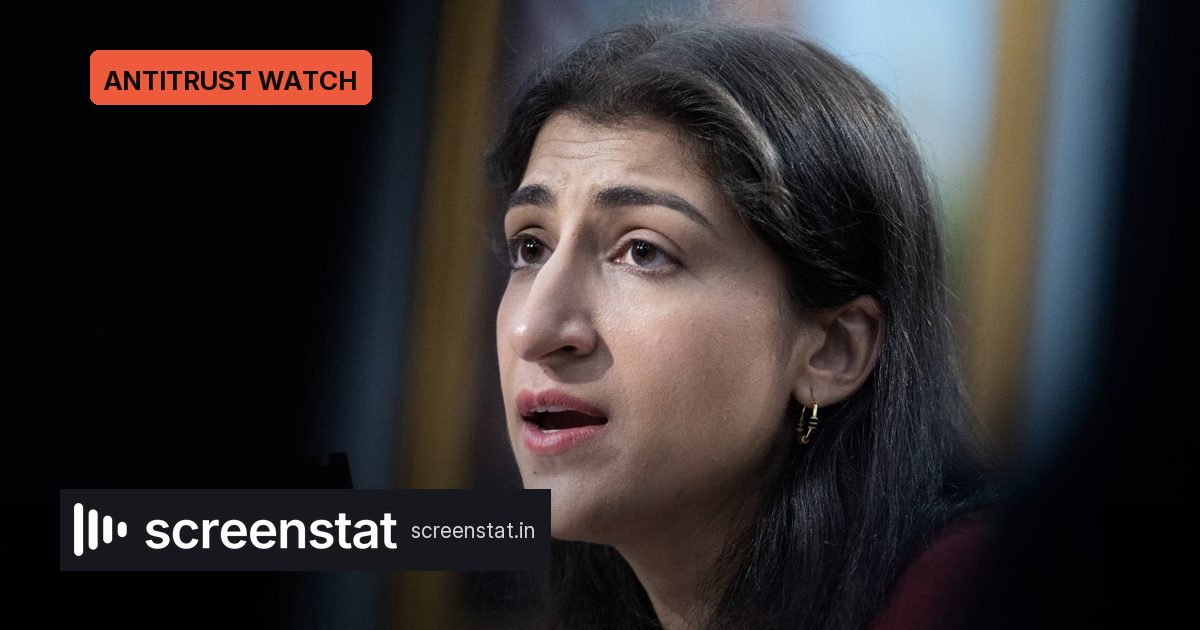
Former Federal Trade Commission chair Lina Khan is urging California Attorney General Rob Bonta to keep fighting the 12-state lawsuit against Paramount Skydance’s proposed $110 billion acquisition of Warner Bros. Discovery, rather than settle for conduct-based promises.
Khan said in a social media post on Sunday that the merger “seems facially illegal” and described reports of advanced settlement talks as “troubling.” Her criticism adds to a growing public campaign against a negotiated resolution, with the state case now the final regulatory hurdle after the FTC under Trump appointee Andrew N. Ferguson declined to challenge the deal.
Structural remedies vs. behavioral remedies
The split is not a technical footnote. Bonta has said he is open to a settlement but wants structural remedies, such as divestments. Khan is warning against the alternative: allowing the deal to close with commitments from the companies attached.
In Khan’s words, behavioral remedies “routinely fail.” She framed the stakes around open markets for journalism and creative expression, a signal that the fight is about market structure, not just corporate size.
For a concrete example already in the public record, Paramount’s pledge to release 30 films in theaters annually has been cited as the kind of promise Bonta considers too weak. From a market-analysis view, structural remedies change who owns the assets, while behavioral remedies try to constrain how the merged firm behaves after the fact.
Why this matters for the screen business
- The California-led suit is backed by 11 other states and remains the main legal blocker to closing.
- Paramount and Bonta were reported Friday to be in advanced settlement talks.
- Opposition now includes Sen. Elizabeth Warren, Mark Ruffalo and the Block the Merger coalition, with demonstrations planned in Los Angeles, New York and Oakland.
- The FTC has not imposed a regulatory challenge, making the settlement fight decisive for the deal’s timeline.
Media planners and entertainment marketers should track the remedy question as closely as the closing date. A settlement based on conduct remedies could leave the combined company free to shift theatrical commitments, licensing terms or distribution windows once conditions expire. A structural settlement, by contrast, could redraw the portfolio before the deal even closes.
The political pressure is real
Khan’s statement does not change the legal filing, but it matters because she is one of the most prominent antitrust voices of the Biden era. Her intervention gives opponents a public megaphone and may make a quiet settlement harder for Bonta to sell. Deal-watchers should price in longer timelines, louder public campaigns and a less predictable outcome than the FTC’s silence would suggest.
Source: TheWrap