Skydance’s combined film operation starts its first real test this week with the release of Street Fighter, but the numbers behind the launch are the story. The company must release 30 theatrical films a year—32 from Year 3—while carrying roughly $80 billion in debt and finding $6 billion in cost cuts.
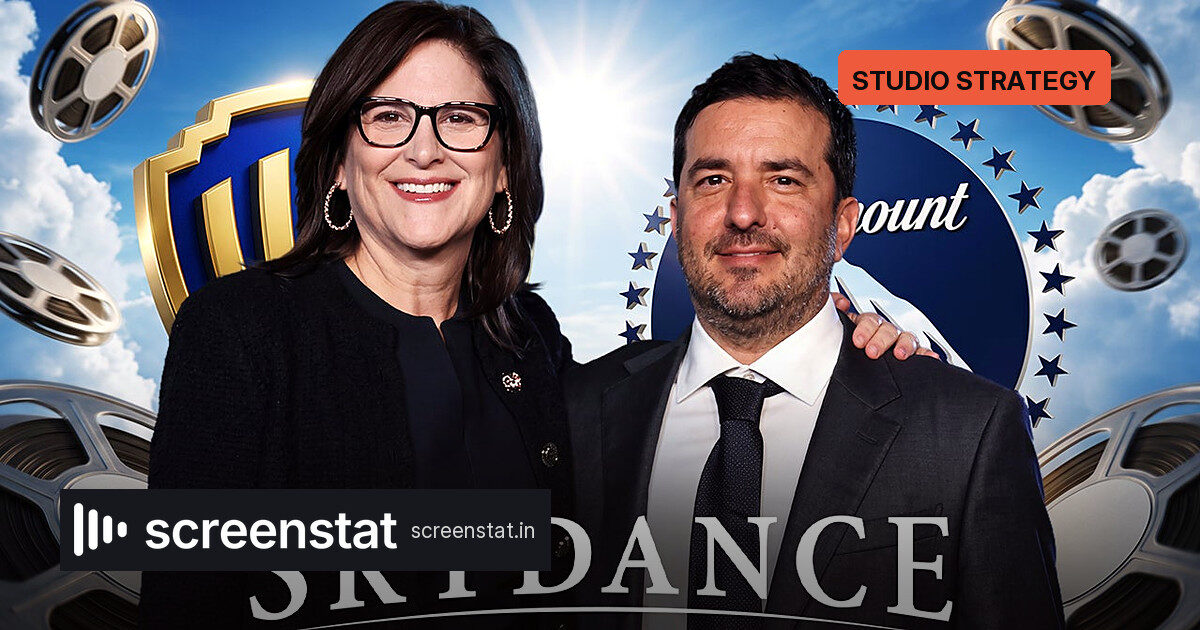
That puts motion picture group heads Dana Goldberg and Josh Greenstein, plus marketing and distribution chief Josh Goldstine, in charge of integrating about 39 inherited Warner films into Paramount’s pipeline without having the two studios’ slates eat into each other.
Two studios, one release calendar
The stated plan is to keep Warner Bros. and Paramount independent creatively, then coordinate the schedule. Co-CEO Ynon Kreiz told reporters that each studio will keep its own slate and relationships, “then we will choreograph the release schedule to optimize by genre, by audience demographic.” Warner’s distribution and marketing leadership stays in place under Goldstine to avoid disruption, while label heads mostly remain except the departure of Mike De Luca and Pam Abdy.
The 2027 slate has to outrun 2026
Both studios enter the new era with weak 2026 results. Warner’s top film, Wuthering Heights, reached $241.8 million worldwide, while Paramount’s closest title, Scary Movie, hit $231 million. The difference was spending: Paramount’s costliest co-production was the $82 million Brad Pitt survival thriller Heart of the Beast.
The inherited 2027 calendar looks stronger on paper. It includes Sonic the Hedgehog 4, A Quiet Place Part IV, a Minecraft sequel, Superman: Man of Tomorrow, K-Pop: The Debut, Bad Fairies and J.J. Abrams’ The Great Beyond. With the domestic 2026 box office expected to top $10.5 billion despite little help from either studio, exhibitors and analysts warn 2027 could step back unless these and other titles overperform.
Talent trust is an open account
David Ellison acknowledged the merger fight was an “ugly process.” More than 5,700 creatives signed an open letter opposing the merger, including Abrams and Denis Villeneuve. Ellison says the company is now in the business of rebuilding trust. Filmmakers with Skydance deals include Jon M. Chu, Issa Rae, the Duffer brothers and James Mangold, whose High Side will be an early original bet.
What to watch next
The animation risk is real. Disney closed Blue Sky in 2021 after a merger, and many of those animators now work at a Skydance Animation outpost in Connecticut. Skydance owns three animation houses under separate leaders.
- Whether the 30-film target creates genre-daypart cannibalization or a genuine efficiency flywheel.
- Whether cost savings arrive through technology and procurement rather than layoffs, as Ellison has promised.
- How the three animation houses and specialty label Clockwork survive under one profit-and-loss.
Dune: Part Three should be a near-term hit, but 2027 and 2028 will show whether the arithmetic of more films, more debt and more promises actually works.
Source: TheWrap