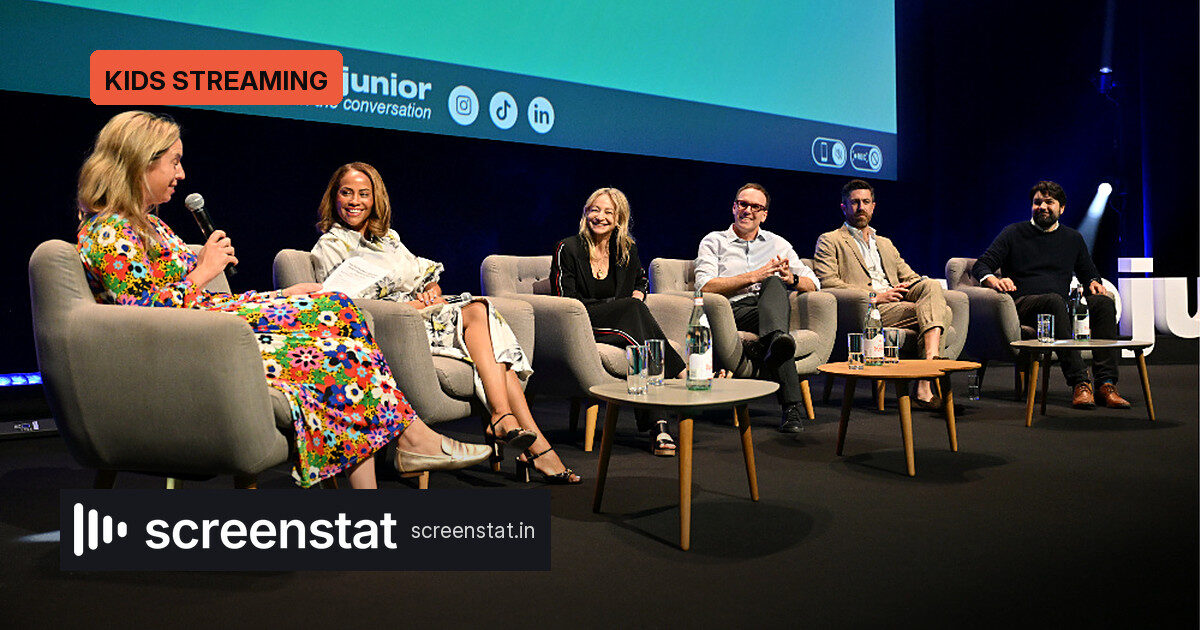
Disney’s Kids & Family leadership used a MipJunior panel in Cannes to lay out how the studio is responding to the collapse of old kids-TV viewing habits. Ayo Davis, president of the division, described a young audience that now moves between Bluey and Squid Game with no friction. The response, she said, is not to chase reach with the old franchise playbook but to ‘meet kids where they are.’
Creators, but with a strategy
Disney is expanding work with digital-native creators such as Dhar Mann and Nastya. Davis framed this as more than a traffic play: the company wants creators whose storytelling aligns with its values. Dhar Mann’s core stories are about good and evil, which Disney teams can apply to the universal themes they already work with.
Charlie Andrews, EVP of live action at Disney Kids & Family, said two Dhar Mann series have been greenlit and the scripts are in. ‘Everything is so 2026. Maybe it’s already 2027,’ he said, pointing to dialogue that reflects how kids speak now while retaining Disney’s familiar elements of friendship, fantasy and wish fulfilment.
Nastya is being developed as a bridge across age groups. Disney Jr.’s Alyssa Sapire said the creator’s imaginative play fits preschool storytelling, while Andrews added that Nastya is ageing and Disney is building live-action content that can move with her demo.
Short-form is the new sampling engine
Gino Guzzardo, VP of multiplatform content, argued that shorts are part of Disney’s original DNA. ‘If it has a screen on it, we can throw a short on it,’ he said. The latest example is Locker Diaries, a vertical anthology shot through characters’ lockers, designed to immerse viewers in a character’s world and act as a discovery layer for larger properties.
For media planners, the shift is material: short-form vertical content is being treated as a distribution surface, not a promotional afterthought.
Age-staged IP as retention architecture
Disney is explicitly using preschool brands as a gateway. Davis called Disney Jr. ‘the introduction to the company,’ and Andrews described taking that audience into live action as they age: Vampirina worked for preschoolers, so Disney can later offer a live-action version with more emotional stakes. Last week’s launch of Coven Academy extends the same idea into vampires and witches for older kids.
The pipeline is now structured by age and format:
- Preschool: Disney Jr. IP, imaginative-play creators such as Nastya, and franchises like SuperKitties.
- 6–12 animation: broad comedies like Big City Greens, then more serialized titles like Dragon Striker.
- Live-action bridge: familiar IP such as Vampirina reinvented for older, emotionally sophisticated viewers.
- Format layer: vertical shorts like Locker Diaries for discovery across screens.
Research before scale
Sapire said Disney Jr. has touchpoints with preschoolers every week through an internal educational resource group. Stories are tested with kids, comprehension is measured, and feedback goes back to writers and showrunners. ‘They are our bosses,’ she said.
The takeaway for entertainment marketers: Disney is treating kids’ content less like a slate of shows and more like a retention system, with creators, formats and age-staging all feeding one funnel. The panel offered no new subscriber or ratings figures, but the direction is clear: reach has shifted, and legacy IP is being reorganized to follow it.
Source: Variety