Navratri has turned into a calendar marker for India’s film business. The makers of Ramayana used the festival to confirm that Part 1 of the two-part epic will open worldwide on 5 November 2026, with advance bookings scheduled to begin on Dussehra.
A poster that sells the central clash
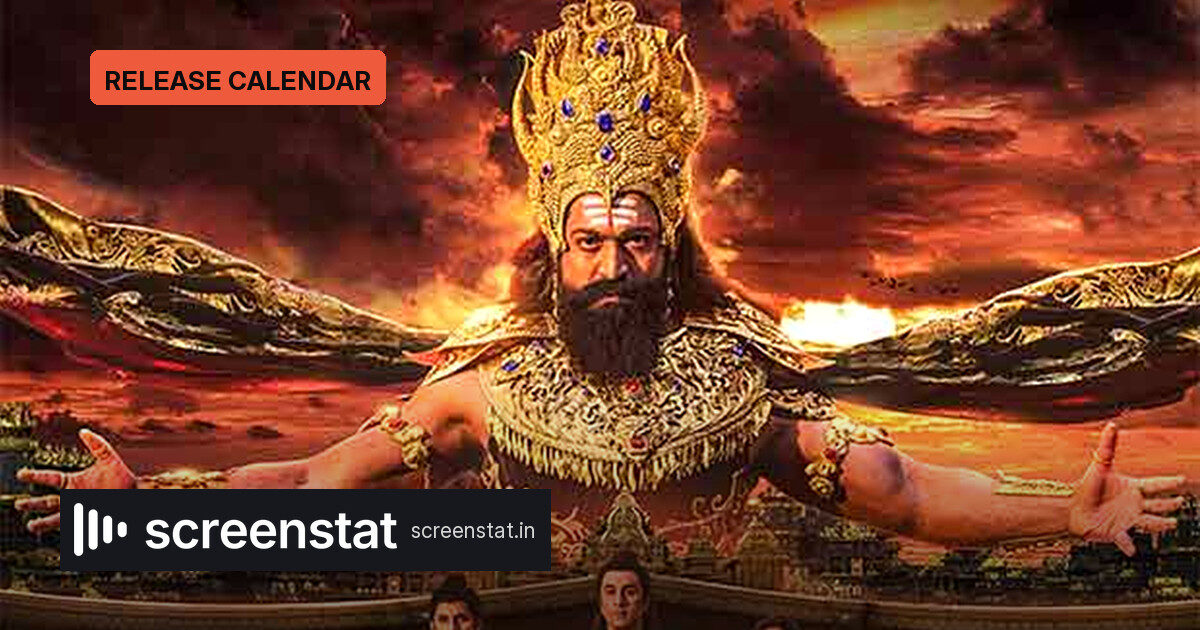
The new ensemble image puts Ranbir Kapoor as Lord Rama, Sai Pallavi as Sita and Ravie Dubey as Lakshman in the foreground, while Yash’s Ravana towers over them. It is a poster built to signal the core conflict before a single trailer frame lands. Sunny Deol is also part of the cast as Hanuman.
The social caption kept the announcement in mythology’s register: “Yeh Ram ke Yug ka Aarambh hai.”
Scale is the real story
Nitesh Tiwari directs. Namit Malhotra’s Prime Focus Studios produces in collaboration with DNEG and Yash’s Monster Mind Creations. The distribution plan is the clearest signal of how wide the producers want this to go.
- India release across Hindi, Tamil, Telugu, Kannada and Malayalam.
- IMAX and premium formats confirmed.
- Sony Pictures distributing globally outside India.
- Dharma Productions handling the Hindi-speaking market.
- Part 2 planned for Diwali 2027.
The two-part structure also spreads the financial risk of a large-scale production across two release windows. By naming Diwali 2027 for Part 2 at the same time, the team is telling the trade that this is a franchise, not a one-off.
Why the date matters for the trade
5 November 2026 is now a fixed point on the release calendar, not a rumour. For media planners and exhibitors, the announcement shifts the conversation from “if” to “how wide.” A five-language, IMAX-enabled release means screen allocation, local-language marketing and premium-format availability all need to be locked early.
The global arrangement also changes the audience math. Sony Pictures’ role outside India turns the film into a diaspora play as much as a domestic one. Dharma’s Hindi-market distribution means the release will be managed with local buyer relationships across north and central India.
The first real demand signal
Advance bookings opening on Dussehra give the team a short conversion window. The number to watch is not just the total pre-sales but the mix: how much early demand comes from southern language versions, and how much is concentrated in IMAX and premium screens. That split will shape the final marketing push and screen allotment.
Marketing teams should also note the split between announcement and booking. The Navratri reveal creates awareness; the Dussehra booking window converts it. The gap between the two is the campaign’s first measurable test.
For a two-part epic, this opening is also a customer acquisition event. An early ticket buyer for Part 1 becomes a warm audience for the Diwali 2027 sequel, which makes the booking data valuable beyond the first weekend.
Source: bollywoodHungama.com