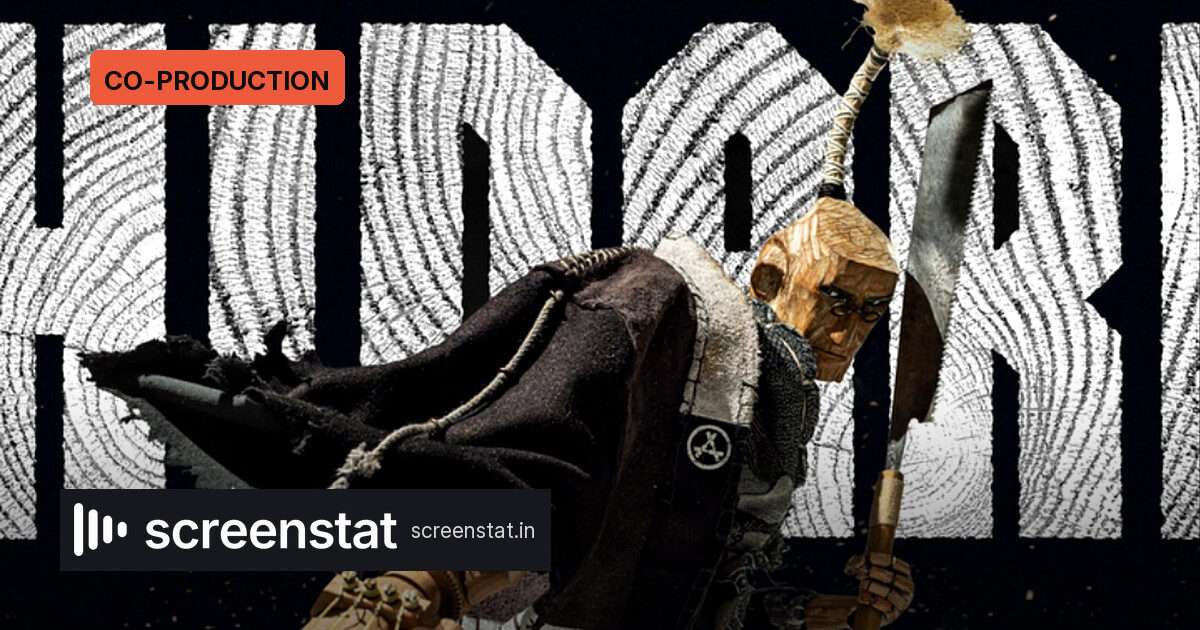
Dwarf Studios is back in the market for Hidari, the stop-motion samurai feature voiced by Keanu Reeves, after a US company’s full-budget offer collapsed at the rights stage. Producer Matsumoto Noriko told the Asian Contents & Film Market in Busan that the US side would have funded the entire budget—in exchange for all rights. Dwarf wanted to hold on to half. Before talks could close, the executives on the other side lost their jobs amid Hollywood upheaval.
“Even with Keanu, we cannot stop the fire,” Matsumoto said.
Why full funding wasn’t a clean win
For a studio with an original stop-motion project, taking the money meant giving away control of a highly unusual IP. Dwarf instead asked Questry, led by former Goldman Sachs banker Ibe Tomonobu, to find Japanese investors for its half. Questry has since set up a special purpose company so overseas and local investors can put money into Hidari side by side.
Ibe put the principle bluntly: “How you raise money decides how you share it.”
Japan’s committee model is local-first
More than 90% of Japanese anime and films are funded through production committees—seisaku iinkai—in which publishers, labels, broadcasters, streamers, toy companies and agencies each take a share, largely to secure a window for their own business. Window fees are recovered first, and studios are often paid a fee with little upside. In Korea, Ibe noted, producers often take around 40% of profit after recoupment.
The model works for titles made in Japan for Japan, but it fits poorly as projects go global. Overseas sales made up 56% of anime industry revenue in 2024, up from 20% in 2014. A co-production with few Japanese windows to sell gives local committee members little reason to invest—and only Japanese companies can sit on a committee.
Three ways independent producers closed the gap
- Love on Trial: 60% Toho-led committee, 29% JLOX subsidy, 11% presales via MK2 and Art House.
- Rental Family: Searchlight Pictures covered 90% of the budget, JLOX location incentive 10%.
- Ibuku: 80% Indonesian partners, 15% Knockonwood, 5% from Thailand’s White Light gap fund.
Producer Yamaguchi Shin, who worked on all three, said independent producers “never give up because we have to find the new ways.” Japan has begun opening to co-production in the past two years but remains behind on language, legal and accounting fronts. Its only co-production treaties are with China and Italy, and he said neither works well for the Japanese side.
Government support is shifting too. The JLOX subsidy behind two of those case studies has been upgraded into a new IP360 program with higher minimum budgets, while the Agency for Cultural Affairs still offers a co-production subsidy covering 20%, subject to caps.
What Hidari brings to a new negotiation
Dwarf made a 2023 pilot short at its own risk, partly through crowdfunding, and the pilot traveled far enough to bring Keanu Reeves aboard. That is the development-money argument Questry wants to back more often. Dwarf also has a track record: its stop-motion feature Komaneko drew more than 250,000 moviegoers in France, over ten times its Japanese ticket sales.
The constraint is structural. Co-production rules often require 20–30% of the budget to be spent outside Japan, which is hard for a stop-motion shoot that cannot easily be split. For now, the search is for a partner that can fund Hidari without taking the whole asset off the table.
Source: Variety