Asian storytelling has moved from niche import to a mainstream global supply line. But the clearest message from the Busan International Film Festival’s Asian Contents & Film Market is that wider demand has not made greenlights automatic.
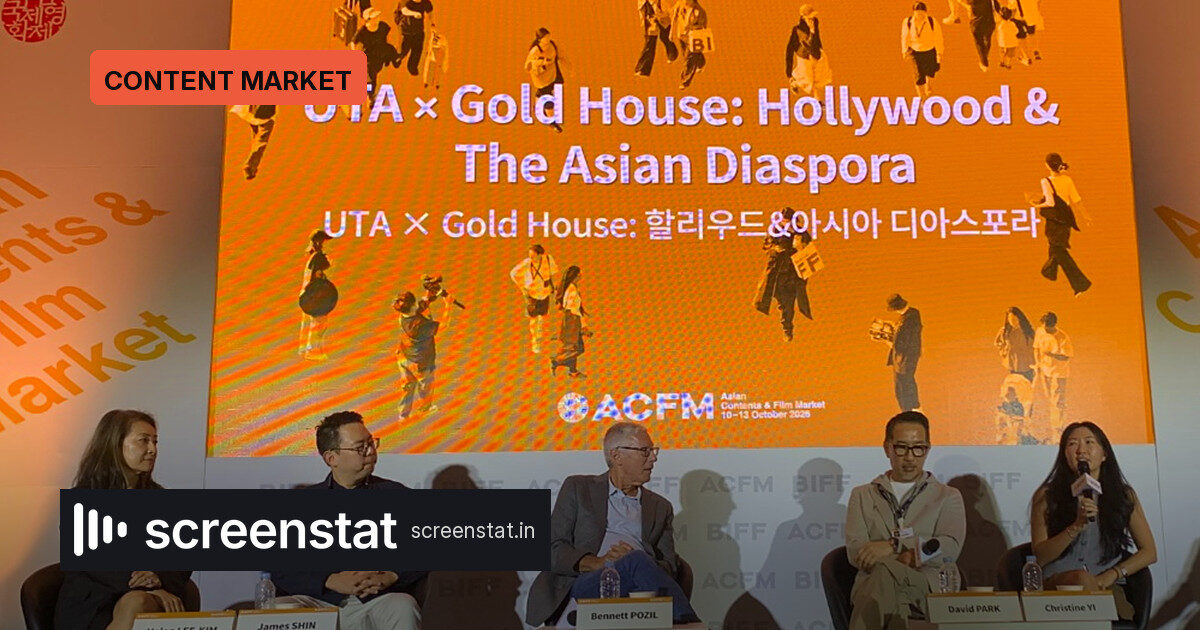
Lionsgate’s president of international, Helen Lee-Kim, put it bluntly: “every movie is still a fight.” Speaking on a UTA and Gold House panel moderated by Variety Asia Editor Naman Ramachandran, she said pandemic viewing had done something structural for non-English content—it made audiences less afraid of subtitles and less likely to read language as a wall.
Concept still does the heavy lifting
Lee-Kim’s argument is that Asian content can travel when the core idea is strong. She used ‘Karoshi,’ the Takashi Doscher-directed action thriller starring Teo Yoo, as an example of bringing Asian talent into a Hollywood production. The catch: these are still individual creative bets, not an automatic category win.
UTA’s David Park framed ‘Parasite’ and ‘Squid Game’ as proof points that changed the routes available. Filmmakers no longer have to relocate to Hollywood and work only in English to reach the world. But he also warned against letting global audience calculations drive the work, pointing to ‘Past Lives’ and ‘Tokyo Vice’ as examples of multicultural stories that work precisely because they stay grounded in particular experiences. He said Na Hong-jin’s ‘Hope’ has global genre appeal with Asian actors leading alongside international stars.
What the money side sees
Gold House Studios president Christine Yi said the company is looking across genres with no prescribed category. The bar is originality and a human, subjective view. Creators do not have to deliberately internationalise material to get attention.
Hybe America Studios president James Shin stressed creative partnerships with Asian and Korean teams. He cited ‘K-Pop: The Debut’ as a cross-cultural production built with artists rather than imposed from a distance.
East West Bank EVP Bennett Pozil, who financed ‘Crouching Tiger, Hidden Dragon,’ said investment activity is rising across Southeast Asia. He named the Taiwan Creative Content Agency and co-production investment in Singapore and Thailand as examples of money being pushed directly into the industry. His takeaway: “Don’t force anything. It has to be authentic.”
What media buyers should read
For planners and marketers, the signal is twofold. First, non-English content is no longer a niche allocation. Second, authenticity is the commercial filter, not an obstacle. The projects named—from Korean blockbusters to diaspora dramas—suggest the next wave is not local stories made to look global, but local stories with a strong genre hook and the backing to reach a global audience.
- Language barrier: Pandemic viewing normalised subtitled work for global audiences.
- Concept first: A strong original hook, not a globalised format, is what travels.
- New money: Southeast Asian co-production and agency financing are adding fresh routes.
For teams commissioning or buying Asian IP, the practical move is to interrogate the concept before the market fit. Ask whether the story is original and specific, not whether it has been softened for international tastes. The panel’s consensus is that softening is where projects stall.
Source: Variety