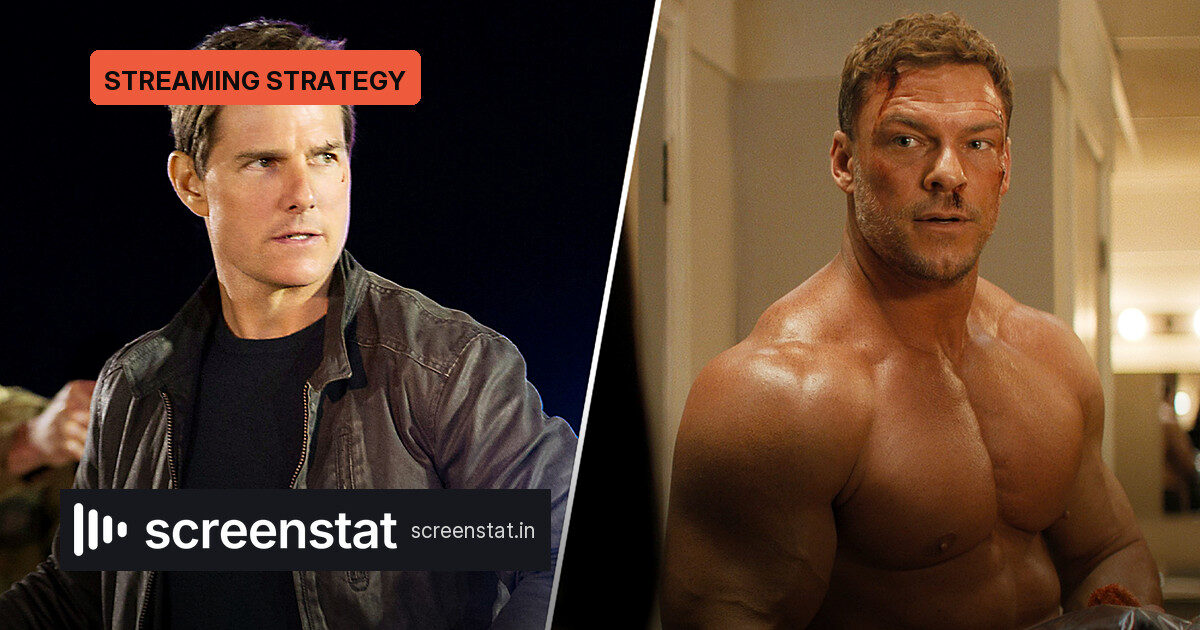
Lee Child, the creator of Jack Reacher, has explained why he stopped the Tom Cruise film franchise after two movies and moved the character to Prime Video. His account is a useful case study in how streaming changed the economics of book-to-screen adaptation.
The veto that ended the film run
Child says his 2005 movie contract gave him a veto after two films, and he used it once the second Cruise film was done. The films had worked commercially. The first opened in December 2012; by January 2013, Child told Collider, eight of his older paperbacks were in the Top 10. “You cannot buy that, and you cannot turn it down,” he said.
But by 2017, the market had shifted. Binge viewing was a habit, broadband was far more widespread, and streaming had become a real home for long-form stories. A deal signed in 2005 had been drafted for a different business.
Running time and financing changed the bet
Child’s central argument is that a movie forces a novel into about 90 minutes. A streaming season, by contrast, can run eight, ten or twelve hours and keep the quiet scenes, side plots and texture of a Reacher novel.
Then there is the money. In a theatrical film, Child said, the actor attracts the financing. “What actor is worth a $200 million investment?” A streamer pays for the series itself, he added, which meant the television version could cast for character fit rather than star power. Prime Video chose Alan Ritchson for the 2022 first season.
What the numbers show now
The strategic shift looks validated on the scoreboard. After Reacher Season 4 premiered in August, Amazon reported that the season drew 66 million viewers globally in its first 28 days. Prime Video had already renewed the show for Season 5 in May; after that opening window, it added an early Season 6 renewal.
The upcoming fifth season adapts Make Me (2015), following Reacher to Mother’s Rest as he helps private investigator Michelle Chang search for a missing colleague.
What this means for the screen business
- Runtime is an asset: longer formats let proven book IP carry more story before a licensing reset.
- Platform financing lowers casting risk: a streamer can bet on the property rather than the actor’s box-office record.
- Early renewals follow opening-window data: a strong 28-day number can convert into a multi-season order.
For rights holders and platform executives, Child’s veto is a reminder that the best format is not fixed at the moment a contract is signed. Distribution changes, and the smart deal leaves room to follow the audience.
Source: Deadline