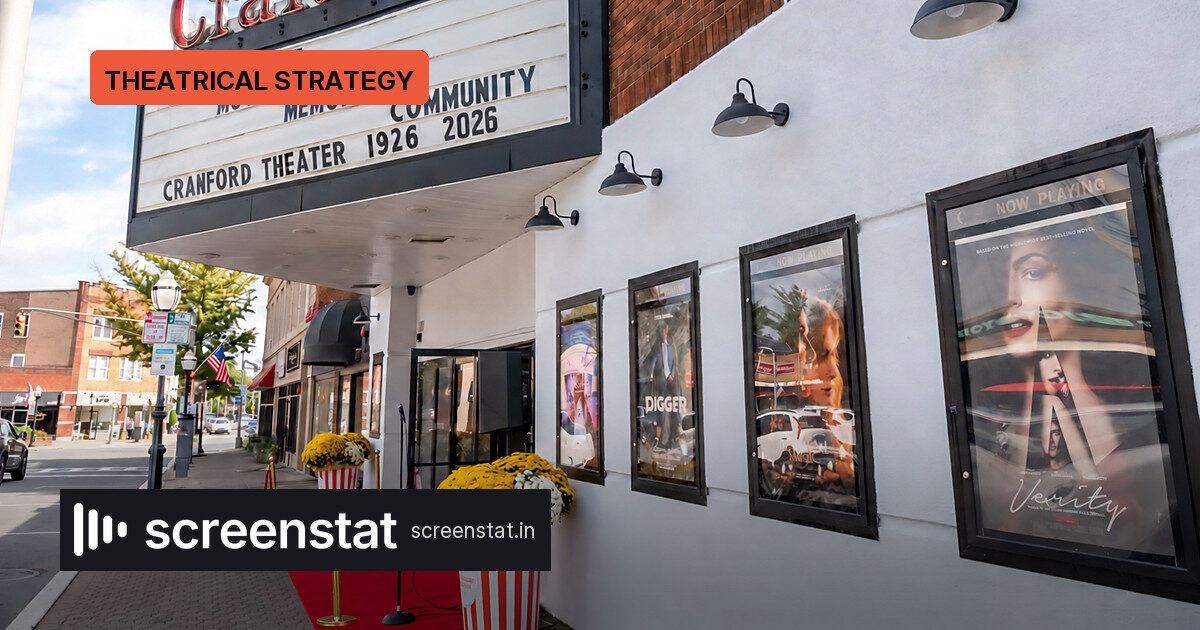
Doreen Sayegh’s Cranford Theater in New Jersey is closing in on a rare milestone: a century in independent exhibition. The five-screen venue, billed as the last indie and family-run cinema in Union County, will mark the anniversary with a throwback screening of Padlocked, the silent film that opened the house on November 29, 1926, with a live organ player.
Sayegh is not framing the centennial as a victory lap. She’s using it to show how an indie theater can still pull audiences when streaming, production strikes and aging buildings keep testing the business.
A family business that kept changing hands
Sayegh grew up in the trade under her father, Jesse Y. Sayegh, who ran an independent New Jersey theater chain in the 1990s and bought the then-twin-screen Cranford in 1997 from Cineplex Odeon. She sold her first popcorn at age 8, sold tickets at 11, and later worked as usher, cashier and manager. The family retained the building while selling the operating business in 2010 to Digiplex Destinations; two more operators followed before Sayegh took it over herself, renovated, and reopened in November 2019.
The timing was almost immediately terrible. The night before the pandemic shutdown, she recalls, the cinema had roughly seven people in the building, four of them staff. Instead of going dark permanently, Sayegh converted a rented parking lot into a drive-in and began handing popcorn and candy through car doors. When tickets for early drive-in dates went on sale, demand was so strong it crashed the web host: the first three nights sold out in 90 seconds. The drive-in expanded to six nights a week of classic titles.
Events, local films and community ties
After theaters reopened, Sayegh kept the same logic: don’t simply open the doors and sell popcorn; build an event around the screening. The Cranford now programs comedy shows, piano recitals, film festivals and indie titles alongside mainstream films. For a 2020 showing of Willy Wonka and Chocolate Factory, the theater hid golden tickets at local Cranford businesses, with finders earning free admission.
That instinct extended to New Jersey’s production boom. The theater has screened locally shot films including Soderbergh’s Presence, shot in Cranford, Mother’s Instinct and Maybe I Do, and is planning Thanksgiving dates for Peter Farrelly’s I Play Rocky. Sayegh says visiting cast and crew often spend in nearby shops and restaurants, which makes the theater a local economic node as much as a screen.
The venue also had to survive an April 2025 ceiling collapse. No one was hurt, and after a seven-month closure the 99-year-old theater reopened on November 26, 2025 with marquee lights and neon signage lit.
For exhibition planners, the takeaway is structural
- Eventize the catalogue. A classic film is a reason to buy a ticket; a themed event, live element, or local scavenger hunt is a reason to leave the house.
- Use the building as community infrastructure. Concessions at the curb, fundraisers and local business tie-ins create value beyond the box office.
- Lean into local production. Films shot nearby give an indie venue a story no streaming home screen can replicate.
The Cranford story doesn’t solve margin pressure for the whole exhibition sector. It does show a workable answer for smaller operators: make the trip itself the product, and let the film be one part of the experience. That’s the frame Sayegh wants for the next century — and, she says, maybe one day for her five-year-old daughter, who is already growing up around the concession stand.
Source: The Hollywood Reporter