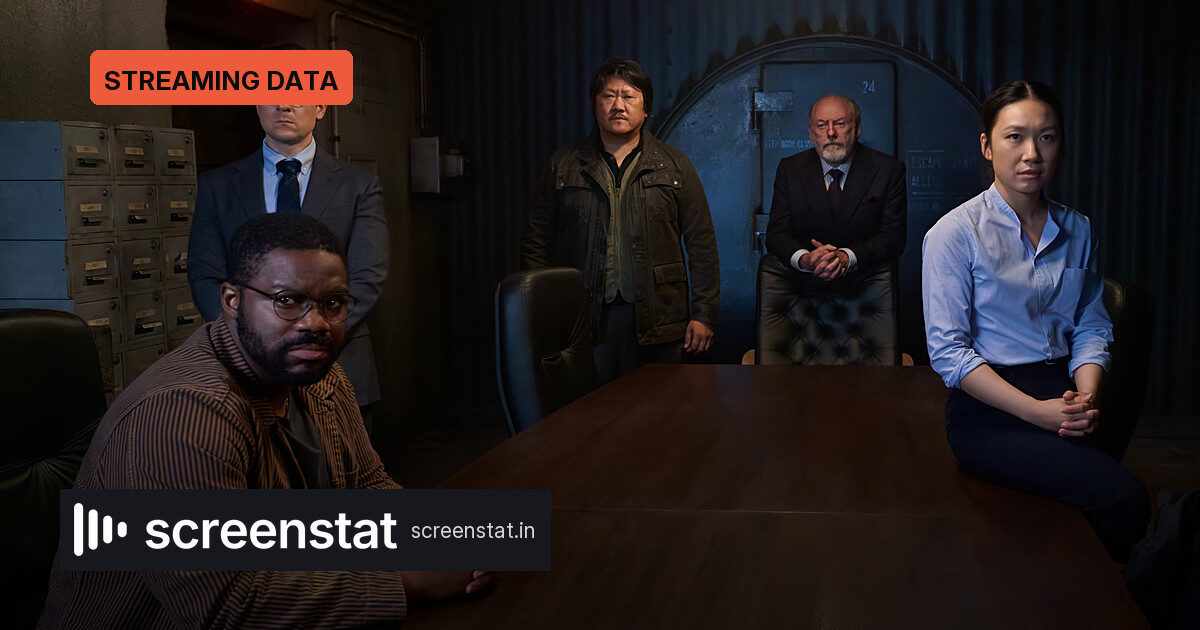
Netflix’s 3 Body Problem is back on the release calendar. The season two trailer has arrived, and the streamer has set Jan. 14 as the return date.
The season tagline is “They Are Here.” The official description from showrunners David Benioff, D.B. Weiss and Alexander Woo sets up an alien invasion that forces humanity to fight on Earth and beyond: a space fleet leaves on a generations-long mission while a secret locked in one man’s mind may be the species’ best survival option. In the trailer, a character cuts through the scale with a simpler warning: “They are coming to exterminate us.”
The season one bar is global
This is not a title that succeeded in only one market. Netflix’s first season numbers set a wide footprint:
- 46.6 million views
- Top 10 in 93 countries
- No. 1 in 44 countries
- Seven weeks in the global Top 10
The country spread matters as much as the raw total. For a hard sci-fi series, reaching the Top 10 in 93 countries gives Netflix a rare multi-market asset: it can sell global sponsorships, local media partnerships, and creator campaigns in several languages off one title. But it also means season two has to reactivate a broad, lapsed audience, not just a core fan base.
Six episodes changes the launch math
Netflix confirmed the second season will run six episodes, down from eight. The streamer had already renewed the show for a third and final season to complete Liu Cixin’s story. Shorter seasons lower per-episode cost and compress the marketing window, but they also ask more of the premiere.
For media planners, Jan. 14 becomes a Q1 tentpole. The campaign has fewer weekly beats to build word of mouth, so the first two weeks carry more of the load. That is a different planning problem from an eight-episode rollout, where the show can spend longer in the Top 10 while late joiners catch up.
Directors are part of the pitch
Netflix has split the season between Jeremy Podeswa and Miguel Sapochnik, both Game of Thrones veterans. The director names are not just trivia for fans; they are a retention signal. For a lapsed viewer deciding whether to return to a dense, multi-timeline story, a known prestige director can be the difference between putting it off and watching on release day.
What to watch
The premiere-day view count will get the press release, but the sharper number for media buyers is the week-one-to-week-three holding pattern. Does the shorter season keep enough global viewers through to the finale to justify the final season? If it does, Netflix has a franchise-shaped sci-fi asset. If it dips, the six-episode order will look like a cost decision, not a creative one.
Source: The Hollywood Reporter