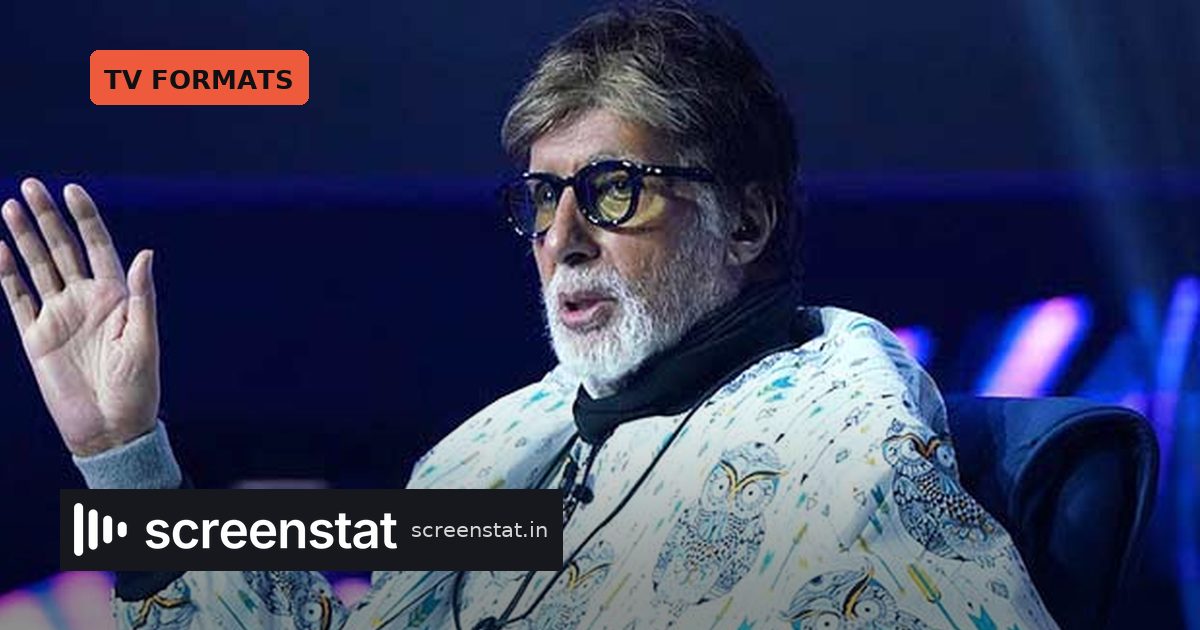
Amitabh Bachchan has described his current stint on Kaun Banega Crorepati as emotionally punishing. Writing on his personal Tumblr, the host of the quiz show’s 18th season said some contestants arrive with such serious personal histories that it becomes hard to manage both his own reactions and the job of running the show.
He declined to share specifics, noting that doing so would give away part of what a host brings to the channel, but summed up the season so far in one phrase: a “heart-breaking experience.”
The show, and where it sits
Season 18 premiered on August 10 at 9 pm and runs Monday to Friday on Sony Entertainment Television, with a simultaneous home on Sony LIV. That dual-window setup is now standard for tentpole Hindi general entertainment, and it matters more than it looks: a five-nights-a-week strip is the closest thing linear television still has to a subscription product, and the OTT mirror turns each episode into a catch-up asset with a long tail.
This season’s marketing leans on hesitation rather than speed. In a promo, Bachchan uses golf as a stand-in for life, arguing that the first answer is not always the right one, and closing on the line “is baar… sochna padega.” It is a smart pivot for a format built on the fastest-finger reflex — reframing the show around judgment rather than recall.
Why the emotional layer is the actual product
For media planners and format buyers, Bachchan’s remark is worth reading as a business note, not just a personal one. KBC’s quiz mechanic is licensed and replicable; what is not replicable is the hot-seat interview — the two or three minutes before the money questions where a contestant explains why they are there.
That segment is where the format converts a game into an appointment. It is also what makes the show unusually durable across 18 seasons in a market where most non-fiction formats fatigue in three or four.
- Emotional segments drive completion, not just tune-in — viewers stay through the break to see whether the story resolves.
- They travel as clips. Hot-seat backstories are the single most shareable unit of the show on social and on OTT short-form surfaces.
- They carry sponsor value. Brand integrations sit more comfortably around aspiration-and-struggle narratives than around trivia.
- They create host dependency. The interview only works because of who is asking. That is a real succession risk for the franchise.
The succession question nobody wants to ask
Bachchan turning the show’s emotional load into public commentary is, in effect, a reminder of how much of KBC’s equity is concentrated in one person. Networks manage this risk badly across the world: formats built on a singular host tend to lose a chunk of their audience when the chair changes, and rebuilding takes seasons, not weeks.
For Sony, the practical hedge is what it is already doing — pushing the Sony LIV window, building the show’s clip identity so the franchise has a life independent of any single broadcast hour, and using promo positioning (“sochna padega”) to make the format, rather than the face, the talking point.
What to watch next
Three things worth tracking through the rest of the season: whether the weekday strip holds its slot share against streaming originals in the same 9 pm band; how much of KBC’s total consumption shifts to the on-demand window versus live linear; and whether the emotional segments continue to outperform the gameplay in social reach. Those three numbers, more than any single episode’s rating, will tell you what the franchise is actually worth going into season 19.
Source: bollywoodHungama.com