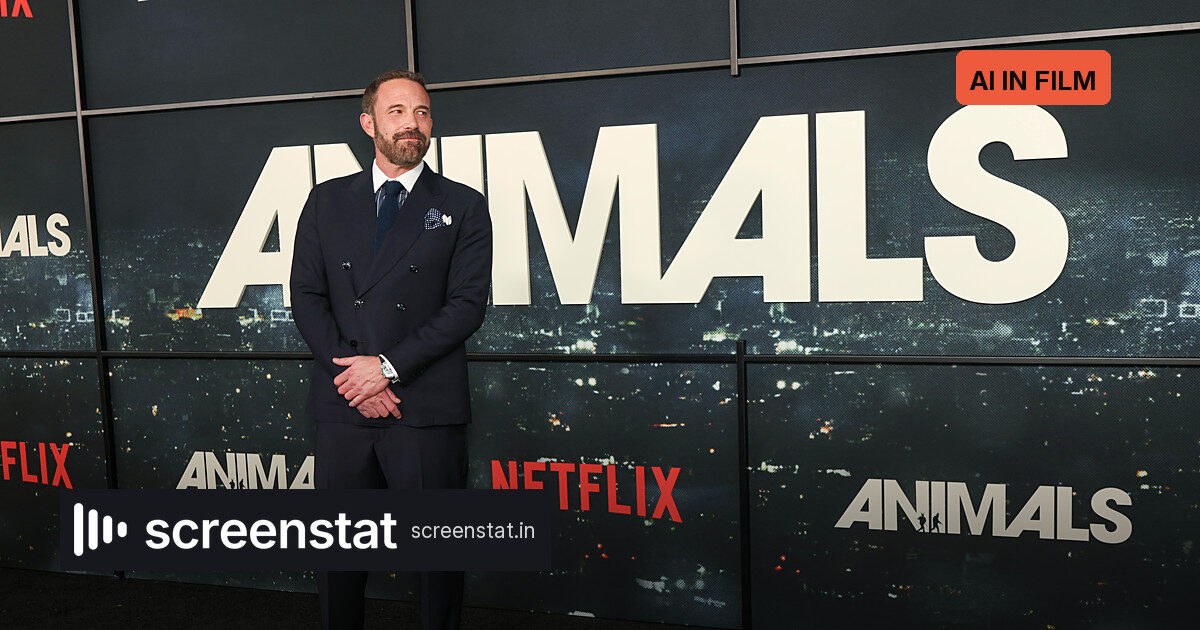
After floating the topic at Bloomberg’s Screentime event on Wednesday, Ben Affleck used the Netflix premiere of Animals on Thursday to draw a hard line between AI as a filmmaking tool and AI as a replacement for actors. He said the film did use AI, but only under rules designed to keep the process from becoming extractive.
Proprietary data is the red line
Affleck said he would not use a system trained on copyrighted work or on “an intelligence created by a peer of mine or somebody that I look up to.” The production used a proprietary dataset instead, which he said “wouldn’t have to be extractive.”
He was blunt about the limits of the technology. AI is not a shortcut to a finished film, he argued, and he has no interest in movies made by typing prompts. “It’s not about making fake people or replacing anybody, ever,” Affleck told The Hollywood Reporter. “It’s about another interesting post tool.”
A $600 million bet behind the argument
The position carries commercial weight. Earlier in 2026, Affleck sold his AI company InterPositive to Netflix for nearly $600 million. That makes Animals a visible test of how such tools can sit inside a guild-signatory studio rather than arrive as an outside threat.
The film follows a Los Angeles mayoral candidate whose son is kidnapped; Affleck directed, co-wrote and stars alongside Kerry Washington. It gets select theatrical dates and begins streaming on Netflix on Oct. 9.
Consent and compensation, not magic
Affleck said a director or actor who chooses to train a model on their own performance can “avail yourself of that intelligence” without handing it to everyone else. For him, the movie business should keep AI inside companies that have relationships with creative talent and pay for what they use, rather than cede the ground to tech platforms.
- Use proprietary, consented training data, not scraped or copyrighted material.
- Frame AI as an invisible post-production tool, not a generator of actors or fake people.
- Keep adoption inside companies that can negotiate permission and compensation.
- Treat an artist’s training data as their asset, not a platform’s default entitlement.
Affleck also separated AI from the issues he considers more urgent. The real problems in Hollywood, he said, are theatrical attendance, labour stoppages and production tax rebates. That reframing matters for studio leaders: AI becomes an efficiency decision rather than an existential debate.
Why this matters for the screen business
With Animals arriving on Netflix, the streamer gets a case study for an AI workflow it can show to talent, guilds and investors. Affleck’s pitch is that film-makers using these tools will get “way better results” than tech companies applying them from outside. For entertainment marketers, the watch point is whether Netflix can market AI-assisted production as a craft advantage without audience or guild backlash. The durable lesson is structural: an owned tool, a proprietary dataset and a star who can explain the guardrails are a more repeatable model than blanket AI approval or rejection.
Source: The Hollywood Reporter