Variety’s review of Runner, the Angel Studios action thriller starring Alan Ritchson and Owen Wilson, lands a verdict that will sound familiar to anyone tracking the mid-budget film business: entertaining enough, efficiently made, and visibly under-resourced. The critique is less about the movie than about the category it belongs to.
What the film is
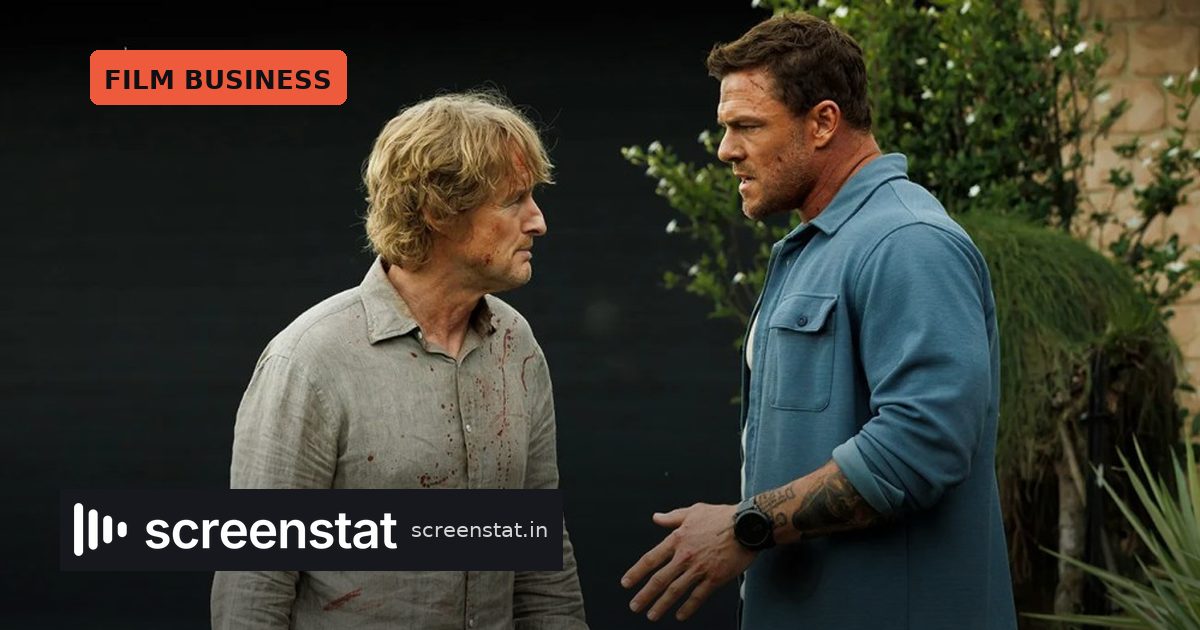
Directed by Scott Waugh and running a tight 98 minutes, Runner casts Ritchson as Hank Malone, a former soldier working as a courier in Brisbane, Australia, one year sober and teaching himself French in memory of his late daughter. A routine pickup — a donated liver being flown in from the U.S. — turns into a chase when Owen Wilson’s talkative messenger Ben Bishop insists on riding along, and a cartel heir played by Rodrigo Santoro decides he needs the organ for himself. Leila George plays the mother waiting at a Gold Coast hospital. The script is by Miles Hubley and Tommy White. Ritchson also co-produced.
Variety’s read: the two leads carry it, the action is sturdy, the laughs are mostly intentional — but the seams show. Songs appear to have been swapped for covers or soundalikes, the Brisbane setting reads as a tax-incentive decision rather than a creative one, and the driving-plate visual effects needed another pass. Waugh, a Variety Director to Watch back in 2012 whose last credit was Expend4bles, is described as delivering what the film needs with two actors instead of an ensemble to juggle.
Why this matters beyond one review
The interesting number here is not a gross. It is the gap between what a star-led action picture used to cost and what the market now pays for one. The mid-tier lane — too expensive to be scrappy genre fare, too thin to compete with tentpoles — has been hollowed out on both sides. Streaming absorbed the volume; theatrical concentrated on event titles. What remains is a class of films financed to fill a slot rather than to break out.
Variety’s framing is blunt about the consequence: the review argues the film “barely feels like a movie made for theaters,” and points out that recognisable actors are visibly hustling across commercials, franchise cameos and straight-to-streaming work. Wilson has recently been in a Disney tentpole, the Marvel universe and a returning comedy franchise. That portfolio behaviour is the story.
The signals worth tracking
- Runtime discipline. Ninety-eight minutes is a deliberate choice — it maximises daily showtimes theatrically and completion rates on streaming. Expect more mid-tier titles to land under 100 minutes.
- Location as line item. When a setting serves no narrative purpose, it is usually a rebate. Incentive-led production geography is now a visible creative constraint, not a back-office detail.
- Music rights as the first cut. Replacing recognisable tracks with soundalikes is one of the cheapest ways to protect a budget, and one of the most noticeable to audiences.
- Actor-as-producer. Ritchson taking a producer credit is how talent on the cusp builds equity when studios will not build a vehicle for them.
- Distributor identity. Angel Studios releasing a secular action thriller is a positioning move worth watching — a faith-adjacent distributor testing broader four-quadrant genre.
What planners and marketers should take from it
Films in this tier rarely win opening weekend; they win on downstream life. The marketing question is not how to sell a premiere, it is how to seed a title so that it performs when it hits a streaming or AVOD window months later. That means leaning on the pairing — Ritchson’s Reacher audience plus Wilson’s comedy familiarity — rather than the plot, which Variety describes as thinly sketched.
The review’s closing thought is the useful one for the business: the leads are good enough here that you want to see them in something better. When the talent is the asset and the production is the liability, the fix is not a bigger cast. It is a bigger budget line for the twenty per cent of craft that audiences actually notice.
Source: Variety