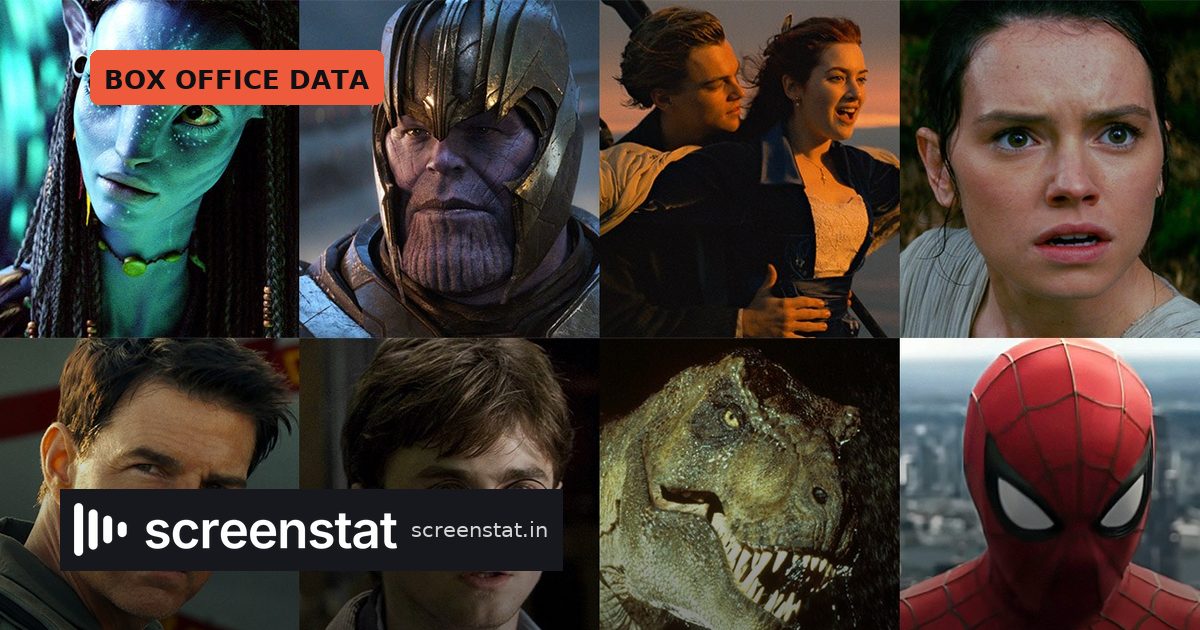
The Hollywood Reporter has published a full ranking of every film to cross $1 billion at the worldwide box office – 65 titles in all. Read as a list, it’s a nostalgia trip. Read as a dataset, it’s a fairly blunt instruction manual for how theatrical money is made in the mid-2020s.
The headline number
THR frames the list against a strong summer: an estimated $4.76 billion in domestic ticket sales between May 1 and September 7, powered by Universal’s The Odyssey, Pixar’s Toy Story 5 and Sony’s Spider-Man: Brand New Day.
That matters because the billion-dollar club has been expanding again after a lean stretch. On the current list, The Odyssey sits at $1.63B, Toy Story 5 at $1.14B, Michael at $1.02B and The Super Mario Galaxy Movie at $1.01B – four new members from a single year. The 2025 intake was just as busy: Ne Zha 2 at $2.27B, Zootopia 2 at $1.87B, Avatar: Fire and Ash at $1.49B and Lilo & Stitch at $1.04B.
What the club actually rewards
Strip out the titles and the composition is remarkably narrow. Four traits show up again and again:
- Animation and family films. Pixar, Disney Animation and Illumination account for a large slice of the list – Inside Out 2 ($1.70B), Zootopia 2 ($1.87B), Frozen and Frozen 2 (both around $1.45B), plus four Toy Story entries and the Minions/Despicable Me line.
- Superhero team-ups. Avengers: Infinity War ($2.05B), Spider-Man: No Way Home ($1.92B), The Avengers ($1.52B) – crossover events, not solo debuts, do the heavy lifting.
- Long-running franchises with a legacy hook. Star Wars: The Force Awakens ($2.07B), Jurassic World ($1.67B), Top Gun: Maverick ($1.50B), Furious 7 ($1.52B).
- Cameron-scale spectacle. Avatar: The Way of Water at $2.33B and Titanic at $2.26B remain among the biggest earners on the ranking.
The originals are the exceptions that prove the rule. Barbie ($1.45B) and Joker ($1.08B) got there without a sequel number in the title, but both were built on pre-existing cultural furniture.
The Ne Zha 2 signal for India
The single most instructive entry for Indian readers is Ne Zha 2. Yu Yang’s animated feature landed at $2.27B – among the top handful of films ever – on the strength of a domestic Chinese audience, without a Hollywood star or an English-language release strategy.
That is proof of concept for the argument Indian studios have been making for a decade: a single large home market, plus a culturally native IP, can produce a global-scale gross. India has the footfall base and, increasingly, the animation pipeline. What it hasn’t yet had is one title that converts a domestic phenomenon into a nine-figure overseas run at China’s conversion rate. Ticket pricing is the constraint – Indian admissions are a fraction of Chinese ones, so volume alone won’t close the gap.
What planners should take from it
Three practical reads:
Family animation is the most reliable billion-dollar bet, and it’s the format most exposed to streaming windows. If a Pixar or Disney Animation title reliably clears $1B theatrically, the case for a short PVOD window weakens, not strengthens. Watch window lengths on the 2026 slate as the tell.
Sequels dominate, but only when the gap is managed. Zootopia 2 arrived nine years after a $1.03B original and nearly doubled it. Jurassic World Dominion, at $1.00B, is the lowest-grossing member of the club – the same franchise, decayed.
The floor is rising. Sixty-five films in roughly three decades means the milestone is no longer rare enough to be a marketing claim on its own. For campaign planning, $1B is now table stakes for a tentpole, not a triumph.
Source: The Hollywood Reporter