
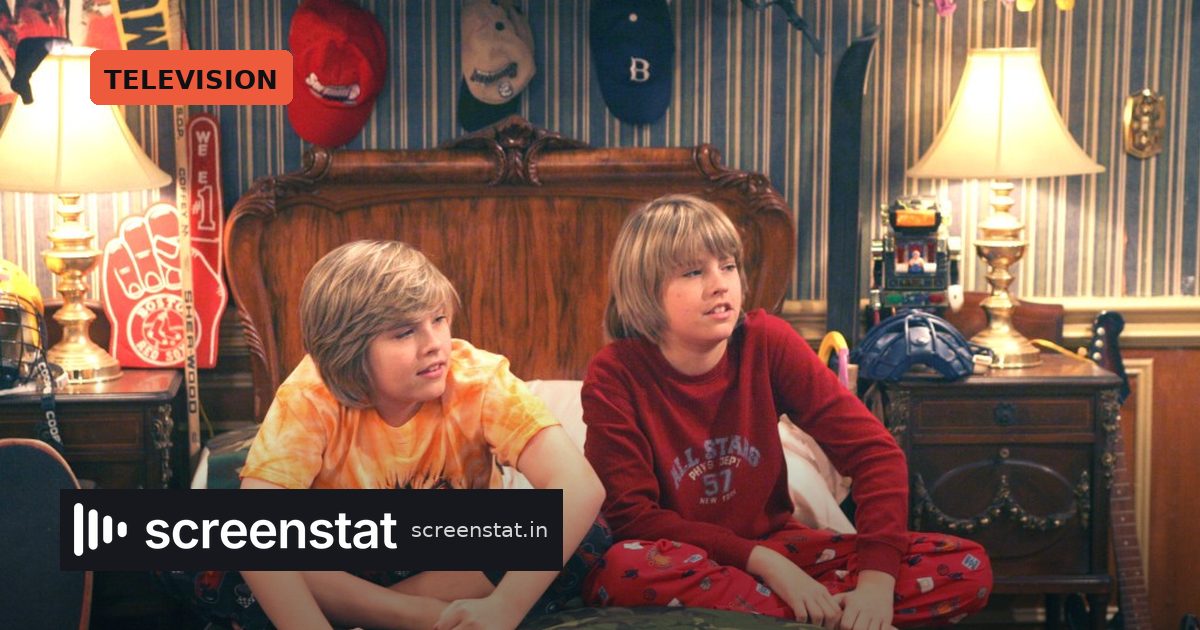
Jim Geoghan, the writer-producer who co-created Disney Channel’s The Suite Life of Zack & Cody, died on Sunday, September 7, in Los Angeles at the age of 79. His daughter Genevieve Geoghan confirmed the death to Deadline; a cause was not immediately available.
For a business audience, Geoghan’s career is a useful case study in how a single multi-camera sitcom format can be turned into a durable, exportable, multi-territory asset — the kind of library title that still carries weight on streaming shelves two decades after launch.
A four-decade writing room career
Geoghan started out in the early 1970s in a stand-up trio called Divided We Stand, playing New York rooms including the Improvisation Cafe, The Bitter End, Catch A Rising Star and The Bottom Line, and sharing bills on the college and nightclub circuit with acts such as The Beach Boys, The Commodores, Jimmy Buffett, The Righteous Brothers, Bill Withers and The Temptations.
He moved into television writing on Three’s Company, Sanford, Too Close For Comfort, The Facts of Life and The Van Dyke Show. Between 1983 and 1987 he wrote 18 episodes of Silver Spoons, and from 1986 to 1990 he was a producer on the format-bending It’s Garry Shandling’s Show. Other credits across the 1980s and 1990s include Kate & Allie, Mama’s Family, Amen and Family Matters, with producing credits on Silver Spoons and Family Matters.
The Suite Life and its franchise math
In 2005, Geoghan co-created and co-executive produced The Suite Life of Zack & Cody with Danny Kallis for Disney Channel. The series ran 87 episodes from 2005 to 2008, drew two Emmy nominations, and starred Cole and Dylan Sprouse, Ashley Tisdale and Brenda Song. A follow-up, The Suite Life on Deck, ran from 2008 to 2011. Geoghan then served as executive producer on The Suite Life of Karan & Kabir, the Indian version of the format.
That sequence — original series, sequel series, local-language adaptation — is exactly the ladder that kids and family programming climbs when it works, and it is worth restating why it matters commercially:
- Volume is the point. An 87-episode order plus a sequel run creates enough inventory for strip scheduling on linear and for deep binge libraries on streaming.
- Multi-cam travels. Contained sets and self-contained plots keep per-episode costs predictable and make dubbing and remakes straightforward.
- Format licensing beats one-off exports. Karan & Kabir is a reminder that Disney’s India strategy in that era leaned on adapting proven US kids formats with local casts rather than only importing dubbed episodes.
- Talent flywheel. Casts from these shows became long-tail draws; the Sprouse twins, Tisdale and Song all built audiences that outlived the series’ original run.
Why this still matters to programmers
Kids and family libraries are among the most rewatched categories on streaming services, which is why they are also among the most fought-over in licensing negotiations. Titles like The Suite Life were engineered in a linear era for repeat viewing — a design goal that maps almost perfectly onto the completion and rewatch metrics platforms now optimise for.
For anyone commissioning family content today, the takeaway is less about nostalgia than about structure: order enough episodes to build a habit, keep the format cheap enough to remake in other markets, and build the show around a cast that can carry a franchise. Geoghan’s work spanned the network sitcom boom, the cable kids-TV era and the beginnings of format export to India — three distinct business models, one craft.
Besides his daughter, Geoghan is survived by his wife of 45 years, Annie. He also wrote for the stage: Only Kidding, set in the stand-up world, opened Off Broadway in 1988, transferred to the Westside Arts Theater, ran 500 performances and earned two Drama Desk nominations.
Source: Deadline